
5 Cat Drawing Tutorials for Beginners


Cat drawing tutorials are a fun way to sharpen your line work, simplify anatomy, and explore expressive poses without overthinking proportion.
In this curated roundup, we highlight five bite-size lessons from YouTube that show different approaches to cat drawing—from cute shapes and cartoon styles to quick gesture sketches.
You’ll find ideas to practice drawing a cat in minutes, plus tips to turn rough lines into confident forms.
Each mini-review explains what you’ll learn, the style, and the skill focus. To respect the creators, we don’t reproduce full instructions; the original lessons remain the work of their authors on YouTube.
Under every description you’ll see a prompt—“Click here to watch the tutorial”—that jumps to a final section where we list the five source URLs in raw form.
1) Simple Shapes for a Cute Cat
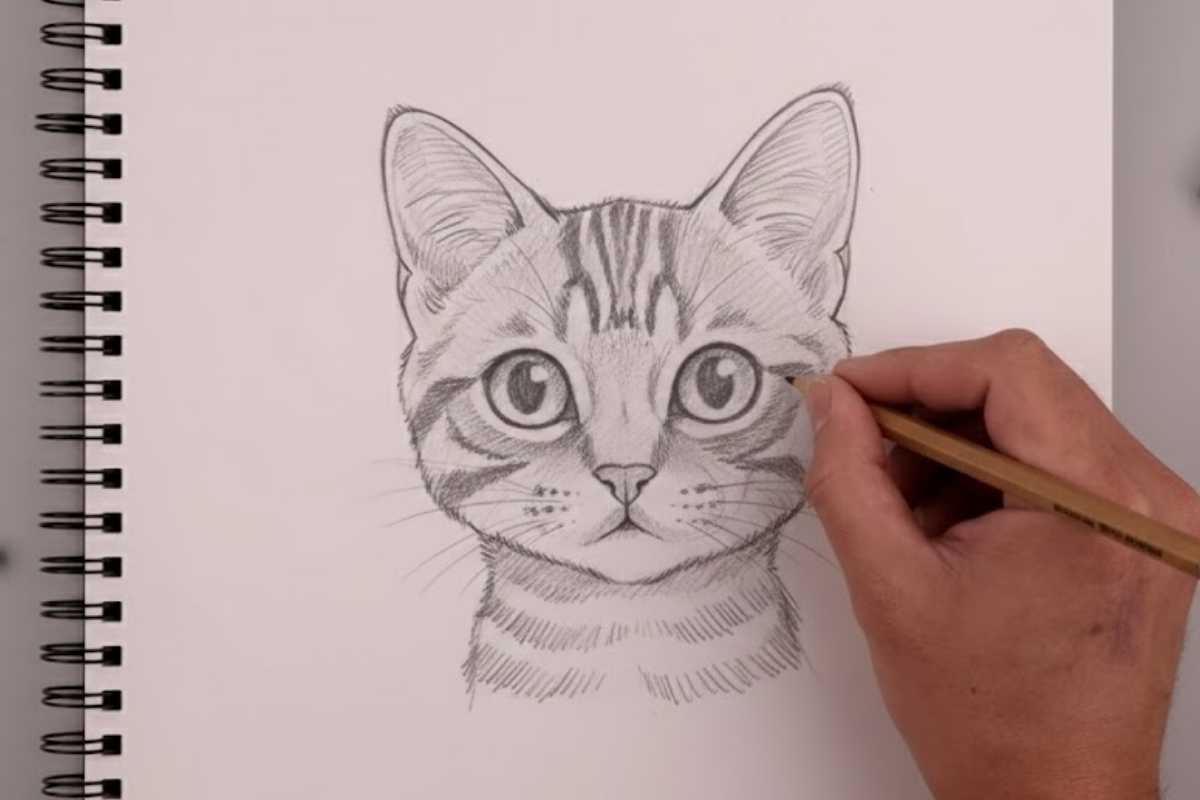
This quick lesson breaks the cat into circles and soft triangles, a perfect entry point for cute cat drawing.
You’ll practice light construction, then add eyes, whiskers, and a tail to convey charm without getting lost in fur texture or shading.
It’s ideal when you want low-pressure cat drawing ideas that focus on clarity and silhouette. Try repeating the exercise at three sizes to build muscle memory before adding color accents or a tiny bell collar.
Click here to watch the tutorial
2) From Gesture to Character

Here the instructor starts with loose lines, then locks in angles for head, spine, and hips.
You’ll learn a speedy way of drawing a cat that captures motion first—sitting, stretching, or mid-prowl—before refining details. The result feels lively and avoids stiffness.
This approach is great for anyone who thinks “I’m just drawing cat outlines.” You’ll shift toward storytelling poses and add personality with small tweaks to ear tilt and tail rhythm.
Click here to watch the tutorial
3) Cartoon Cat With Expressive Eyes
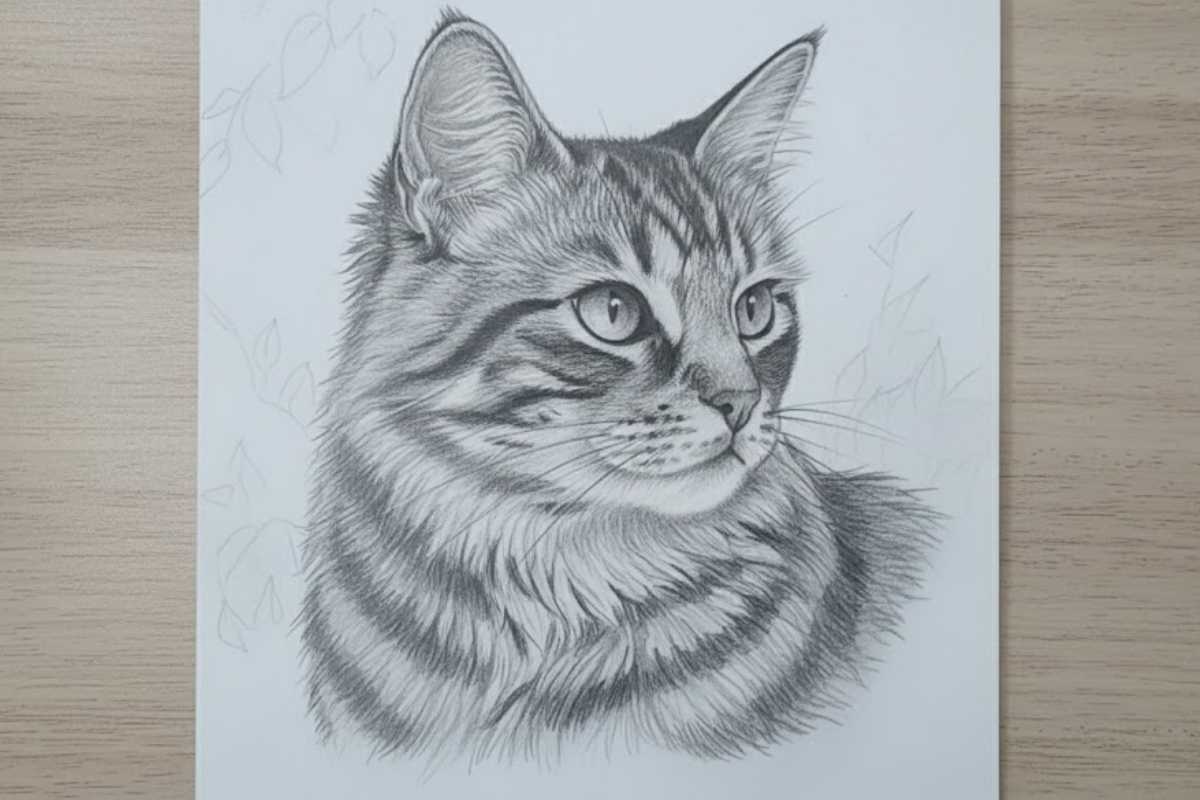
If you love bold line art, this tutorial leans into graphic shapes and exaggerated features.
You’ll map eye size to emotion, use tapered strokes for whiskers, and learn a clean inking pass that makes your cat drawing tutorial practice look print-ready.
Expect a playful vibe that’s perfect for stickers, thumbnails, and sketchbook warmups. It also suggests quick drawing ideas cat fans enjoy: sleepy cat, surprised cat, and “please feed me” cat—each with tiny line edits to eyebrows and cheeks.
Click here to watch the tutorial
4) Cozy Sitting Pose, Step-Back Refinement
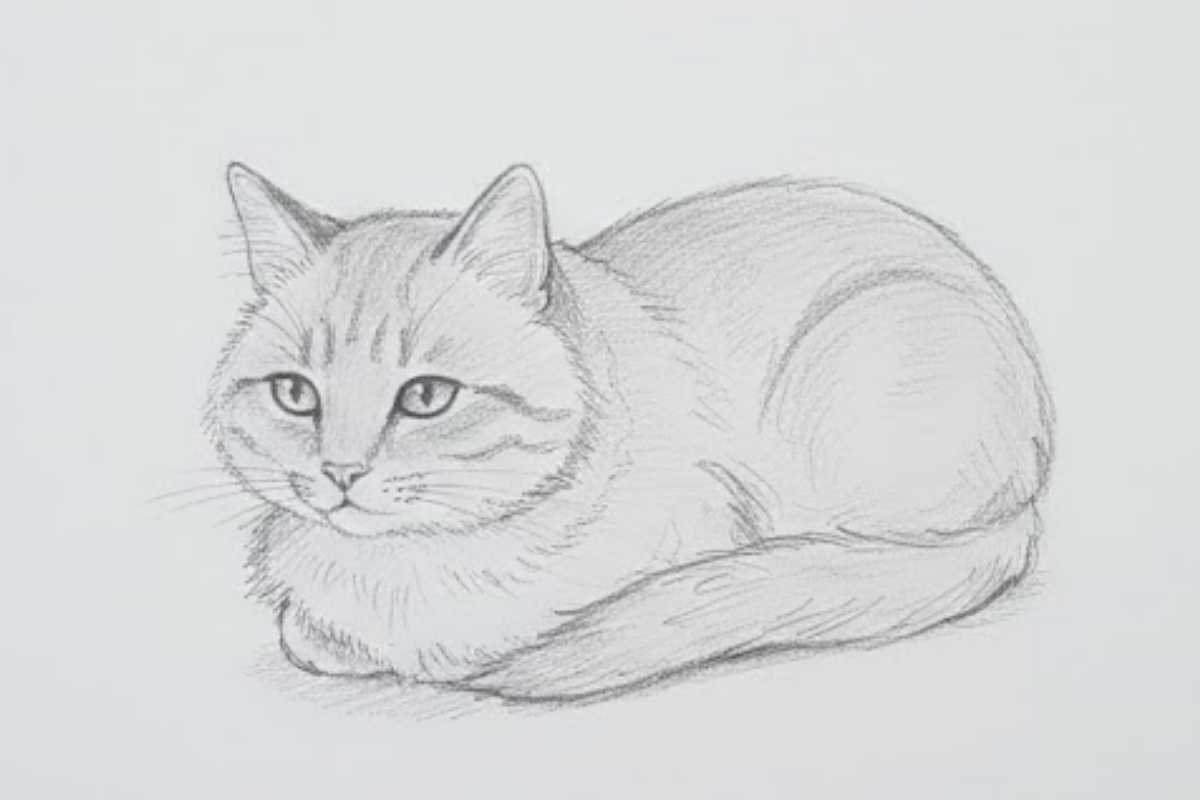
This lesson emphasizes proportion checks: compare head to body, shoulder width to hip width, and find a simple negative-space triangle under the chin.
You’ll see how to block forms lightly, step back, then commit to confident contours.
It’s a strong follow-up to earlier cat drawing tutorials because it shows how to evaluate your own work without erasing every line. Great for sketchers building a daily routine of drawing cat poses with minimal fuss.
Click here to watch the tutorial
5) Quick Shading for Depth
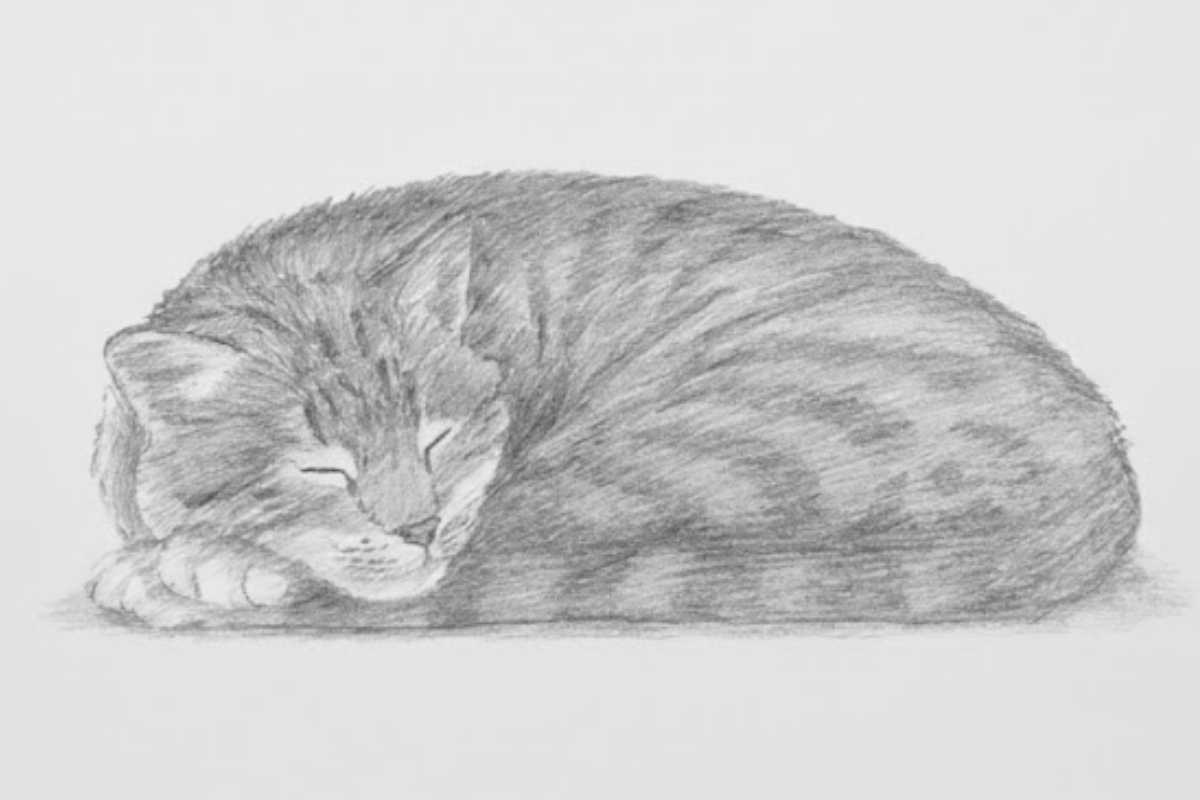
Round out your skills with simple shadows under the belly, tail, and chin. You’ll learn an approachable hatching method that suggests fur direction without overworking the page. The demo keeps values limited so the face remains the focal point.
Use this to transform flat sketches into finished pieces. As you add shading, revisit your earlier cat drawing ideas—sleeping, stretching, playful pounce—and test how light placement changes mood.
Click here to watch the tutorial
Cat Drawing Tutorials: Watch the Originals

Below are the five original YouTube lessons by their respective creators. All credit and rights belong to the original authors. We encourage you to support them directly by visiting their channels.
How to Practice and What to Keep
Rotate between construction, gesture, character, proportion, and shading so each session stays fresh.
Keep a page of thumbnails where you test ear angles, tail curves, and paw shapes. Over time, your library of cat drawing studies will turn into finished illustrations.
Looking for more cat drawing tutorial content? Set a 20-minute timer, pick one video, and focus on a single skill—eyes, whiskers, or tail motion. This targeted practice accelerates learning and keeps your sketchbook fun.
Discover More Artistic Inspiration