
Painting a Cozy Winter Cabin at Night with Gouache


If you’re craving a peaceful painting session, a cozy winter cabin at night is such a satisfying subject—snowy shapes, deep night colors, and that warm glow from the windows.
This gouache tutorial is especially helpful if you’re a beginner and want a clear process you can follow without stressing about perfection.
You can paint along as-is, or use the same steps to create your own winter scene in a sketchbook or on paper. Either way, you’ll come away with a better feel for layering, value changes, and how to make a night painting feel bright and cozy.
How to Build a Nighttime Winter Scene With Gouache Layers
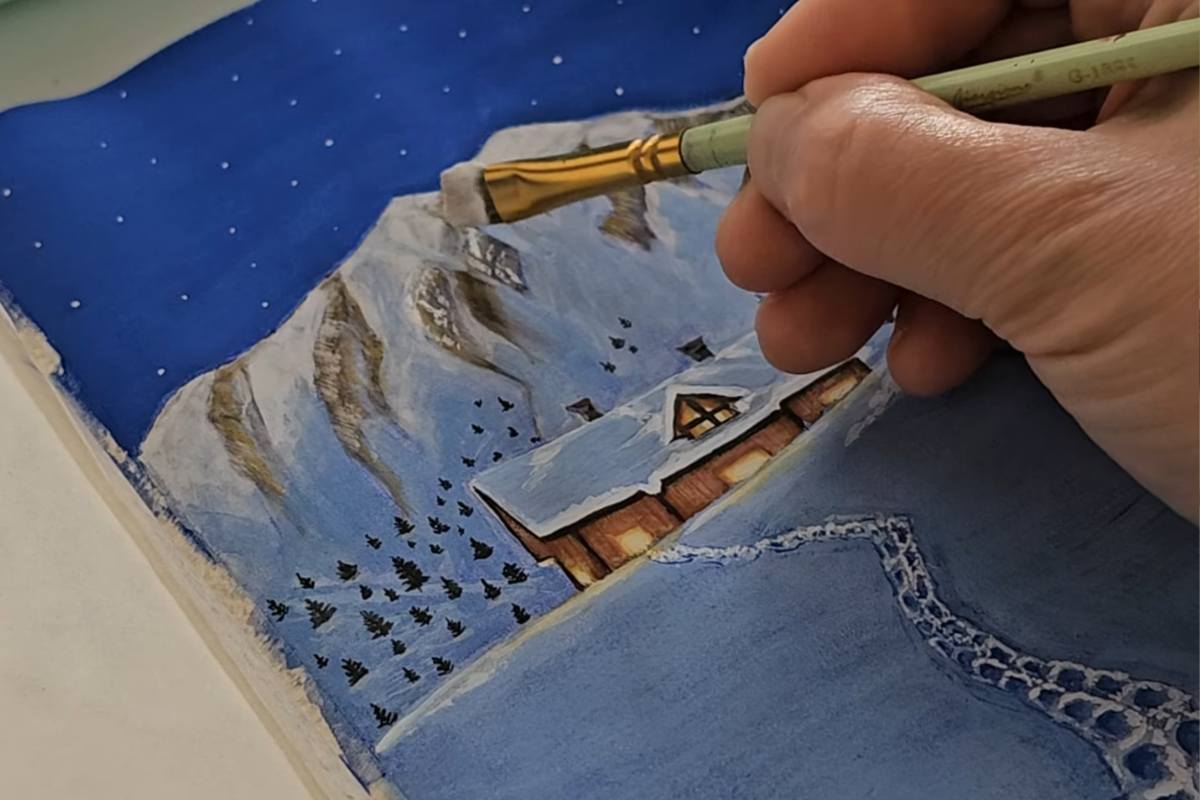
Night paintings work best when you think in simple layers: dark background first, then mid-tones, then the brightest highlights last. In the video, you’ll see the scene develop in stages so the cabin and snow don’t get lost in the darker colors.
A great trick for a winter gouache painting is to keep your snow from being pure white the whole time.
Even snow has shadows and temperature shifts—cooler notes can help it feel crisp and dimensional, while warmer highlights near the cabin can make the whole piece look extra inviting.
Also watch how edges are handled. Soft edges can push areas back (like distant trees or sky), while sharper edges can bring the cabin and foreground details forward. That contrast is a simple way to create depth—even if you’re keeping the painting stylized.
We thank Raghad for the images.
Cozy Winter Cabin Gouache Tutorial for Beginners (Watch the Process)
This is the best part: seeing how each step is layered and adjusted. Pay attention to when the paint looks more watery and thin versus opaque and bold, especially when details and highlights are added at the end.

Source: Raghad
Easy Snow + Glow Tips to Make Your Cabin Feel Cozy
If you want your painting to really sell that “warm cabin in the cold night” vibe, these ideas help:
Add the brightest highlights last (snow sparkles, roof edges, window glow).
Keep some snow shadows slightly darker so the highlights actually pop.
For glowing windows, surround the light with slightly darker tones first—then add the warm glow on top.
Don’t over-detail everything: a few clean focal details on the cabin can be enough.
Save this tutorial for your next cozy winter painting night—especially if you want an easy, feel-good project that looks impressive in a sketchbook.
Discover More Artistic Inspiration