
Snow Oil Paintings Winter Landscape Tutorial


If you’re exploring Snow Oil Paintings Winter Landscape ideas, this curated video is a winter gem.
Instead of a strict step-by-step, we highlight what the creator does well—light control, color temperature, and brush economy—so you can apply the same thinking to your next Winter Landscape Painting without guesswork.
Snow Oil Paintings Winter Landscape: What You’ll Learn
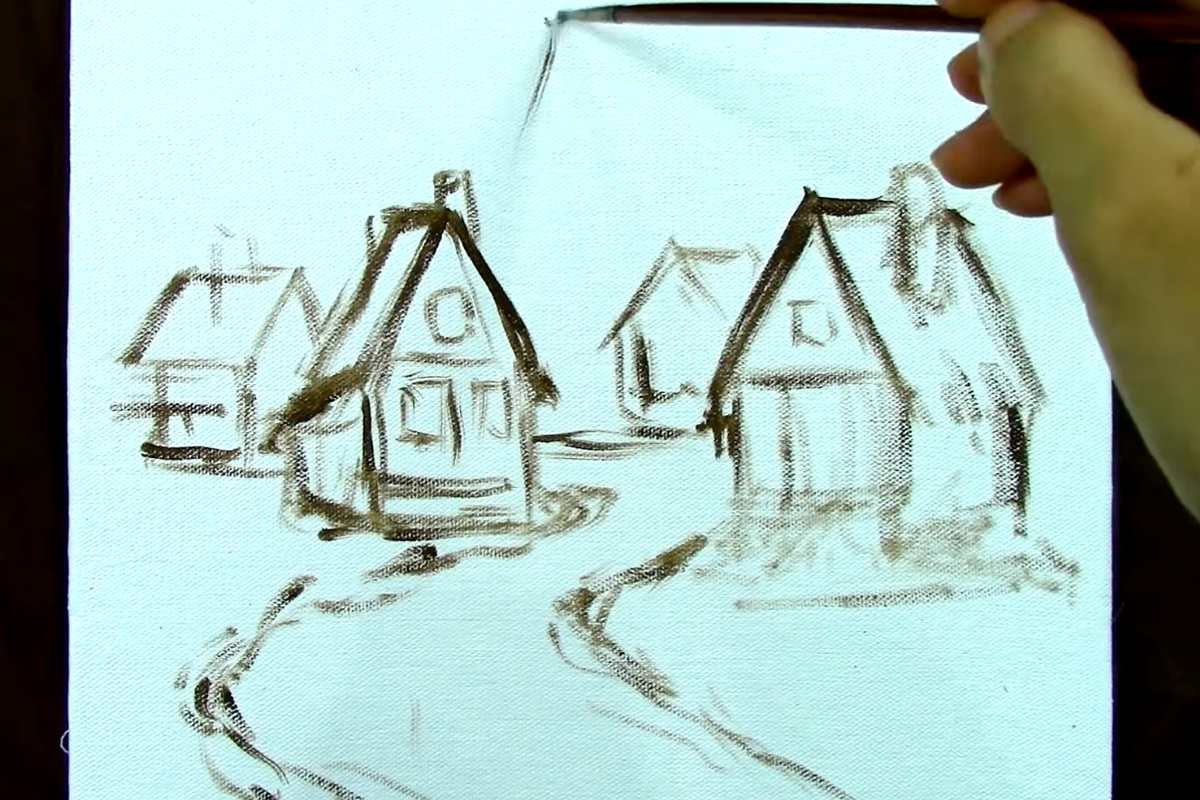
The tutorial shows how to suggest snow without overblending, a must for anyone wondering How To Paint Snow. You’ll see how cool shadows and warm light play together to keep the scene lively rather than flat.
It’s a practical approach to Winter Oil Painting: block in big value shapes first, reserve highlights, and save texture for the end. The result reads like refined Winter Artwork rather than a heavy, overworked canvas.
Color & Light: The Heart Of Winter
Snow isn’t white; it borrows color from the sky and the surrounding landscape. The video demonstrates limited palettes that make Painting Snow simpler—think ultramarine blues for shade, and small notes of warm neutrals for sunlit planes.
If your goal is a convincing Snow Landscape Painting, watch how the creator sequences layers: thin darks, controlled midtones, then textured lights. Those subtle shifts are what turn generic scenes into believable winter light.
Composition Ideas For Different Scenes

For a tranquil meadow, let the sky breathe and keep tree lines simple. That restraint supports a calm Winter Wonderland Painting mood without clutter. Broken brushwork suggests sparkling crystals on top planes of snowdrifts.
Forest scenes benefit from value grouping. By simplifying trunks and branches into masses first, you’ll set the stage for a stronger Winter Forest Oil Painting where the snow reads as negative space and the path naturally pulls the eye through the scene.
Edges, Texture, And Brushwork
Edges do the heavy lifting. Hard edges call attention to sunlit ridges; soft, lost edges make distance recede. The tutorial’s palette-knife touches add crisp accents perfect for a luminous Snow Scene Oil Painting without over-detailing every twig.
Reserve your thickest paint for the final lights. That physical build-up creates the tactile sparkle we associate with Painting Ideas Winter—fresh, clean, and not muddy.
From Hills To Peaks
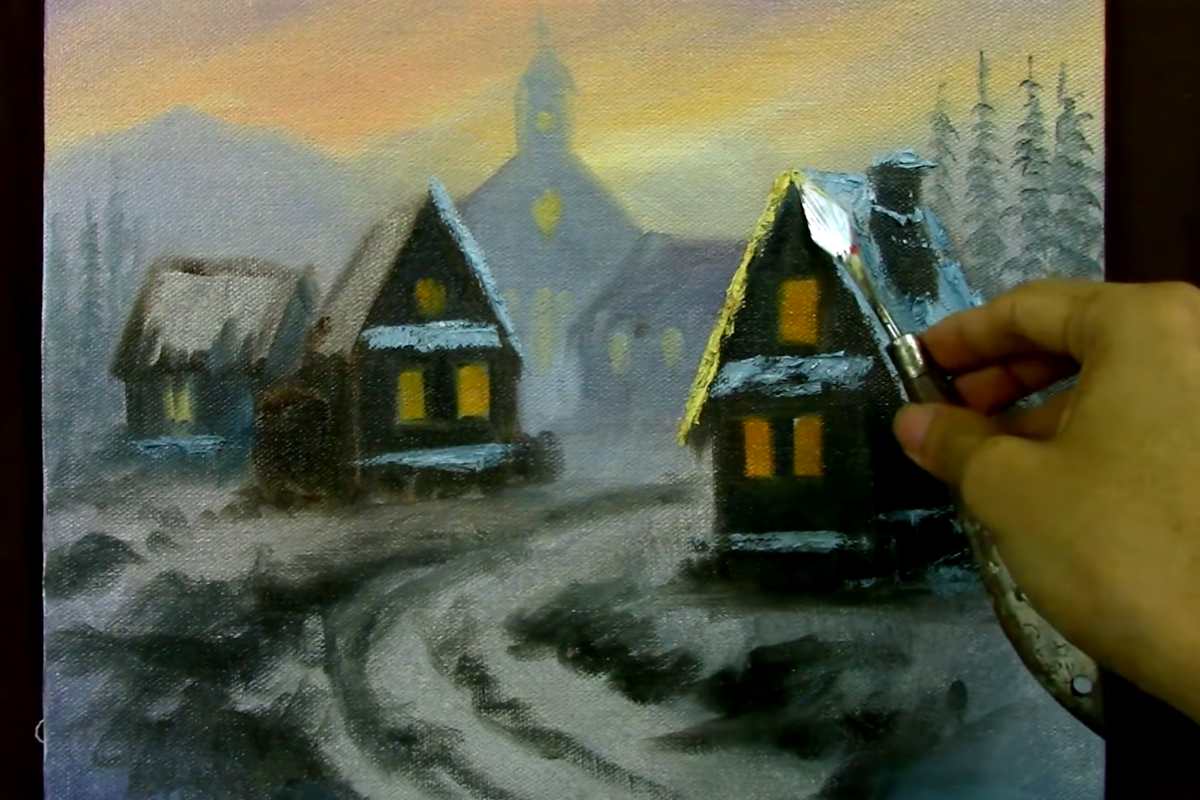
When the terrain rises, planes change fast. The creator shows how cooler violets in shadow and leaner mixtures help avoid chalkiness in a Snowy Mountain Oil Painting. A few warm notes at the summit can suggest late sun even in a limited palette.
Keep atmospheric perspective in mind: bluer, lighter backgrounds and warmer, sharper foregrounds. This is key whether you’re tackling a wooded valley or an alpine Winter Landscape Painting at golden hour.
Make It Your Own
Swap references, adjust the horizon, or introduce a winding stream to personalize your Snow Landscape Painting. The video’s process scales nicely from study boards to gallery pieces, so you can practice small and then go big.
Use the same principles for holiday cards or larger Winter Artwork—cool vs. warm, edges, and value design—so every variation feels intentional rather than accidental.
Quick Troubleshooting

If the snow looks gray, your darks may be too thick; thin them and lift a bit before adding new lights. If it feels chalky, warm up the sunlit areas slightly. These small tweaks instantly elevate any Winter Oil Painting.
When highlights stop sparkling, you may be overblending. Reload a clean brush or knife and place a confident stroke—perfect for restoring sparkle in a Snow Scene Oil Painting.
We thank Art of John Magne Lisondra (JMLisondra) for the images.
Watch The Tutorial

Discover More Artistic Inspiration