
Winter Birch Trees in Acrylics: Paint a Snowy Lakeside Landscape

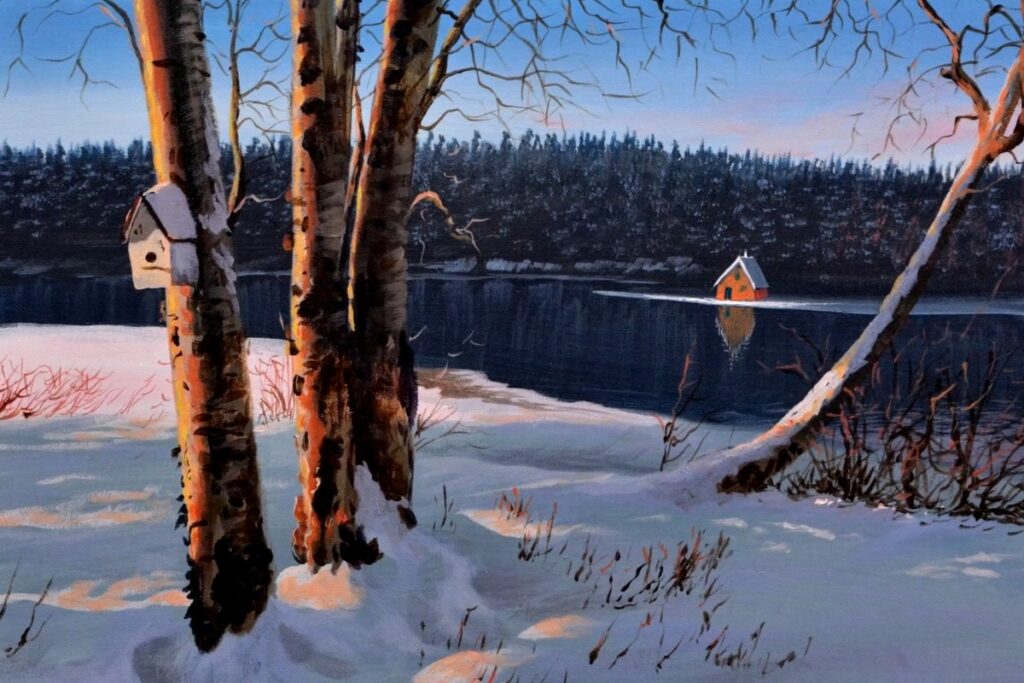
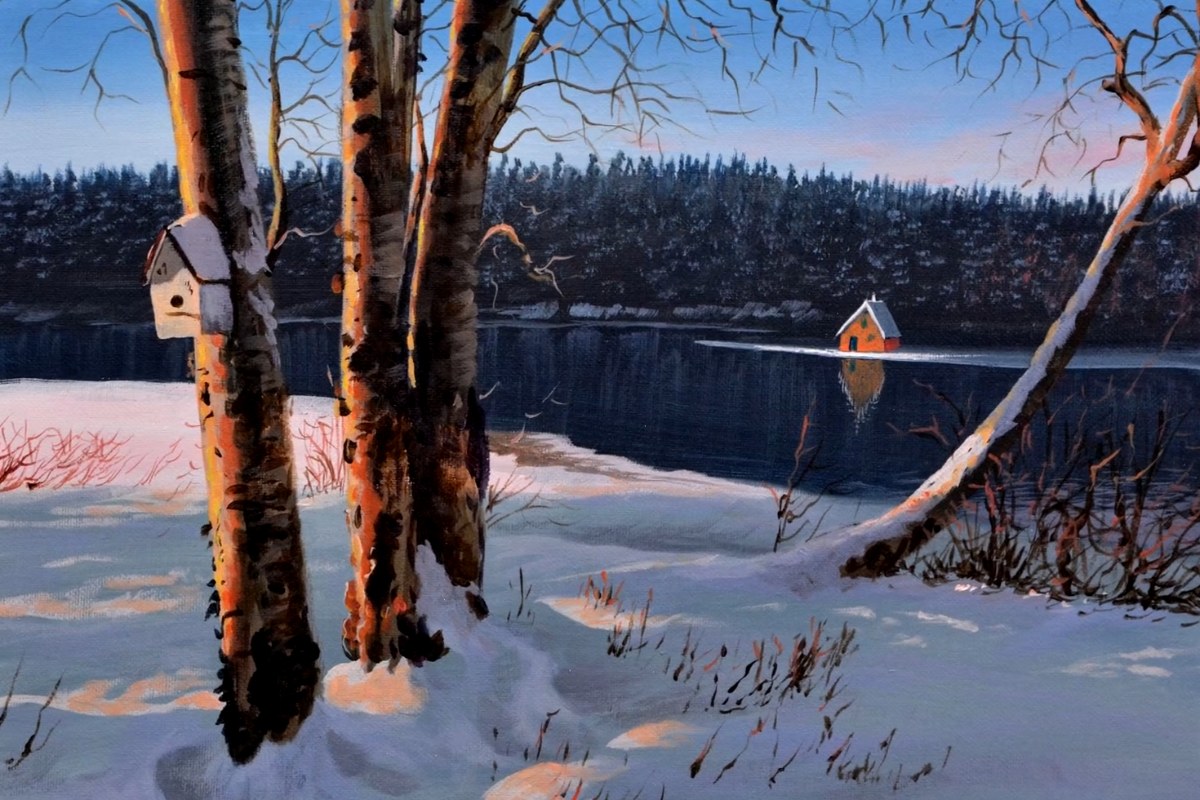
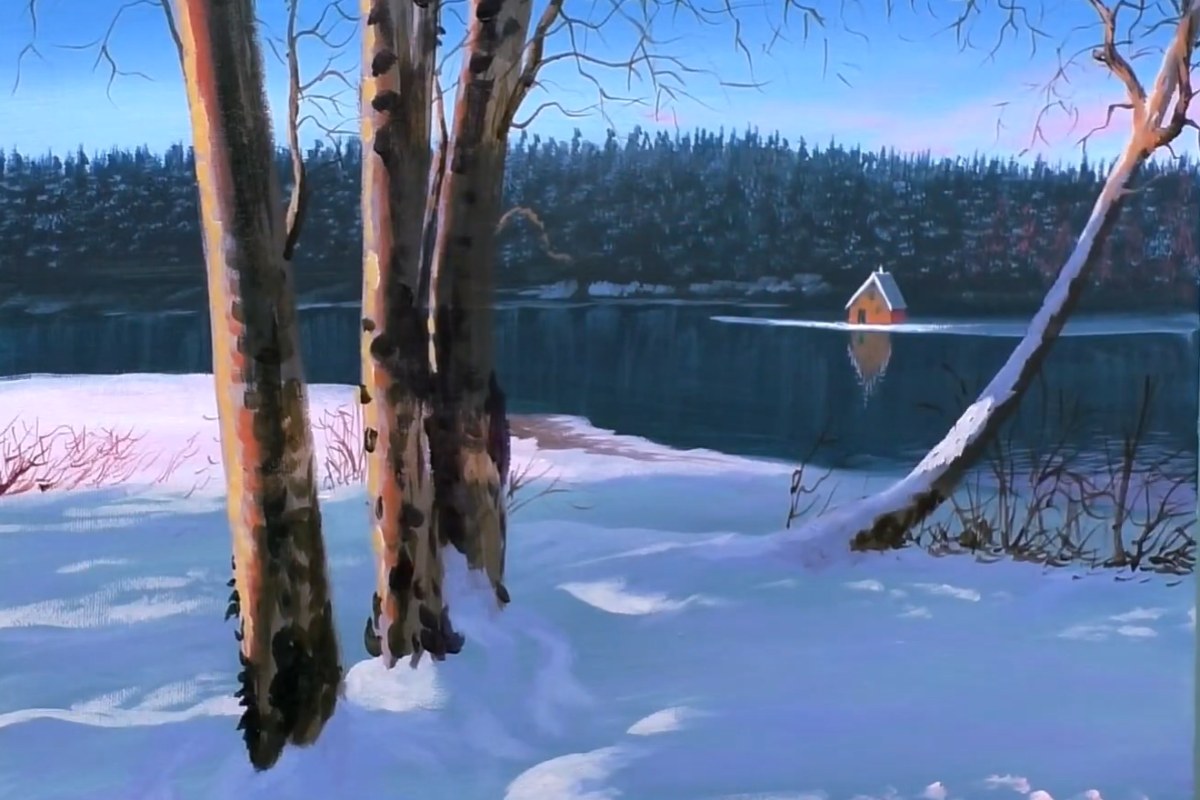
Birch trees are one of the easiest ways to make a winter painting feel instantly recognizable. Their pale trunks, dark bark marks and thin bare branches stand out against snow and a cold blue sky, and they don't need to be painted perfectly to look convincing. In this time-lapse, John Magne Lisondra (JMLisondra) paints a quiet snowy lakeside with a group of birches in the foreground, a small red cabin across the water and warm late-day light on the bark.
It's a good project for the weeks before the holidays: the finished scene works as wall art, as a card design or simply as a calm painting session on a cold afternoon.
Winter Birch Trees at a Glance
- Artist: John Magne Lisondra (JMLisondra)
- Medium: Acrylic paint
- Subject: Snowy lakeside with birch trees, a pine treeline and a small cabin
- Level: Beginner to intermediate (the artist describes it as useful for both beginners and experienced painters)
- Video: 9:19 time-lapse with background music
- Palette: A limited palette of five colors, including white
What You'll Need
These are the materials listed in the video description:
- Acrylic paints: Titanium White; Phthalo Blue (or Ultramarine / Primary Blue); Brilliant Red (or Primary Red / Cadmium Red); Medium Yellow (or Primary Yellow); Raw Umber (or Burnt Umber / Burnt Sienna)
- Flat nylon brushes: No. 12 and No. 8 with long handles, No. 7 and No. 3 with short handles
- Detail brush: No. 0 nylon liner or round brush (a No. 1, 00 or 000 also works)
- A canvas or canvas board, a palette and water
How the Painting Comes Together
There are no chapters in the video, so the times below are approximate points in the time-lapse where each stage is visible.
- Mark the horizon and shoreline (0:00–0:45). The artist starts on a white canvas with a few thin lines for the far shore and the edge of the snowy bank. That's all the drawing there is; the rest is built with paint.
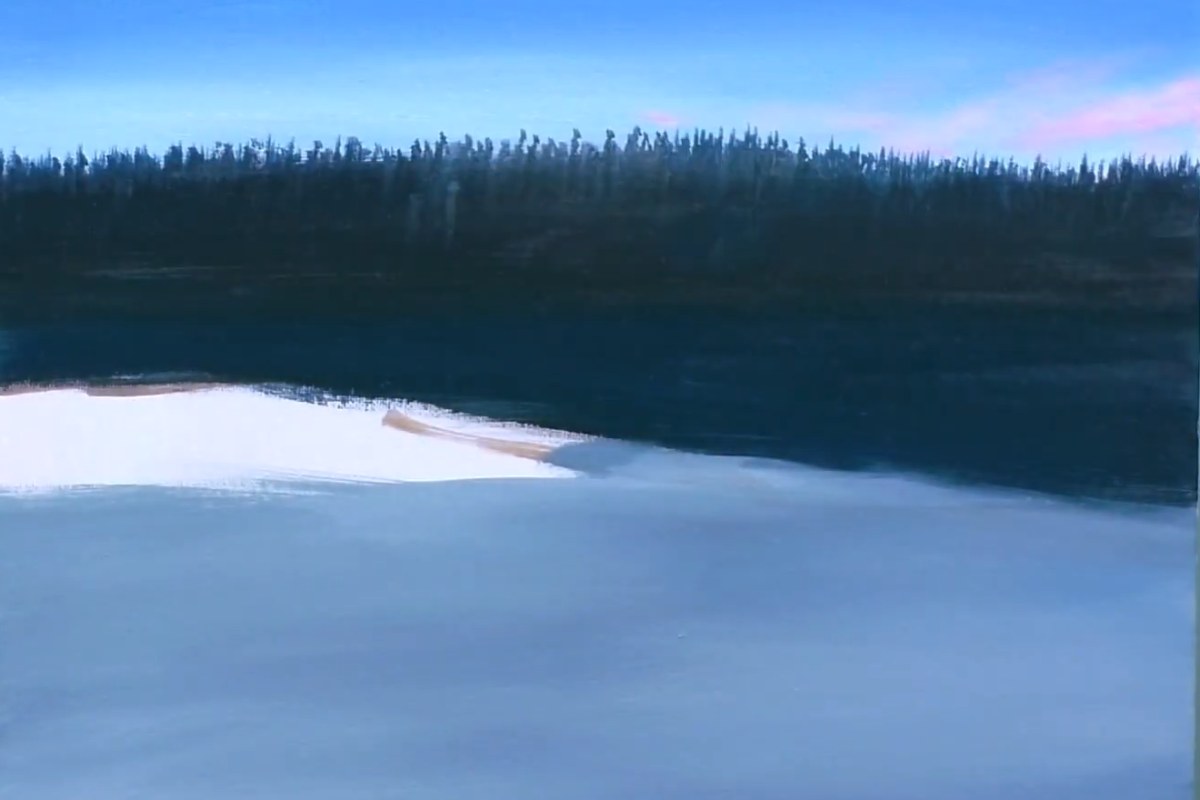
- Sky and distant forest (around 0:45). The sky goes from a clear blue at the top to a soft, light band with a touch of pink near the horizon. A dark, dense pine treeline is then painted straight across the far shore.
- Lake and snow (around 1:20–2:00). A deep blue-green strip becomes the lake. The snowy bank and the foreground are laid in with pale, cool blues, keeping the brightest white for the sunlit edge of the bank.
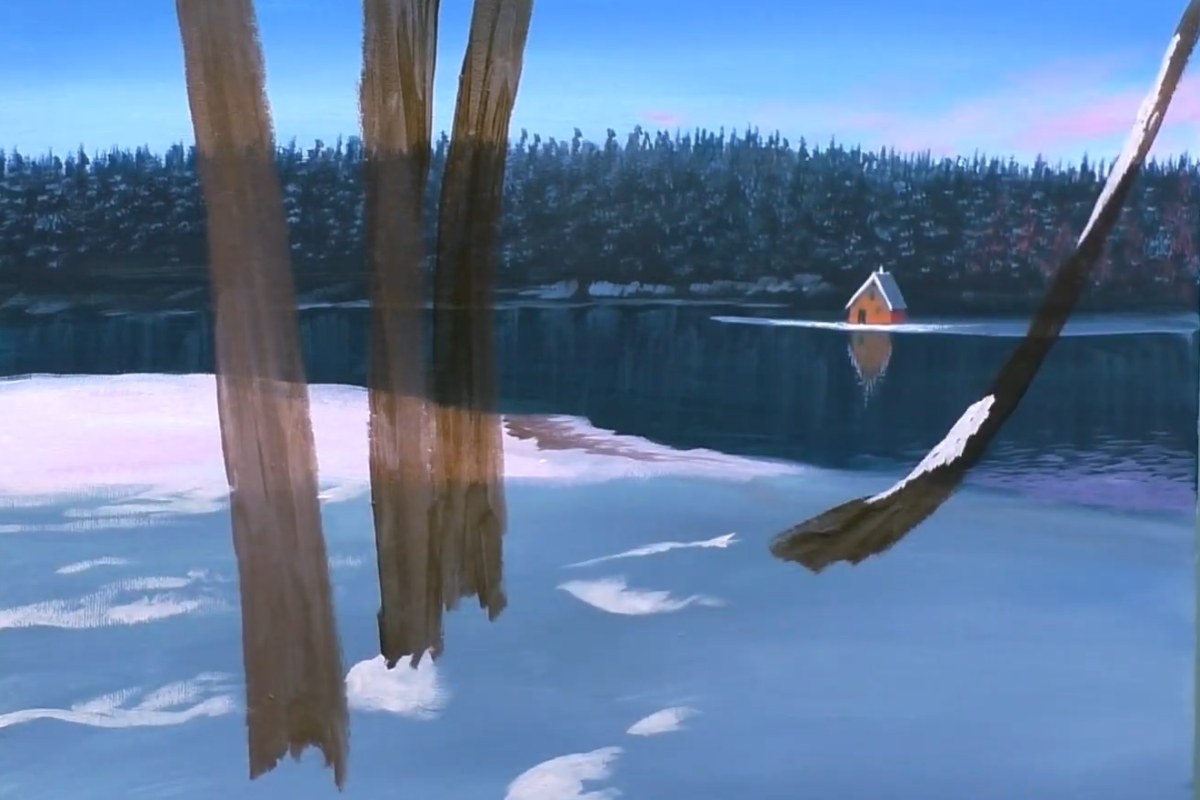
- The little cabin (around 2:30). A tiny red cabin with a white roof sits on the far shore, with a short reflection below it. It's small, but it gives the whole scene a focal point and a bit of warmth.
- Block in the birches (around 3:10–4:00). Three upright trunks and one long trunk leaning in from the right are painted in a thin, warm brown. At this stage they're just simple shapes; snow drifts and shadow shapes are added around their bases.
- Bark, branches and shrubs (around 4:30–6:15). The trunks get their typical dark bark marks, bare branches spread into the sky, and reddish shrubs appear along the shoreline and under the leaning tree.
- Final details (around 6:45 to the end). A small birdhouse is added to the left trunk, the light side of the trunks is warmed up, and the foreground gets snow mounds, shadows and thin dry grass stalks poking through the snow.
Tips for Better Results
- Paint the background first. Finishing the sky, forest and lake before the trees means you can paint the trunks right over them without cutting around anything.
- Snow is rarely pure white. Notice how most of the snow in this painting is a light blue or lavender. Save pure white for the spots where the light hits directly.
- Start birches in a mid-tone. The trunks begin as a soft brown, not white. The bark marks and the light on one side are what make them read as birches later.
- Use the liner brush for branches. Thin, slightly watered-down paint flows better for long branches and grass stalks.
- Keep the cabin tiny. A small warm shape against all that blue does more than a big, detailed building would.
Enjoy the Video Tutorial
Watch the full painting process below. Since it's a time-lapse, it helps to pause at each stage and compare it with your own canvas.

Source: Art of John Magne Lisondra (JMLisondra)
Frequently Asked Questions
Do I need a lot of paint colors for this?
No. The video description lists only five colors, including white, and gives alternatives for each one (for example Ultramarine instead of Phthalo Blue, or Burnt Sienna instead of Raw Umber). Every other shade in the painting is mixed from that small set.
Is a time-lapse good for learning?
It works well if you pause often. Each stage is easy to spot: sky and forest, lake and snow, trunks, bark and branches, and the final details. Paint one stage, then move on to the next part of the video.
More from John Magne Lisondra
Discover More Artistic Inspiration