
3 Acrylic Painting Ideas Flowers for Beginners

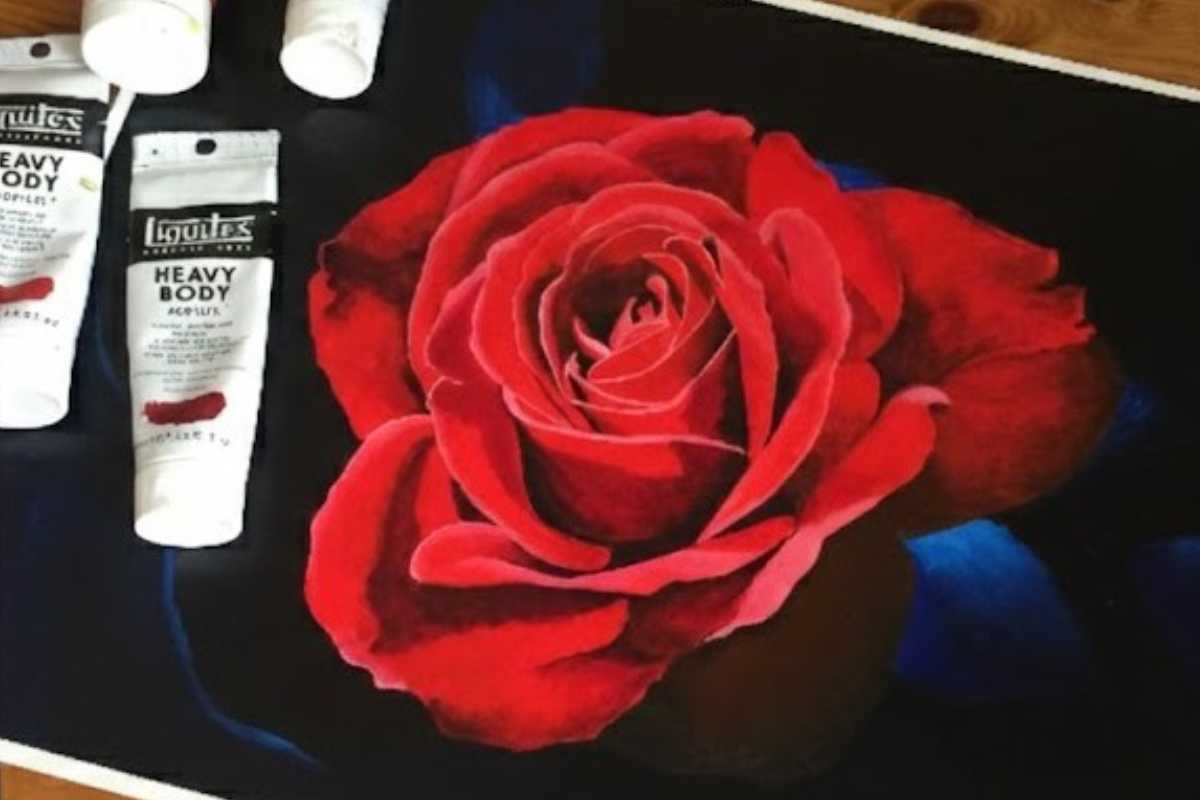
Looking for Acrylic Painting Ideas Flowers that feel fresh, doable, and gallery-worthy? This curated trio spotlights roses, peonies, and poppies—each a beautiful acrylic flower painting you can complete with simple tools.
We summarize what you’ll learn, who it’s for, and how to customize your palette. For step-by-step guidance, follow the original flower painting acrylic tutorials linked after every description.
Before You Start: Materials & Mindset
Keep setup simple so you can focus on brushwork and color: a limited palette, two or three brushes (round, filbert, liner), and medium-weight canvas or paper.
If you prefer easy flower painting acrylic projects, work alla prima (wet-on-wet) and limit blending to a few decisive passes. This helps your petals stay lively without turning muddy.
Beginners often search “flower painting acrylic easy”—the secret is to sketch big shapes, reserve highlights, and build contrast early.
Each tutorial below teaches a distinct approach to flower art painting acrylic so you can pick the technique that matches your comfort level.
1) Red Rose: Drama With Edges & Values
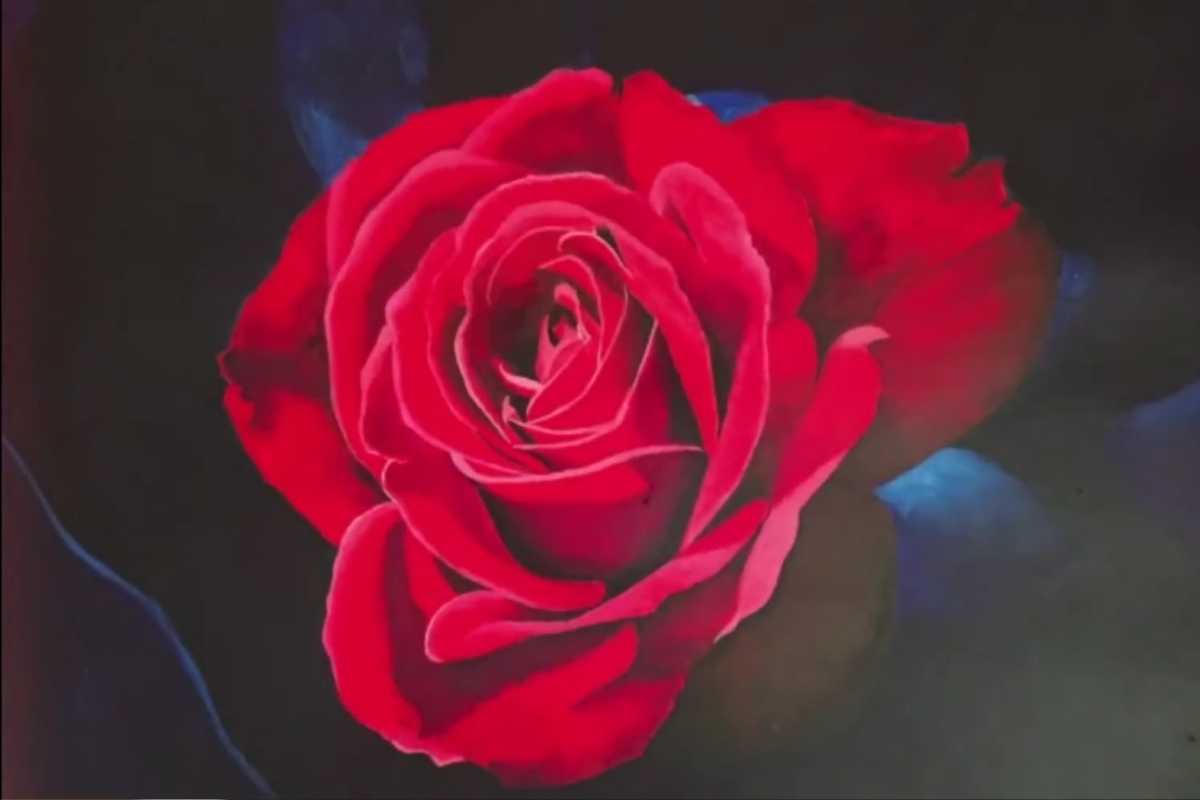
The rose tutorial focuses on value control—placing your darkest darks early so the bloom pops. You’ll practice crisp petal edges near the focal spiral, then soften outer petals for depth.
This approach turns a classic subject into a striking flower painting acrylic study that reads well both up close and from across a room.
Tips for success: map three reds (deep, mid, highlight) and avoid over-blending; let brush marks describe the curl of each petal. It’s a superb gateway if you want an acrylic flower painting tutorial that builds confidence with contrast.
Click here to see the tutorial
2) Peony: Soft Layers, Big Impact
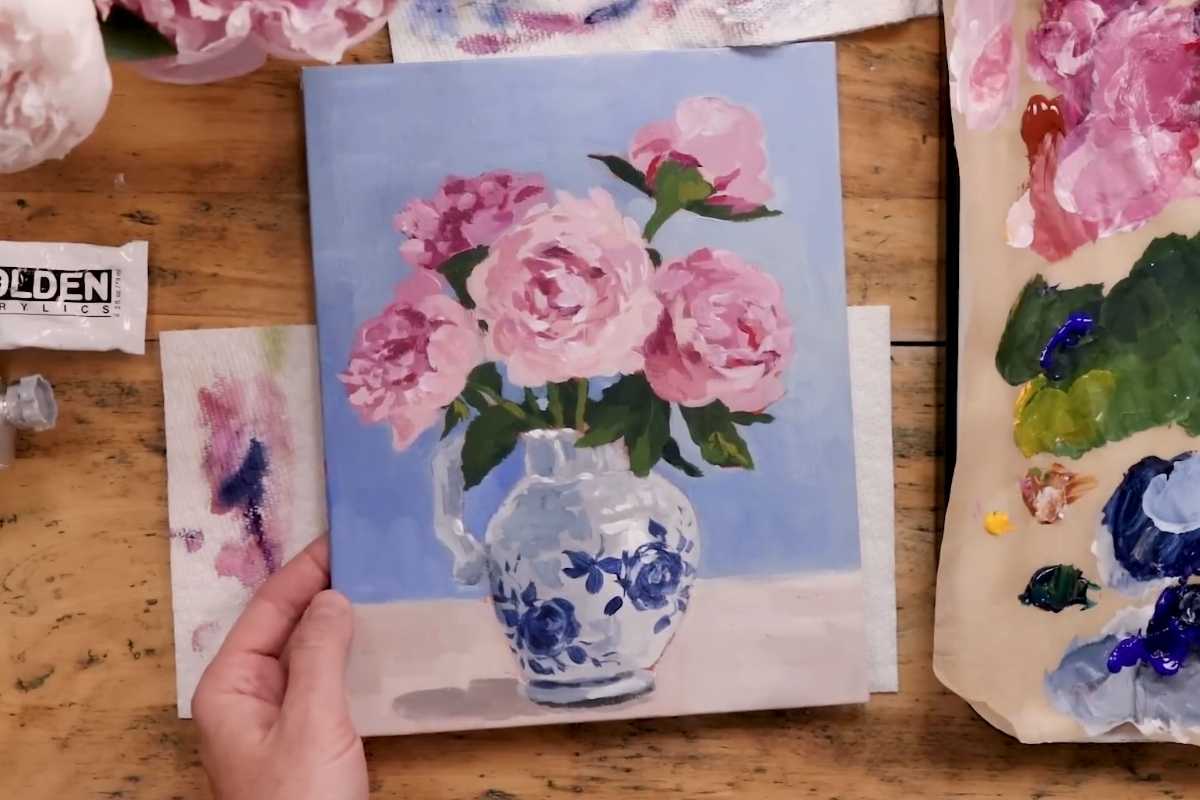
Peonies reward gentle layering. This tutorial emphasizes translucent passes and softened gradients to suggest delicate, overlapping petals.
You’ll learn how to vary edge quality—sharp accents at the center, feathered transitions at the perimeter—to keep the bloom airy rather than heavy.
Color strategy: play with warm-cool shifts inside the pinks (a hint of violet in shadows, coral in lights).
If your goal is easy flower painting acrylic with romantic results, this peony is ideal and sits squarely in beginner-friendly flower painting acrylic tutorials.
Click here to see the tutorial
3) Poppy: Bold Shapes, Graphic Color
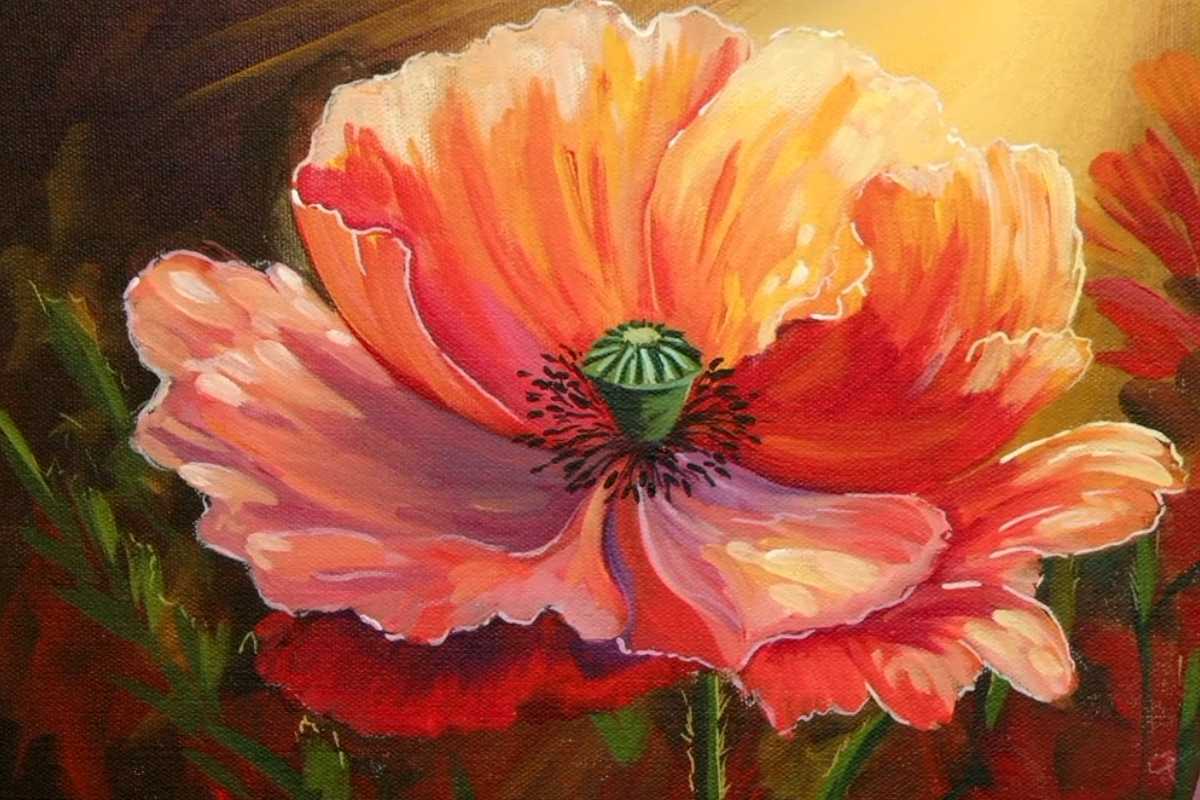
Poppies excel at statement-making silhouettes. This lesson focuses on confident, graphic shapes and a limited palette so your reds and oranges sing against neutral backgrounds.
You’ll practice negative painting around petals to carve crisp outlines and keep the composition modern.
Try a textured underpainting (dry brush or scumble) for visual interest. If you’ve been hunting for modern yet approachable acrylic flower painting ideas, the poppy offers a fast, high-impact win that’s perfect for gifts or gallery walls.
Click here to see the tutorial
Composition & Color: Make It Your Own

Swap backgrounds to change the mood: charcoal gray for drama, warm beige for softness, or muted teal for contemporary contrast.
Consider triadic palettes (red–yellow–blue) for energy or analogous schemes (rose–peony pinks) for calm. These choices keep your Acrylic Painting Ideas Flowers flexible and personal.
Scale matters: 8×10 in. feels intimate; 16×20 in. turns your acrylic flower painting into a statement piece. Try diptychs—rose + peony—or a triptych with the poppy to build a mini series that looks curated and cohesive.
Common Pitfalls & Quick Fixes
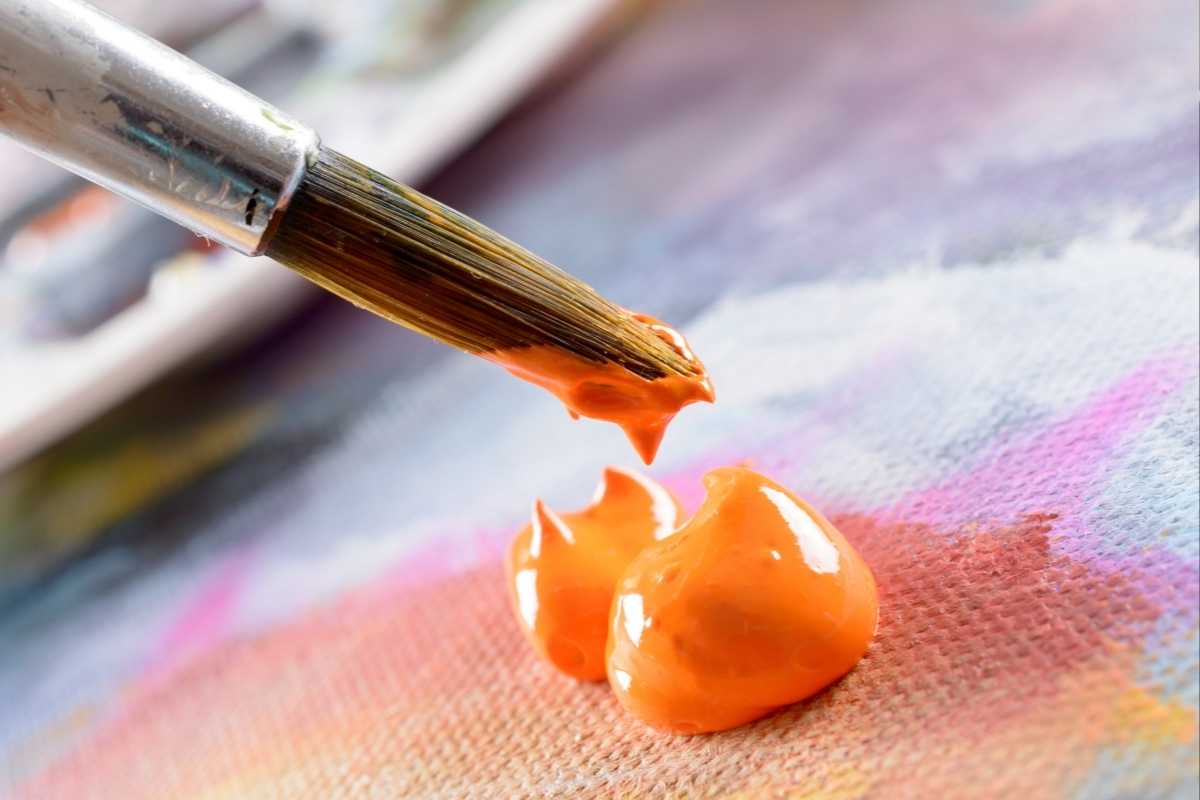
Muddiness comes from too many passes. Load paint generously, place, and leave it. If edges feel harsh, soften just the transition zone—don’t blur the whole petal.
When highlights look chalky, glaze a thin, warm tone over them to reintroduce luminosity without losing structure.
Remember: these are curated summaries; detailed steps, color mixes, and brush sequences belong to the original artists. Follow their acrylic flower painting tutorial pages for precise guidance.
Keep Painting
Whether you prioritize speed, softness, or bold shape design, these three flower painting acrylic projects cover the essentials. Explore more modern, easy flower painting acrylic ideas across the site and build a series that reflects your voice.
Save the links above, revisit the flower painting acrylic tutorials, and keep experimenting until your florals bloom with confidence.
Discover More Artistic Inspiration