
3 Dot Mandala Patterns Simple For Beginners


Ready to try Dot Mandala Patterns Simple without feeling overwhelmed? This beginner-friendly roundup curates three clear video lessons—paper swirl, easy dot ring, and a classic beginner disc—so you can focus on rhythm, spacing, and color.
Think of it as a gentle bridge into Dot Mandala Art For Beginners: short sessions, minimal tools, and satisfying results that look polished on cards, notebooks, or framed mini prints.
1) Swirl Design on Paper (Step-by-Step)
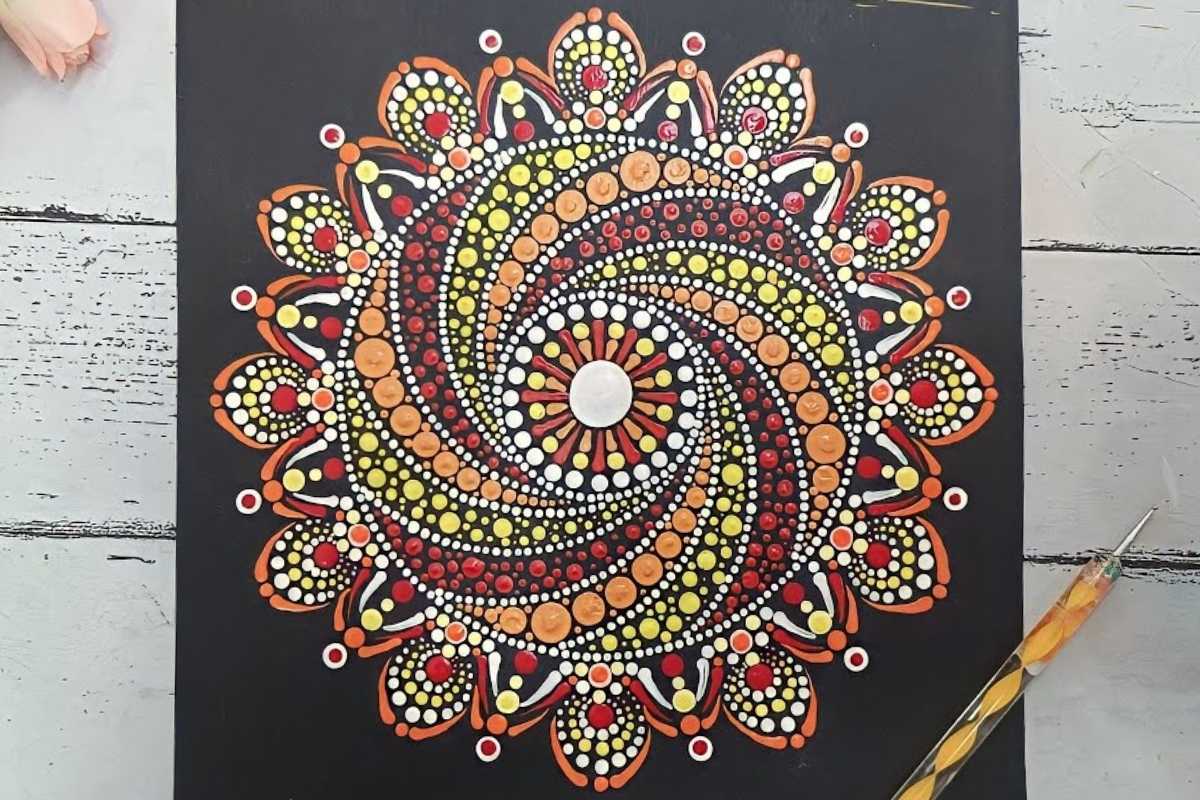
This tutorial turns a simple spiral into a graceful showcase of dots. You’ll see how steady pressure and measured spacing create hypnotic flow—perfect for practicing control on paper before moving to canvas or wood.
It’s a great first study in Mandala Art Dot Painting, where contrast and symmetry make the design pop.
Keep your palette tight (1–3 colors plus white) and rotate the page, not your hand. This is where clean Dot Mandala Art Design starts: light pencil guides, aligned dots, and patient layering.
Click here to view the tutorial
2) Easy Pattern for First-Timers (Rings & Petals)
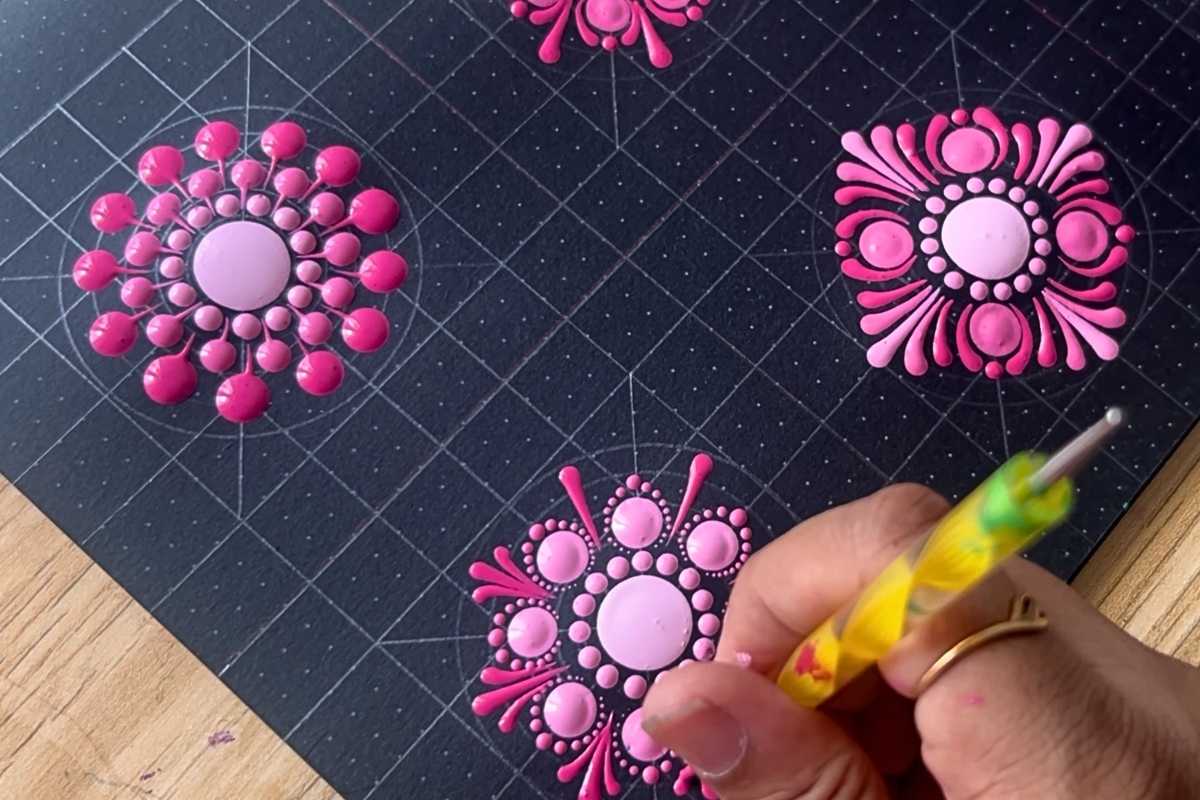
Begin with a center dot, then build even rings and simple petal shapes. This lesson focuses on repeatable motions that deliver tidy geometry—ideal for Dot Mandalas For Beginners who want wins without complex tools.
You’ll learn when to refresh paint, how to avoid tails, and why test dots matter.
Use a small ruler or compass for guides, then remove marks after the paint dries. Consider this your template for Easy Dot Mandala Patterns you can reuse on coasters, bookmarks, or gift tags.
Click here to view the tutorial
3) Classic Beginner Disc (Clean Rings, Bold Centers)
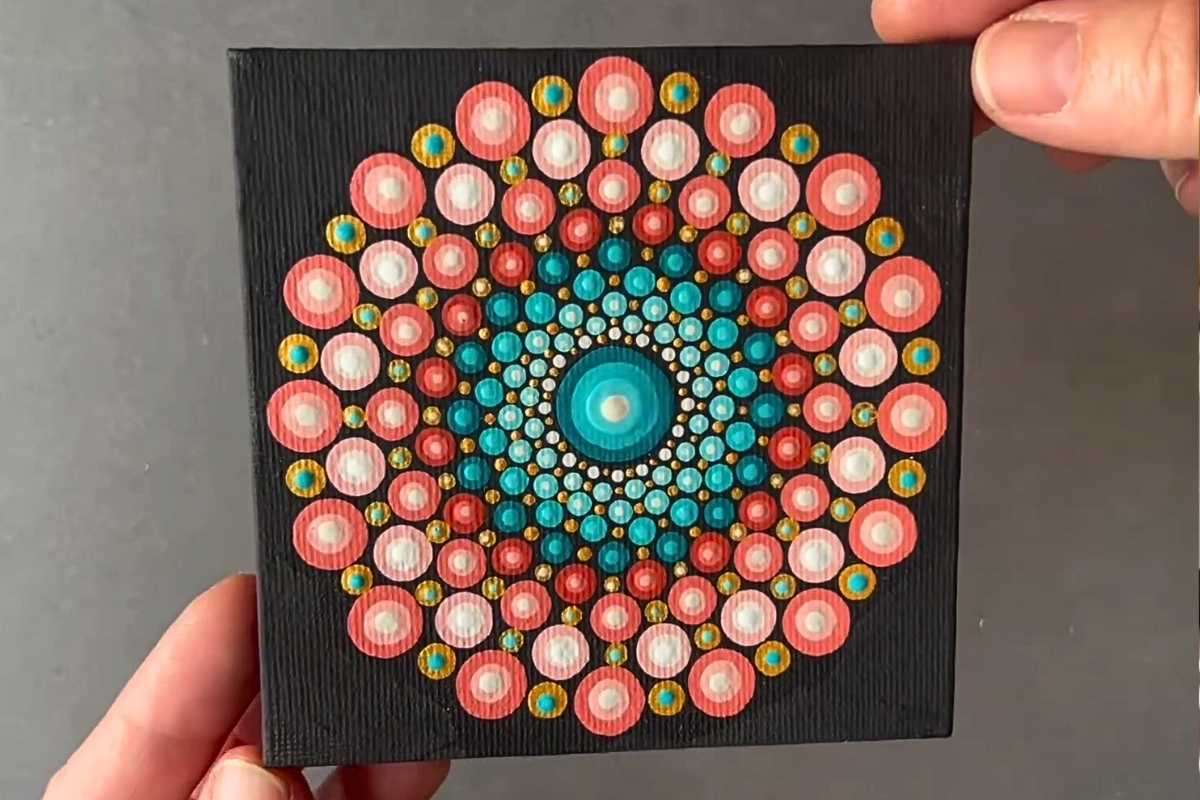
Build confidence with a straightforward disc layout—center, rings, accents. The demonstration emphasizes dot size progression and spacing, the backbone of neat Dot Mandala Designs. It’s a fast path to gifts that look store-bought but keep your maker’s touch.
Try complementary color pairs and a metallic highlight for the inner ring. Save this approach as a “default” for future Dot Painting Mandala Patterns when you need a quick, reliable result.
Click here to view the tutorial
Materials & Setup (Keep It Simple)
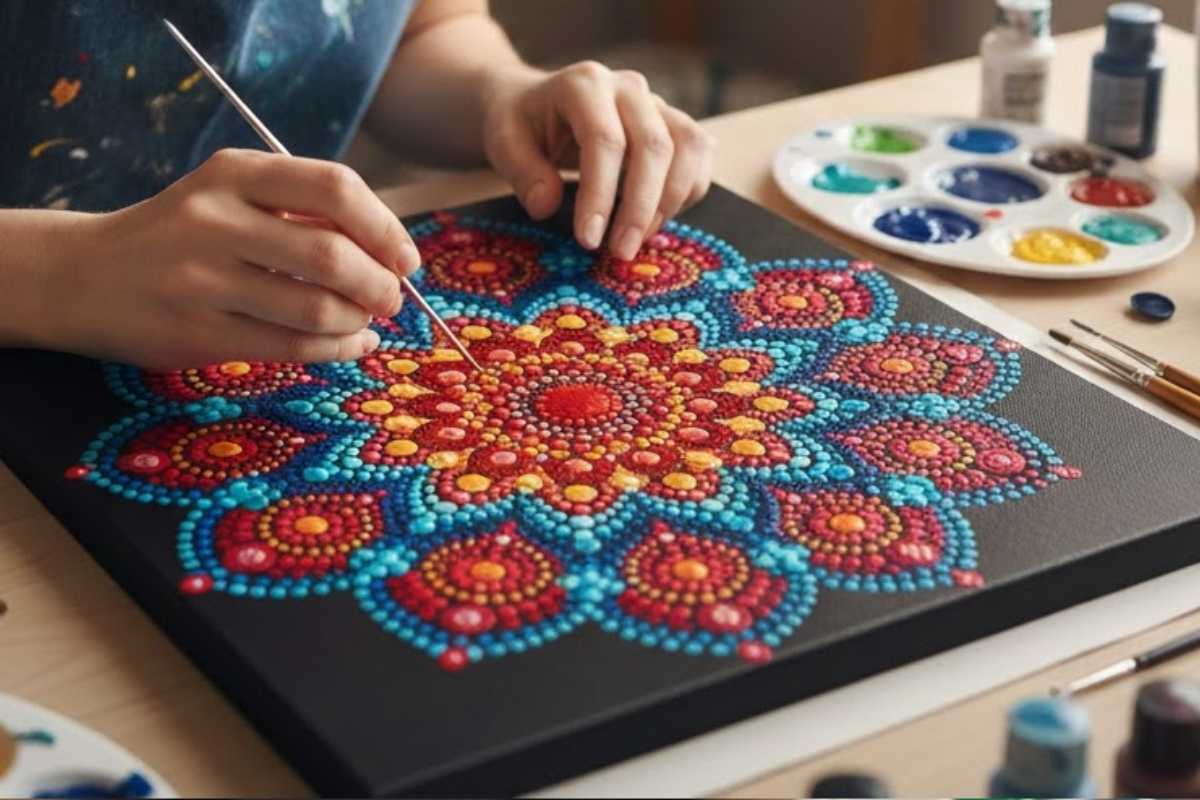
Substrate: cardstock, watercolor paper, or a primed coaster.
Tools: dotting tools or anything round (stylus, dowel, blunt pencil).
Paint: fluid acrylics thinned to yogurt consistency. With this micro kit, Dot Mandala Art For Beginners becomes a calm, repeatable practice you can fit into 20–30 minute sessions.
Tip: Decant small amounts of paint and test on scrap. Consistency is everything—too thick leaves peaks; too thin floods guides. This foundation supports all future Mandala Dot Painting Ideas.
Technique Checkpoints
Pressure: same tool, same pressure = same dot. For fade effects, lift halfway through the press.
Spacing: use light pencil rings to place dots evenly.
Cleaning: wipe tools between colors to avoid halos. These habits make Dot Mandala Patterns Simple look precise.
Practice ladders: five dots from large to small, five back to large. This tiny drill upgrades your accuracy for all Dot Mandala Designs.
Where These Tutorials Fit

Each video is by its original creator and focuses on principles rather than crafters’ secrets. We highlight what you’ll learn—layout logic, dot control, and rhythm—without reproducing exact steps.
Watch the creators for specific measurements and sequences; they’re the authority behind these Dot Mandala Pattern styles.
Use the three lessons as a loop: swirl for flow, ring pattern for spacing, classic disc for finish. After a week, remix elements into your own Dot Mandala Art Design.
Quick Project Ideas
Coaster sets, greeting cards, notebook covers, mini wall tiles. Keep a “gift drawer” of finished pieces and rotate palettes by season. This turns Mandala Dot Painting Ideas into ready-to-share art.
When in doubt, small and simple wins. A 10 cm disc with clean rings beats an ambitious layout you never finish—proof that Dot Mandala Patterns Simple can still look gallery-worthy.
Discover More Artistic Inspiration