
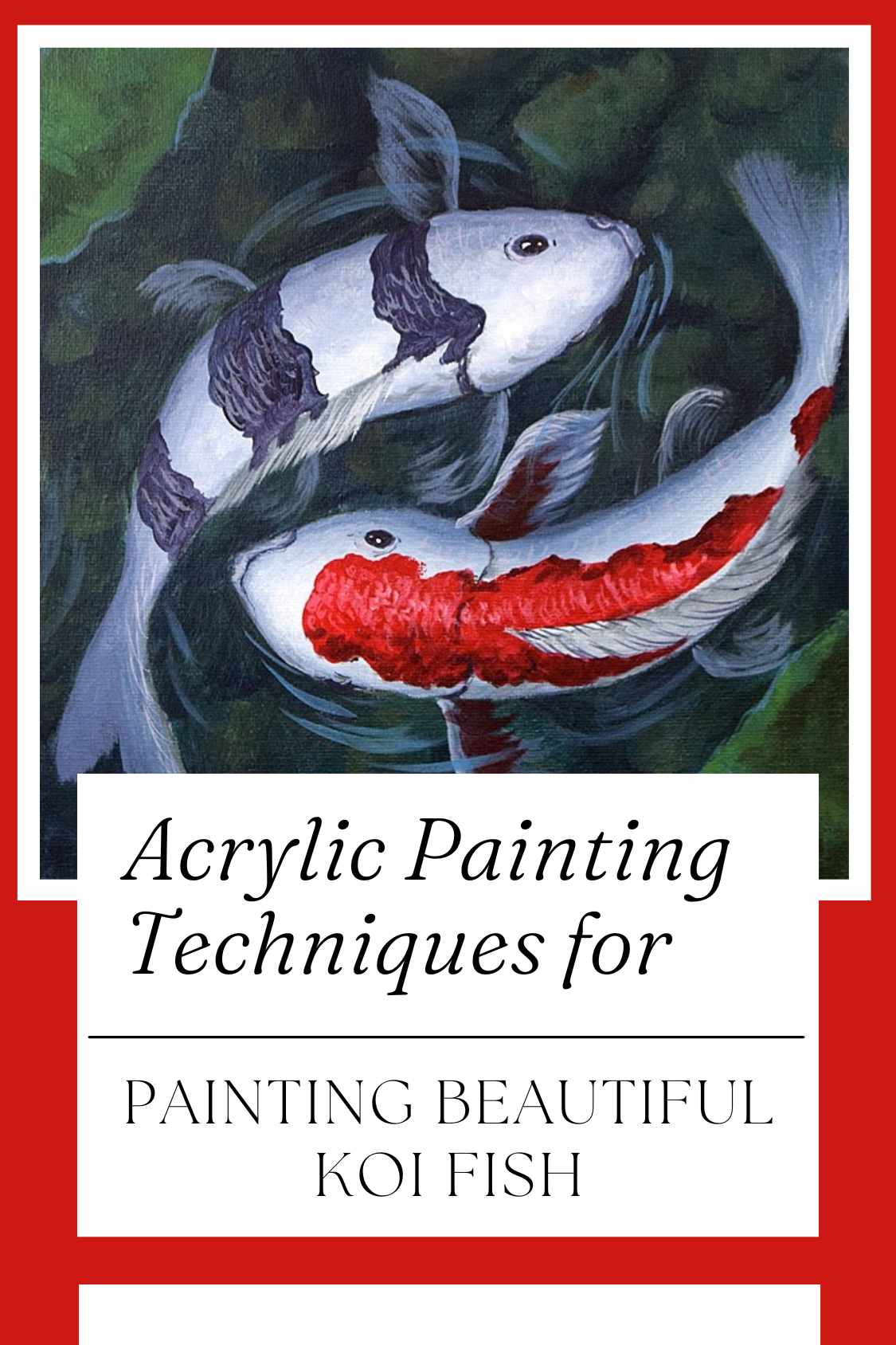
Acrylic Painting Techniques for Painting Beautiful Koi Fish

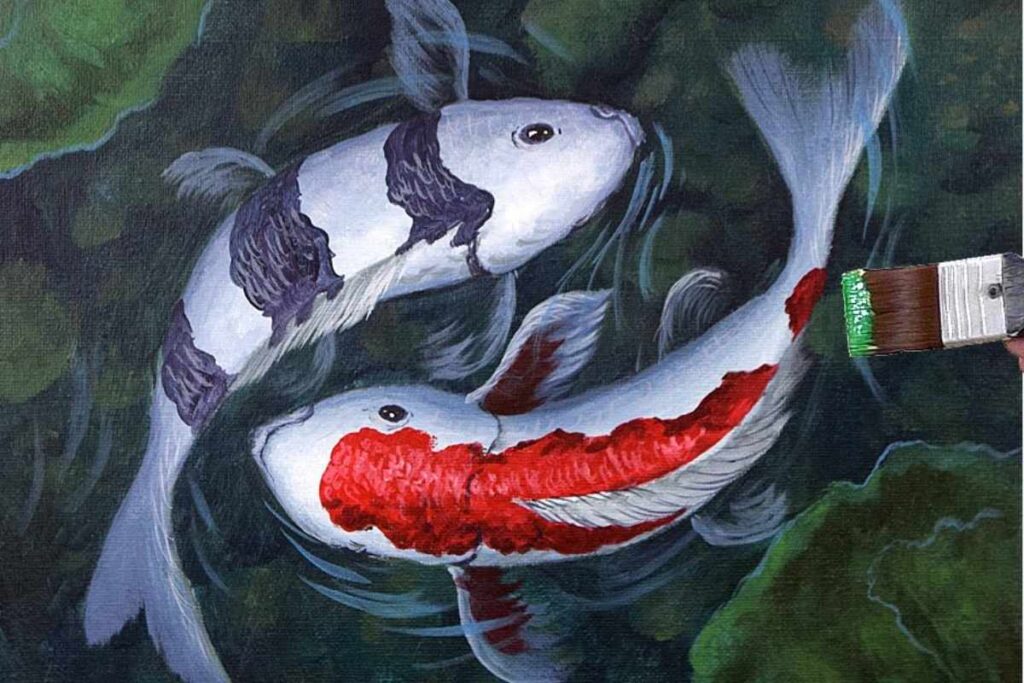
Painting Koi fish with acrylics offers a wonderful opportunity to capture the grace and beauty of these iconic aquatic creatures.
Their vibrant colors and flowing movements make them a popular subject for artists looking to create dynamic, realistic, or even abstract works of art.
In this tutorial, you'll learn the essentials of painting Koi using acrylic paints, from choosing the right colors to mastering blending techniques and adding intricate details to bring your Koi to life.
The Fascination with Koi Fish in Art
Koi fish have deep symbolic meanings across different cultures. They represent strength, perseverance, and good fortune.
In art, they are often depicted swimming gracefully through water, showcasing their elegant movement and the contrast of their vivid hues against the calm background of a pond or water.
This makes Koi fish a perfect subject for any artist looking to express movement, color, and depth on a canvas.
Painting Koi in acrylics gives artists the opportunity to experiment with layering, blending, and adding intricate details. The medium's versatility makes it possible to create both bold, vibrant depictions as well as softer, more subdued representations.
Choosing the Right Colors and Brushes
One of the first steps in painting Koi is selecting the right colors. Koi fish come in a variety of vibrant hues, including oranges, reds, whites, yellows, and blacks.
Their unique color patterns, often with patches or gradients, make them a striking subject to paint.
Color Palette for Koi Fish
A typical Koi fish will have a mixture of these colors:
Reds and oranges for the body of the fish.
Whites and yellows to highlight certain areas or create contrast.
Blacks for the markings or as accent colors.
Shades of blue, green, and turquoise for the water around the fish.
Acrylic paints are fantastic for creating bold, saturated colors, and their quick-drying nature allows you to layer without long waiting periods.
Brush Selection
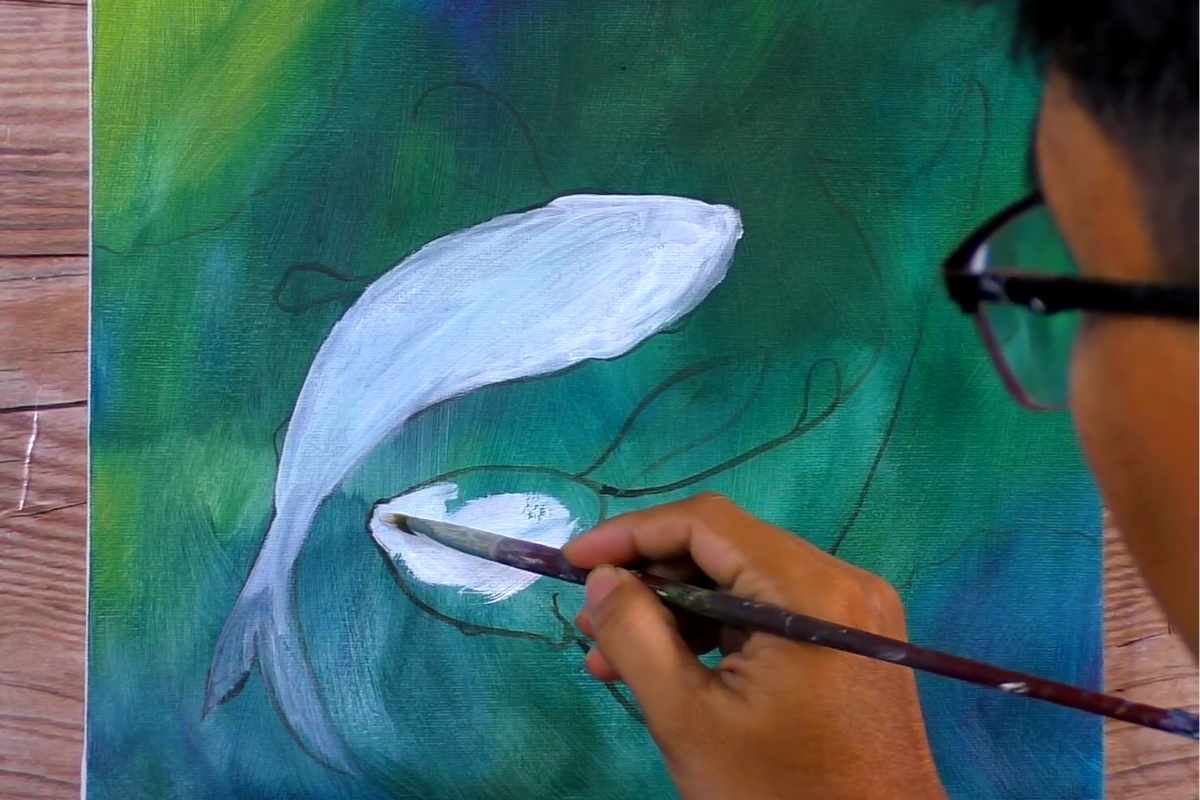
Choosing the right brushes is essential for achieving the textures and details needed to capture the essence of a Koi fish. Round brushes are perfect for adding details to the scales and the fins, while flat brushes are ideal for creating the smooth, fluid background or the body of the fish.
Importance of Brushes for Detail and Texture
A fine detail brush will help you capture the intricate scales of the Koi or the subtle gradations of color that define their markings.
Larger brushes can be used for painting the water and creating smooth transitions between colors, mimicking the gentle flow and movement of the water.
Mastering Blending and Depth
One of the key challenges in painting Koi fish is capturing the depth and movement that make them appear alive.
Acrylics are known for their ability to be layered, allowing you to create gradients and depth in the painting. This layering technique is crucial when painting the flowing fins and soft, reflective surface of the water.
Layering Techniques for Realism
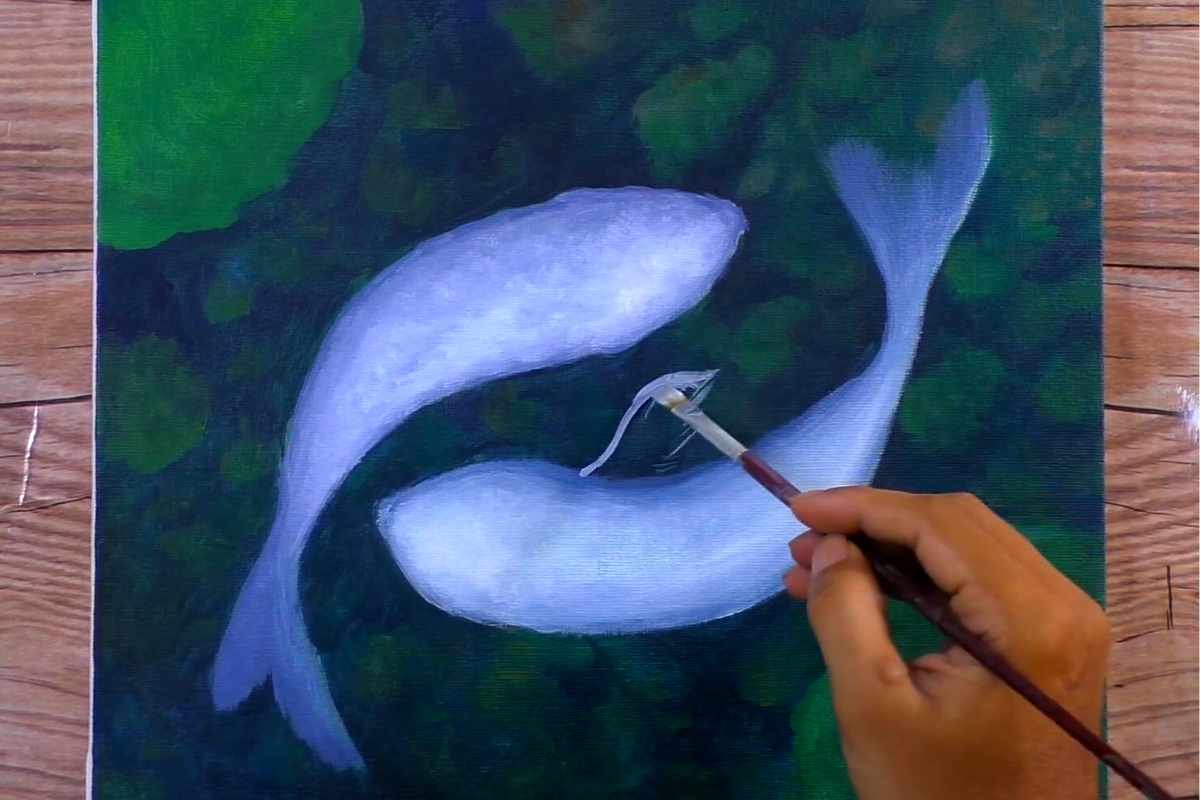
When you start painting the Koi, begin by working on the base layer of the fish, painting in broad strokes to define the body shape and colors.
Once the base layer is dry, you can add additional layers of color to create depth, using subtle gradations to mimic the way light interacts with the fish's skin. Focus on the areas where the light hits and the shadows cast by the body and fins.
The beauty of acrylics lies in their ability to dry quickly, allowing you to build up color and texture without much wait time. By layering different hues, you can create the gradients that make the Koi fish appear more realistic and three-dimensional.
Blending Water and Background
Creating the water in which the Koi swims is equally important for enhancing the realism of the painting. The wet-on-wet technique works beautifully for painting water.
By using blue, green, and turquoise tones, you can mimic the reflective quality of water. Gently blend the edges of the Koi with the background to give the impression that the fish is swimming in a living, dynamic environment.
To capture the movement of the water around the fish, use fluid, sweeping brushstrokes to suggest ripples or swirling motion.
Allow the edges of the water to fade into softer hues, creating the illusion of depth as the Koi appears to move through the scene.
Adding Intricate Details
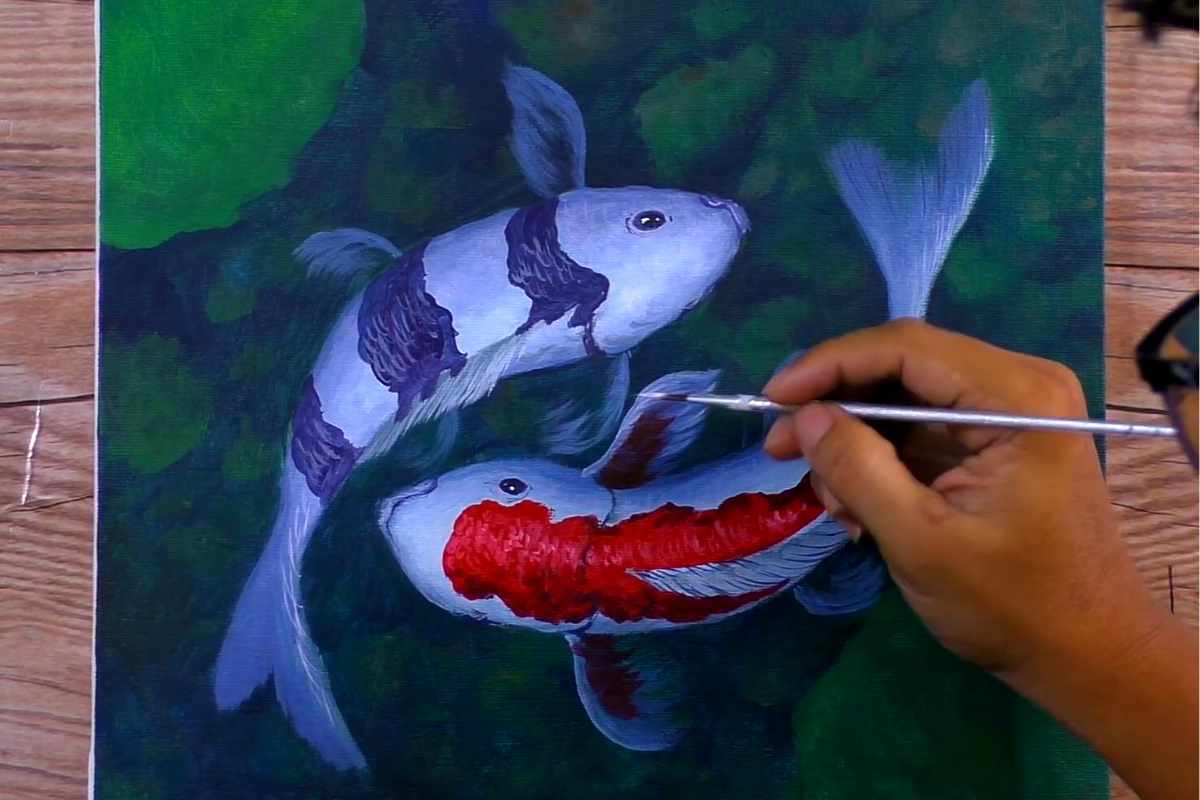
The final touches to your Koi painting will involve adding fine details that bring the fish to life. The scales of the fish, the reflective spots on the fins, and the gentle texture of the water all contribute to a vibrant, lifelike painting.
Highlighting the Fish
Use a lighter color, such as white or light yellow, to add highlights to areas where the light hits the Koi’s body. The contrast between light and dark is essential for creating the shine on the fish’s scales, and it adds to the realistic appearance of the painting.
You can also paint the eyes of the Koi with a fine brush, making sure to add a highlight to the pupils to create a lifelike shine. A small dot of white can make the eyes appear bright and expressive, which is a defining feature of the Koi.
Details in the Water
The ripples in the water can be created with subtle brushstrokes using white or light blue to add reflective highlights.
To finish the water background, gently blend these areas to mimic the way the light reflects off the surface of the water, making the whole scene look more integrated and dynamic.
Why Acrylics Are Perfect for Painting Koi
Acrylic paints offer several advantages that make them perfect for painting Koi fish. Their versatility, quick drying time, and ability to be layered make them ideal for creating both the vibrant colors of the fish and the dynamic water background.
Acrylics allow you to build up texture in both the fish’s body and the water, adding depth to the entire painting.
Additionally, acrylic paints can be used for fine details as well as broad strokes, making them suitable for all aspects of Koi fish painting—from the fluid motion of the fish to the soft, reflective water surrounding it.
Conclusion
Painting Koi in acrylics can be an incredibly rewarding experience for artists of all levels. With the right tools, techniques, and guidance, you can capture the graceful beauty of these stunning aquatic creatures.
Through layering, blending, and focusing on intricate details, you can bring your Koi fish painting to life on the canvas.
Whether you’re a beginner exploring the world of acrylics or a seasoned artist looking to refine your technique, this Koi fish painting tutorial provides valuable insights into creating depth, realism, and the vibrant energy these iconic creatures exude.
So, gather your supplies, embrace the process, and enjoy the journey of painting these majestic fish!
We thank Art of John Magne Lisondra for the images.
Enjoy The Video Tutorial

Source: Art of John Magne Lisondra
Did you find this post useful or inspiring? Save THIS PIN to your Art Board on Pinterest! 😊
Discover More Artistic Inspiration