
How to Illustrate People in Watercolor: Easy Tips for Beginners


Illustrating people with watercolor can seem like a daunting task, but it doesn’t have to be! With the right techniques and a relaxed approach, you can bring human figures to life in a way that feels natural and fun. This tutorial is by Shayda Campbell.
Whether you're a beginner or looking to improve your skills, this tutorial will show you how to illustrate human figures in a loose, playful style using watercolor and colored pencils.
In this beginner-friendly guide, we will explore how to simplify the form of the human body, capture expressive details, and incorporate textures through color and line work.
By focusing on key principles such as foreshortening, movement, and personality, you’ll be able to create engaging and dynamic illustrations without feeling overwhelmed.
Start with a Loose Approach
Embrace Playfulness in Your Sketches
When it comes to painting people, one of the most important things to remember is not to get too caught up in perfection. Watercolor works best when it’s allowed to flow freely, especially when capturing the essence of human figures.
Rather than obsessing over every small detail, allow yourself to draw loosely. This gives the figure a natural, organic feel that makes it more lifelike.
Start by sketching out basic shapes to form the structure of the person you want to illustrate. These can include simple circles, ovals, and lines for the head, body, and limbs.
Once you have these basic guidelines, use watercolor to loosely define the form. This technique helps create fluidity and keeps the figure feeling dynamic rather than stiff.
Focus on Simplifying the Human Body
A common challenge for beginners is trying to capture every tiny detail of the human body. But simplicity is key to creating successful watercolor portraits.
Focus on the overall shape and proportions of the figure, not the fine lines. For example, rather than attempting to perfectly outline each limb or facial feature, think about the silhouette of the body. Use bold strokes to suggest the figure's shape, and keep the overall structure simple yet expressive.
You don’t need to capture every wrinkle or fold in clothing; instead, focus on the movement and pose of the person. This adds life to your painting without overwhelming you with complexity.
 Shayda Campbell (@shaydacampbell)
Experiment with Different Approaches to References
Use Yourself as a Model
One of the most effective ways to improve your illustration skills is to use yourself as a model. Stand in front of a mirror, strike a pose, and observe your body from different angles. This exercise helps you get familiar with how the body moves and how light and shadow play on it.
As you sketch, focus on gesture and expression. You don’t need to replicate your reflection exactly; instead, think about how you can express the emotion or movement in your pose.
This can be a great starting point for more complex compositions, helping you develop a deeper understanding of the human form.
Draw from Reference Images
While drawing from life is an excellent practice, using reference images is also a valuable tool. You can find inspiration in magazines, online resources, or even personal photos.
Reference images allow you to study the body’s anatomy, clothing, and various poses more closely. They also give you the flexibility to work at your own pace, especially when you’re focusing on specific aspects like hands, faces, or footwear.
When using references, try to think beyond the photo and focus on what’s important to your illustration. What is the main action or feeling you want to convey? This focus will help you simplify the details and make your illustration more dynamic.
Mastering Foreshortening and Movement
Understanding Foreshortening
One challenge many artists face when drawing figures is foreshortening—the technique of depicting an object or figure in perspective to show depth.
Foreshortening is crucial when you’re illustrating people in dynamic poses, such as reaching out or sitting down. The key to mastering foreshortening is breaking the human body into simple shapes and using perspective lines to exaggerate depth.
To practice foreshortening, start with basic shapes like cubes and cylinders, then imagine how these shapes would change if viewed from a different angle. By doing this, you can begin to understand how to portray parts of the body that are closer or further away from the viewer’s eye.
Capturing Movement in Your Figures
Human figures are full of movement and energy, and the goal in your illustrations should be to capture that vitality. When illustrating people, try to focus on the overall flow of the body, rather than rigidly outlining every detail. This is where gestural drawing comes into play.
When you sketch, think about how the person is positioned in space. Are they walking, running, or sitting? Use loose lines to capture the direction of their movements. This technique adds a sense of fluidity and rhythm to your work, making it feel more alive.
 Shayda Campbell (@shaydacampbell)
Adding Personality with Clothing and Textures
Bring Clothing to Life
A great way to add personality and detail to your illustration is through the clothing your subject wears. In watercolor, fabric textures and folds are easier to represent than you might think.
Focus on the general shape of the clothing and then add layers of watercolor to suggest the texture of different fabrics, like wool, denim, or silk.
Use different shades and tonal values in your watercolor to give the fabric a natural flow and feel. For example, when painting a shirt, allow the colors to blend and run into each other to represent wrinkles or folds.
If you’re illustrating pants, use darker colors where the fabric bends or gathers, and lighter shades where it stretches out.
Add Expressive Details
The small details can bring your figure to life and reveal their personality. Whether it’s a quirky hat, a unique bag, or a distinctive hairstyle, these details help viewers connect with the character you’re illustrating.
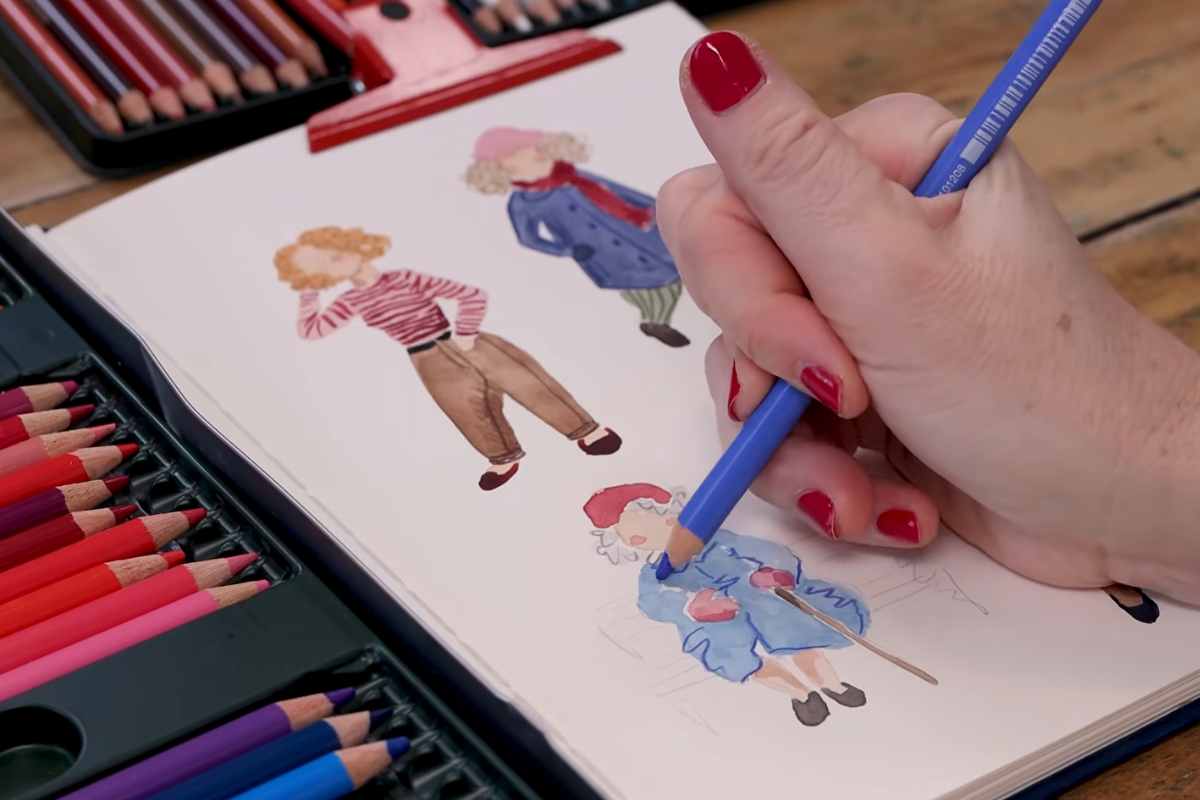
Use colored pencils for fine lines and small details like facial features, hair texture, or accessories. This combination of watercolor and colored pencil creates a beautiful contrast and adds a refined touch to your work.
Experiment with Color and Line Work
Watercolor is a versatile medium that allows you to experiment with both color and line. You can use vibrant, bold colors to evoke emotion or choose softer tones for a more subtle effect. The key is to use color thoughtfully to highlight specific areas and create a sense of depth.
Line work can also enhance the expression and movement of your figure. Try using a combination of thick and thin lines to emphasize certain parts of the body or clothing, creating a sense of dimension and flow.
 Shayda Campbell (@shaydacampbell)
Conclusion
Illustrating people with watercolor can be incredibly rewarding, and with the right techniques, it doesn’t have to be intimidating. By focusing on simplifying forms, expressing movement, and adding personality through details, you’ll be able to create human figures that feel alive and full of character.
Whether you're drawing from real-life references, photo references, or experimenting with foreshortening, each step you take will bring you closer to mastering the art of illustrating people with watercolor.
So grab your brushes, sketch out your figures, and start adding your own personal touch to each piece. With practice, you’ll develop a unique and expressive style that brings your illustrations to life!
We thank Shayda Campbell for the images.
Enjoy The Video Tutorial

Source: Shayda Campbell
Did you find this post useful or inspiring? Save THIS PIN to your Art Board on Pinterest! 😊

Discover More Artistic Inspiration