
Lonely Tree and Crashing Waves: Acrylic Landscape Guide

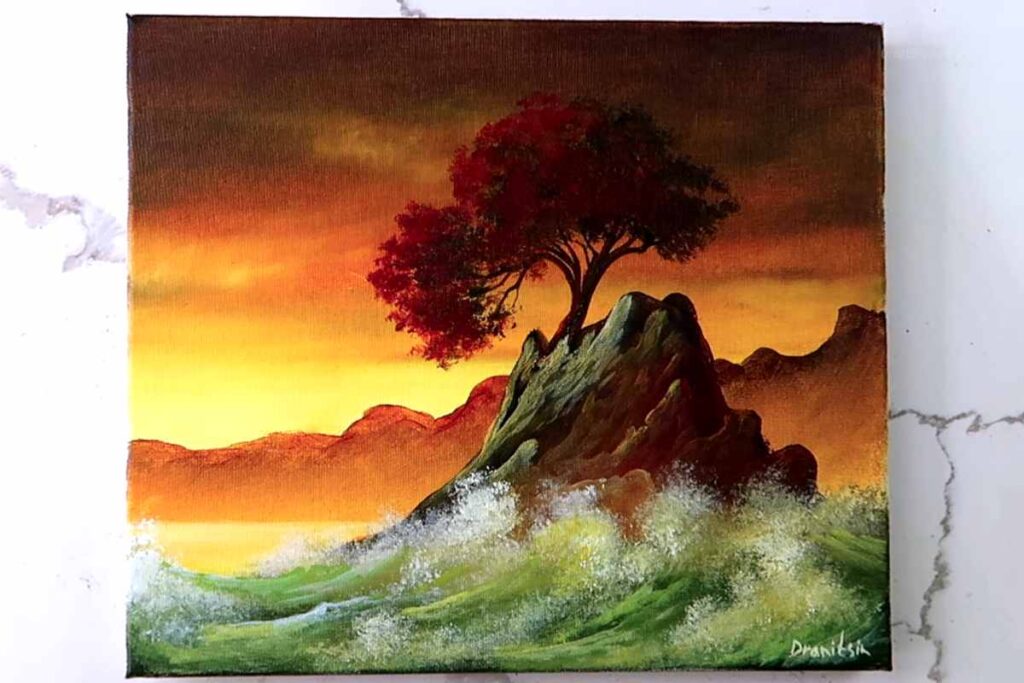
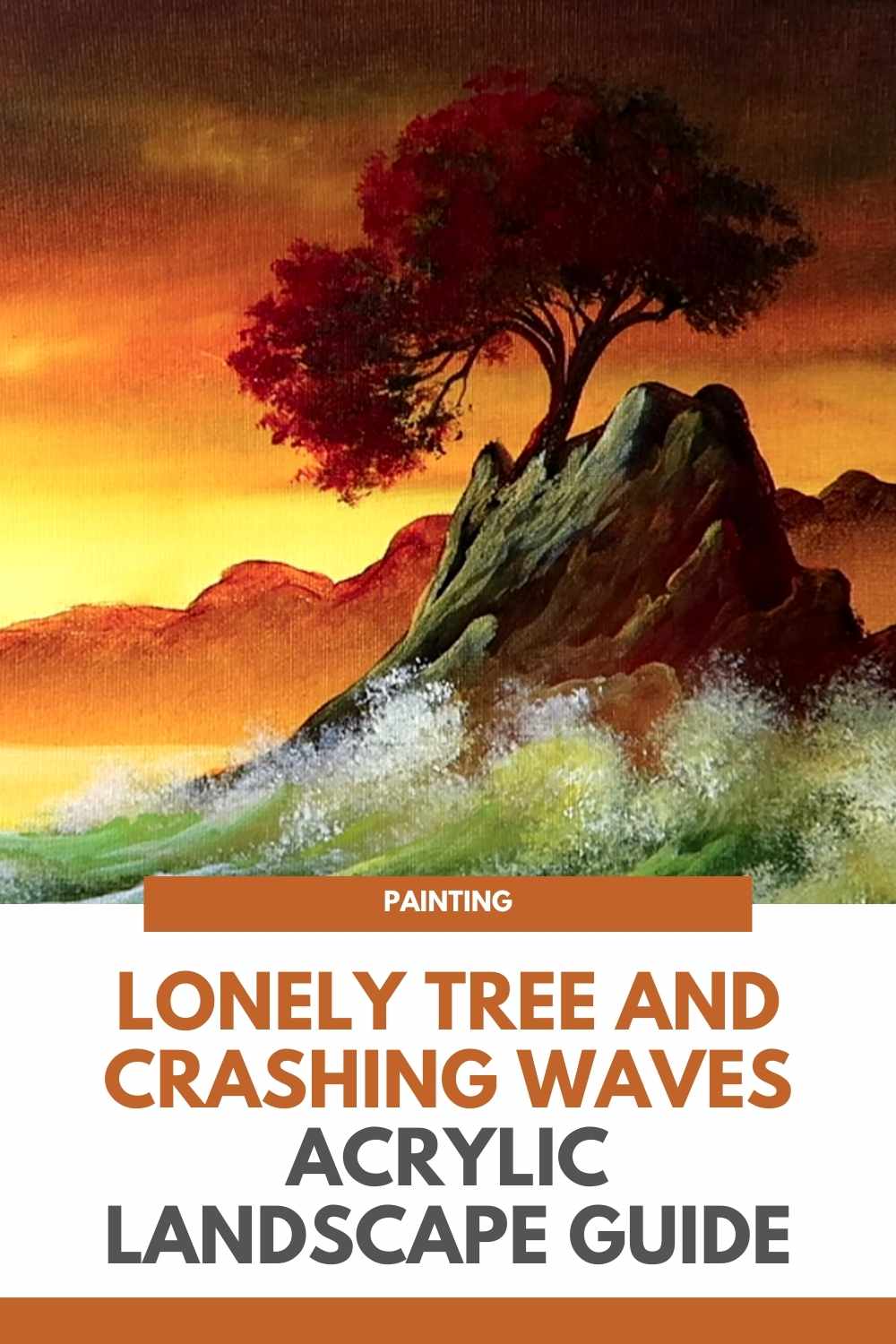
Some paintings say everything without words. A lone tree clinging to a rocky cliff, waves crashing at its base, all bathed in the fiery glow of sunset—this is more than a landscape.
It’s a feeling. In this acrylic painting tutorial, you’ll explore how to capture solitude, strength, and serenity in a single scene.
This guide focuses not on the brushstrokes themselves—that's in the video—but on the emotional impact, compositional balance, and techniques that make this piece so compelling.
A Scene of Strength and Stillness
There’s something symbolic about a single tree growing from solid rock. In this painting, that tree becomes the focal point of a powerful composition.
Its deep red foliage contrasts against the warm sky, while the gnarled trunk clings to jagged stone. It’s a study in resilience—a quiet statement of endurance against nature’s chaos.
The surrounding waves, painted with dynamic motion and white frothy edges, bring movement and energy, while the distant sunset mountains fade gently, creating a natural frame for the central subject.
The Power of a Sunset Palette
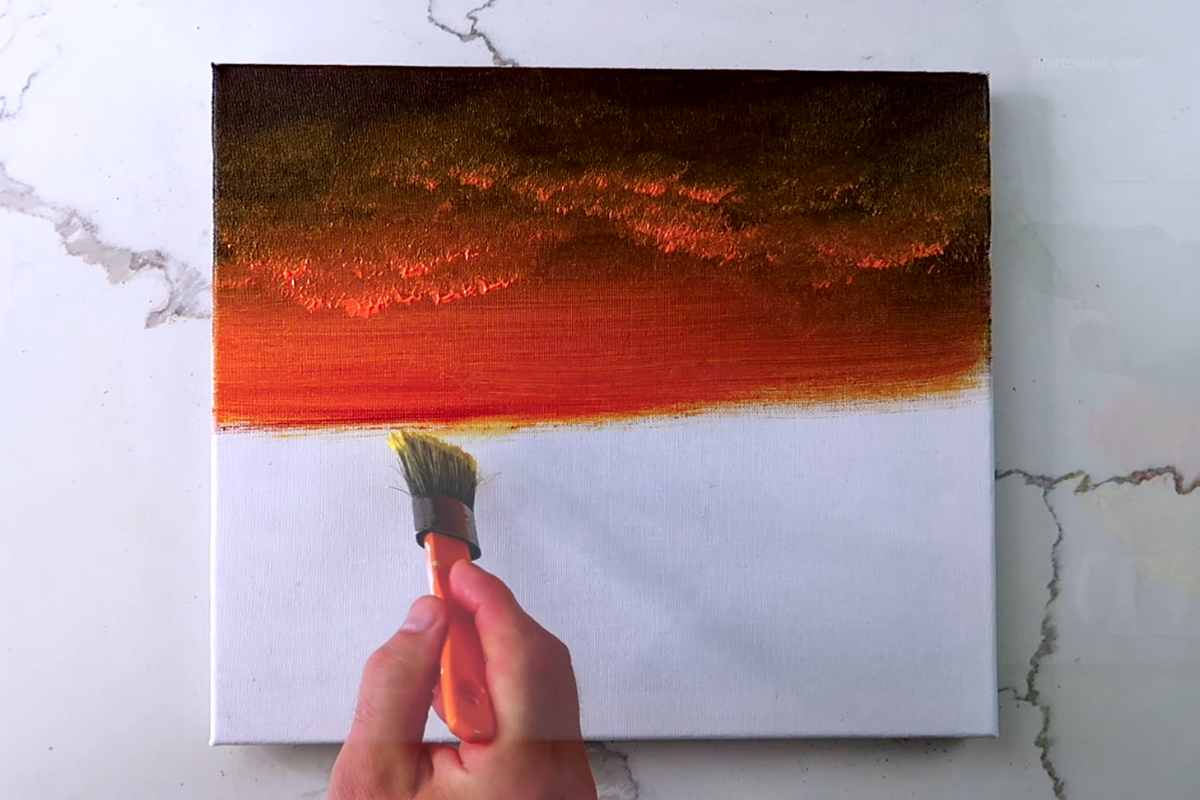
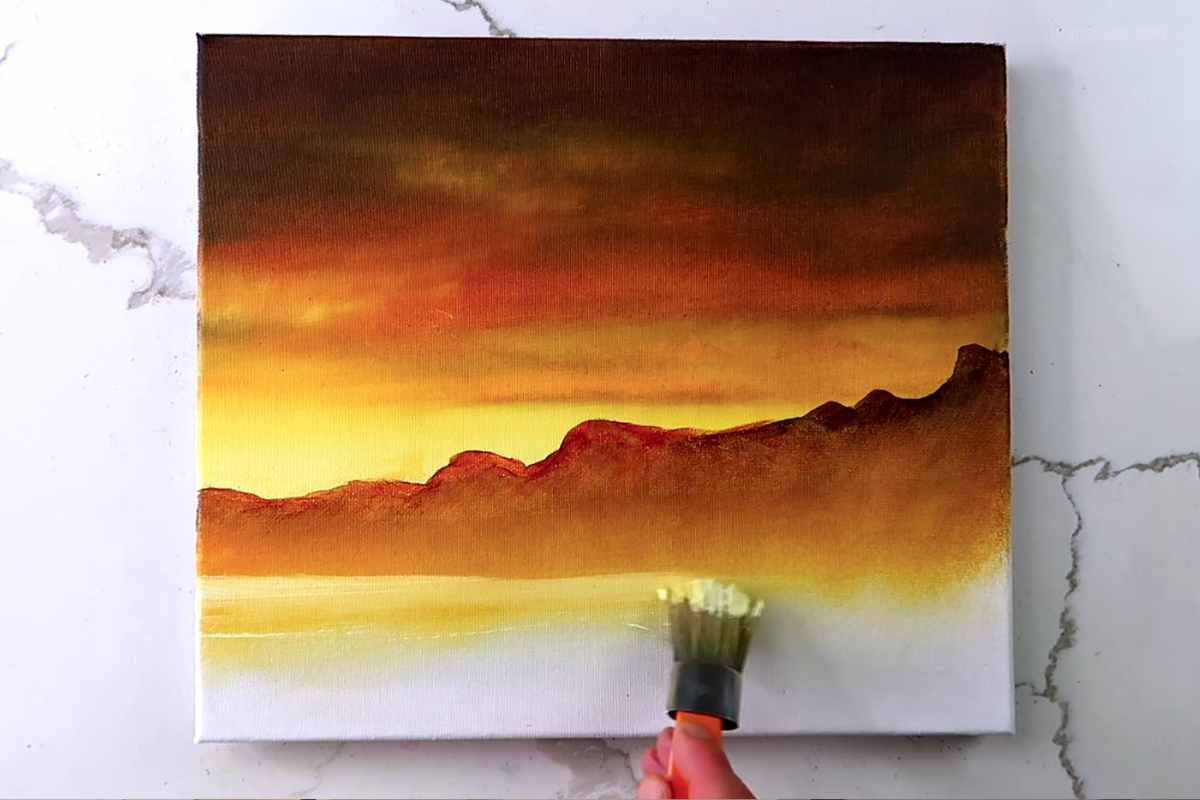
Sunset scenes allow for dramatic lighting and bold color choices. In this artwork, you’ll notice a smooth gradient that moves from deep amber to fiery orange and fades into dark purples and browns at the edges. These warm hues are contrasted beautifully by the cooler tones of the ocean—greens and white foam that shimmer with energy.
This contrast helps separate foreground from background, giving the tree and rocks a three-dimensional quality while maintaining harmony across the canvas.
Key Visual Elements
Backlighting: The sunset provides a glowing backdrop that casts subtle shadows and highlights across the tree and rocks.
Motion vs. Stillness: The crashing waves add a sense of drama, while the tree stands still and grounded.
Silhouette and Shape: The bold shape of the tree against the glowing sky adds visual impact without needing fine detail.

Mastering Light, Texture, and Composition
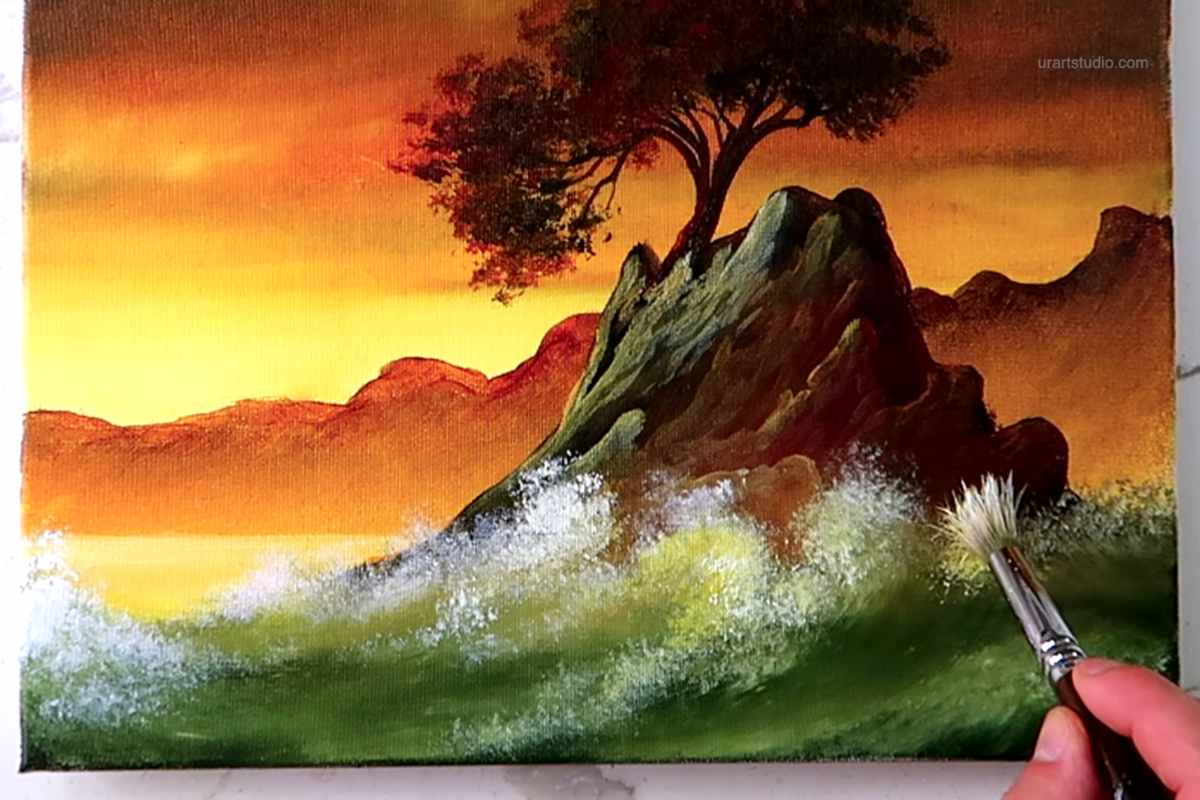
One of the most compelling aspects of this painting is how it uses light and shadow to create mood. The tree isn’t just painted—it’s lit from behind, giving it a silhouette effect that emphasizes form.
The rocks beneath it are modeled with dark greens, ochres, and highlights to create realistic texture.
Meanwhile, the waves offer a chance to practice loose brushwork, allowing the paint to move like water without becoming too rigid or flat. Each layer—sky, mountains, rock, water, tree—is placed with intention to lead the viewer’s eye around the composition.
What You’ll Learn from This Painting
How to use color temperature to control depth and emotion
Techniques to create contrast between hard and soft elements
Ways to blend natural forms into a dramatic composition
The importance of edge control and layering for acrylic landscapes
It’s not about painting a “perfect” tree or wave—it’s about understanding how each part of the scene contributes to the overall feeling.
For Artists Who Want More than Just a Landscape
This painting goes beyond traditional landscape art. It’s not a crowded forest or a peaceful meadow—it’s raw, bold, and emotional.
Perfect for intermediate beginners ready to push their skills, or for more experienced painters looking to explore deeper storytelling through imagery.
By focusing on a single, powerful subject, you’ll practice restraint and focus—learning to suggest more with less, and evoke emotion through shape, light, and contrast.
Let this tutorial be a reminder: sometimes, the simplest compositions carry the most meaning. A lone tree. A crashing wave. A sky on fire. Painted with purpose, these elements become a story of their own.
Dive in, trust the process, and let your canvas tell it.
We thank URARTSTUDIO for the images.
Enjoy The Video Tutorial

Source: URARTSTUDIO
Did you find this post useful or inspiring? Save THIS PIN to your Art Board on Pinterest! 😊
Discover More Artistic Inspiration