
Watercolor and Stencil Lifting: Fun and Creative Art Journal Technique


If you love quick watercolor techniques that instantly make a page feel more “done,” reverse stenciling is one you’ll want to keep in your toolkit. It’s easy, playful, and beginner-friendly, and it creates that soft layered look that works beautifully in art journals.
In this video, you’ll see a reverse stenciling watercolor tutorial focused on building an art journal background with simple transfers and gentle layering. You can follow along as-is, or use the same steps with your own favorite color palette.
Why reverse stenciling creates soft, layered watercolor backgrounds

Reverse stenciling flips the usual stencil process. Instead of applying paint through the stencil onto the page, you add watercolor to the stencil first, then transfer it to your paper. That “reverse” step helps you get natural edges, watercolor blooms, and subtle texture that’s hard to fake with a brush alone.
This technique is especially helpful when you want a background that feels organic but still has shape and structure. A few light transfers can create a base layer, and then you can repeat with more color to build depth without overworking the page.
As you watch, notice how each layer adds interest—even when it looks imperfect up close. Those little variations are what make the finished background feel artistic and alive.
Reverse stenciling watercolor steps to try in your art journal

This tutorial shows how to use reverse stenciling to create a background that’s fun to make and easy to personalize. You’ll see how placement and repetition can turn simple stencil shapes into a cohesive page.
A few practical tips to keep in mind while you follow along:
- Keep your paint a bit on the damp side so it transfers smoothly—but not so wet that it puddles everywhere.
- Lift the stencil carefully to avoid smearing, especially on early layers.
- If colors start to look muddy, pause and let things dry before adding more.
Once you have your background, you can leave it as a standalone page or add journaling, stamping, lettering, or collage on top.
Common reverse stenciling mistakes (and quick fixes)
If you’re new to reverse stenciling, these little tweaks can make a big difference:
- Too much water: Blot your brush or dab the stencil lightly before transferring.
- Paint not transferring well: Add a touch more pigment, or try pressing more evenly across the stencil.
- Smudging between layers: Give it a minute to dry, or work on a different area while the first section sets.
Reverse stenciling is meant to be flexible—every attempt teaches you something, and you’ll quickly find the balance that works for your style.
We thank Krista Robertson for the images.
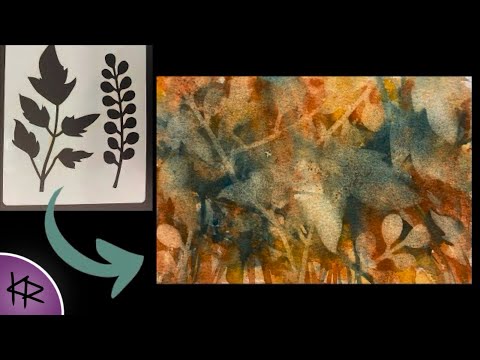
Source: Krista Robertson
When you’re ready, try the same method with different colors or repeat the shapes in a new layout. Reverse stenciling is one of those techniques you can come back to anytime you want an easy background with lots of visual payoff.
— Lauren
Discover More Artistic Inspiration