
Watercolor Spring Landscape Painting (Swing Scene)

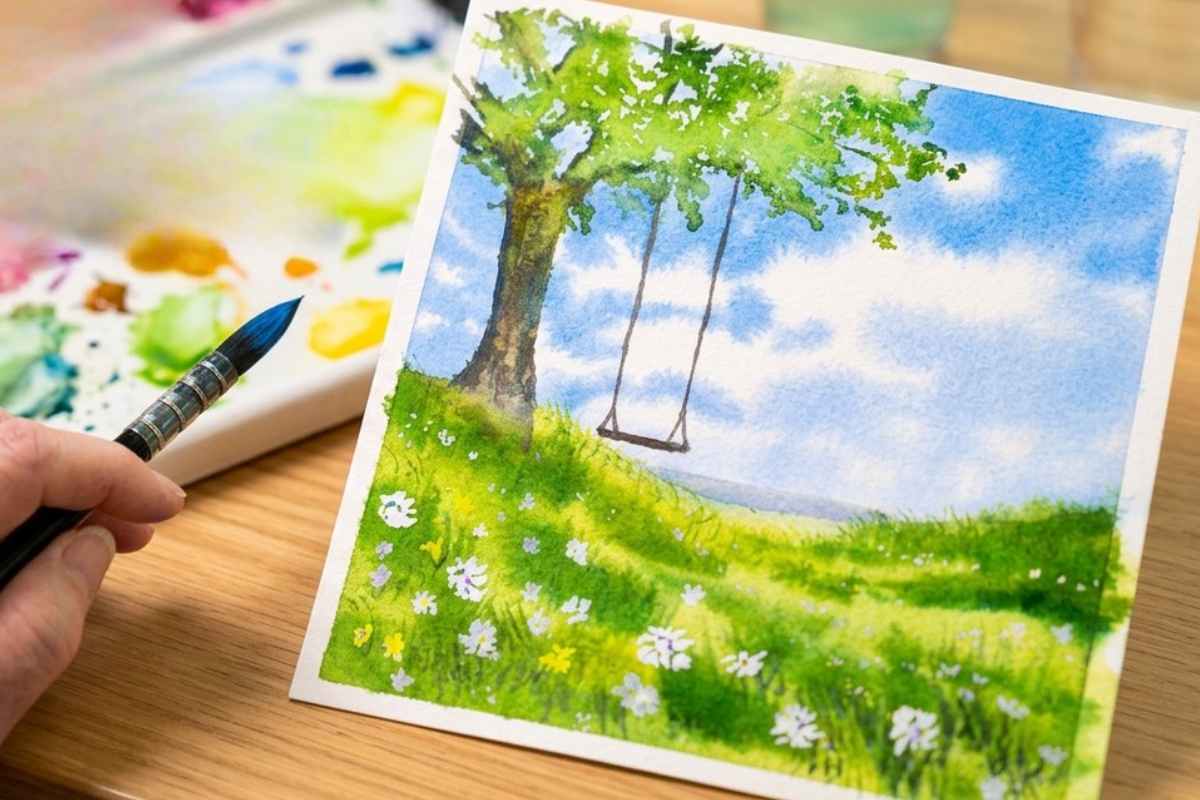
Spring landscapes are perfect for watercolor—soft skies, fresh greens, and that light, airy feeling you can build with simple washes. If you’ve been wanting to paint a seasonal scene that feels calm and uplifting, this tutorial is a great one to save.
In today’s video, you’ll follow along with “Watercolor Landscape–Swinging Into Spring” and see how a spring setting can come to life step by step. It’s a relaxing project for any skill level, and you can pause and replay whenever you need.
How to Plan a Spring Watercolor Landscape That Feels Light and Fresh
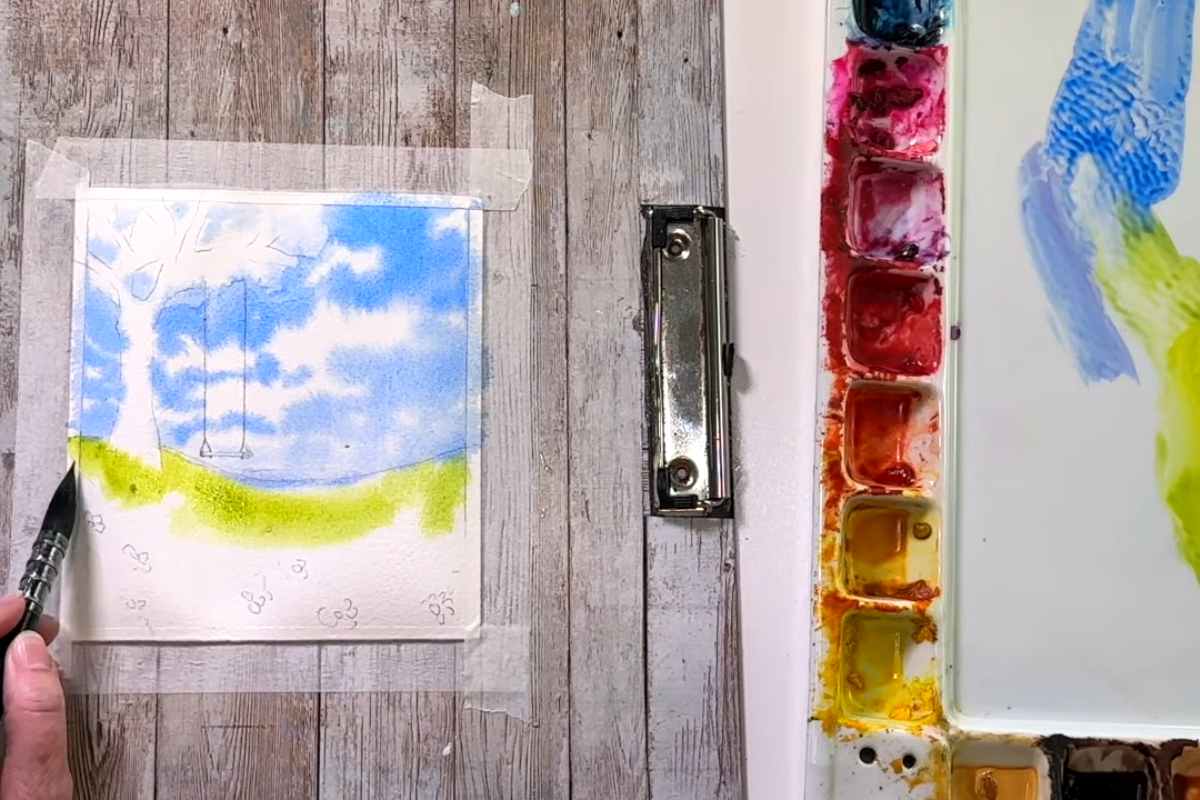
A watercolor landscape usually looks best when you keep the big shapes simple and let the paint do some of the work. Before you start, it helps to think in layers: background, midground, and foreground. Even a quick mental plan can make your scene feel more believable and balanced.
In the tutorial, notice how the composition is built around an easy focal point (the swing) while the rest of the landscape supports it. That’s a helpful approach when you don’t want your painting to feel “busy.” Keep your edges varied—some soft, some crisp—and let lighter areas breathe so the whole piece feels bright and springy.
If you’re new to landscapes, focus on these basics as you watch:
- Big washes first, details later
- Value changes (lighter vs. darker) to create depth
- Layering to build dimension without overworking the paper
Watercolor Spring Landscape Tutorial With a Swing Scene
Use the video below to paint along in real time. You’ll be able to see the order of layers, how the scene develops, and when to add stronger shapes and contrast.

Source: Creative Lass
Common Watercolor Landscape Mistakes (and Easy Fixes)
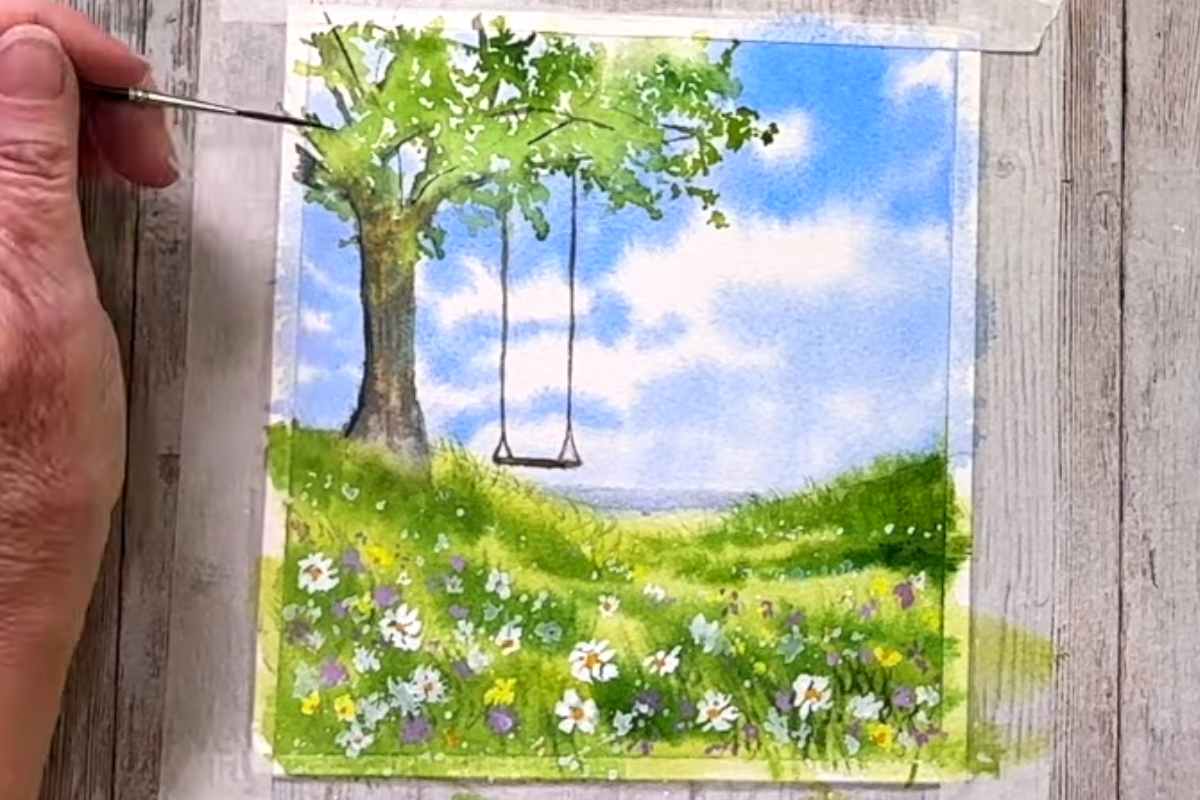
One of the easiest ways to lose that fresh spring look is overworking an area. If something starts to look muddy, try letting it dry completely, then come back with a lighter glaze or a single confident darker pass where you want emphasis.
Also, don’t worry if your swing (or any focal detail) doesn’t look perfect right away—small shapes often look better once the surrounding values are in place. As you paint along, aim for clear contrast near the focal point and softer, simpler shapes further away.
Thanks for painting along with me today—hope this inspires you to create your own spring scene and experiment with gentle color and layering. If you enjoyed this project, save it for later and revisit it when you want a relaxing watercolor session.
— Michael
Discover More Artistic Inspiration