
Creative Watercolor Ideas: 14 Colorful Fruits & Vegetables to Paint


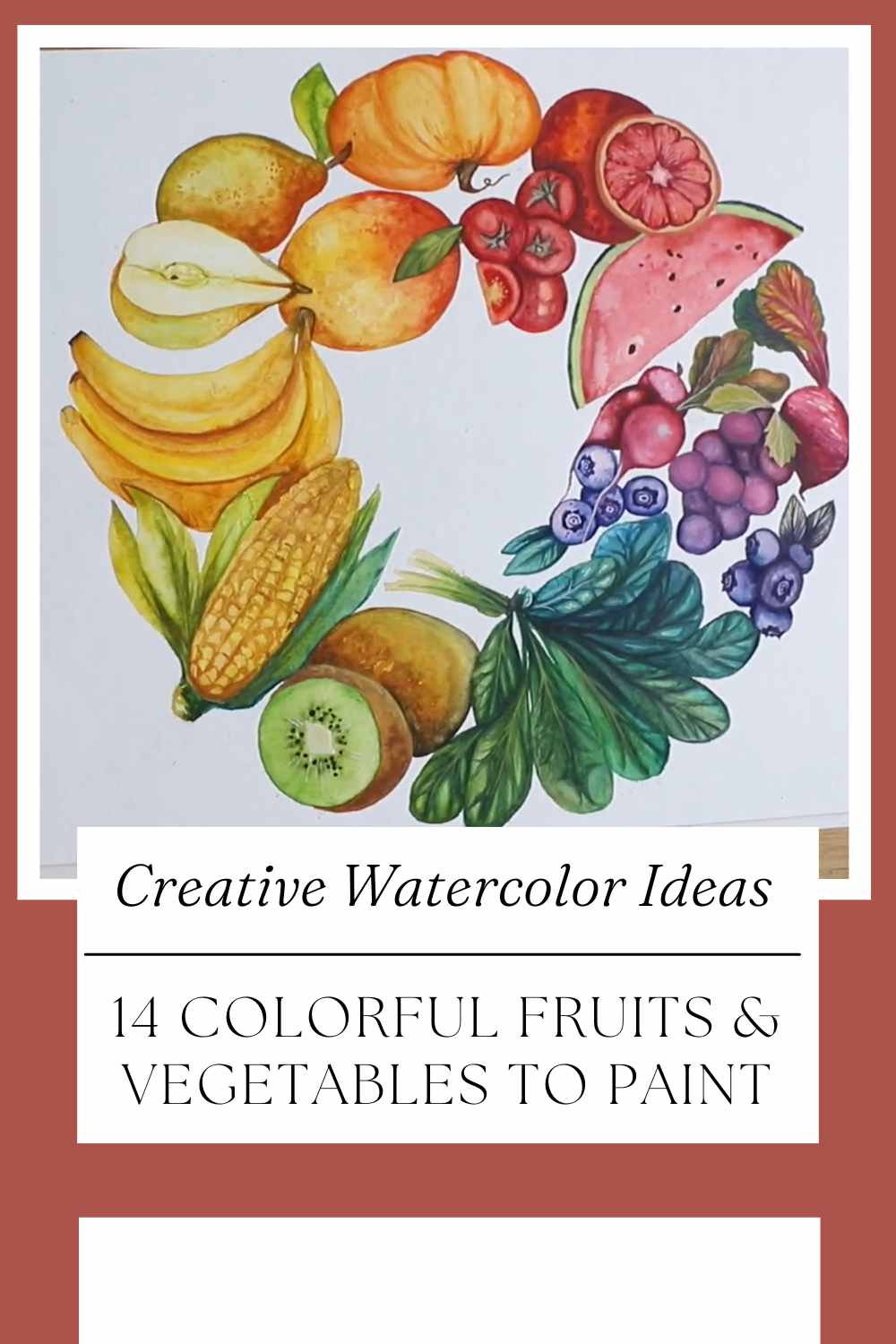
Watercolor painting allows for the creation of vivid, vibrant art, and one fun way to showcase the power of this medium is by painting fruits and vegetables in a rainbow circle.
This unique concept is not only visually stunning but also offers a great opportunity to practice various painting techniques, such as creating gradient effects, adding details, and managing shadows.
The task of selecting the right fruits and vegetables for each color section of the rainbow circle can be a challenge, but it also encourages creativity and problem-solving.
In this article, we explore the process of painting 14 different fruits and vegetables, using a compass to create that striking gradient effect while discussing key tips for achieving realistic results.
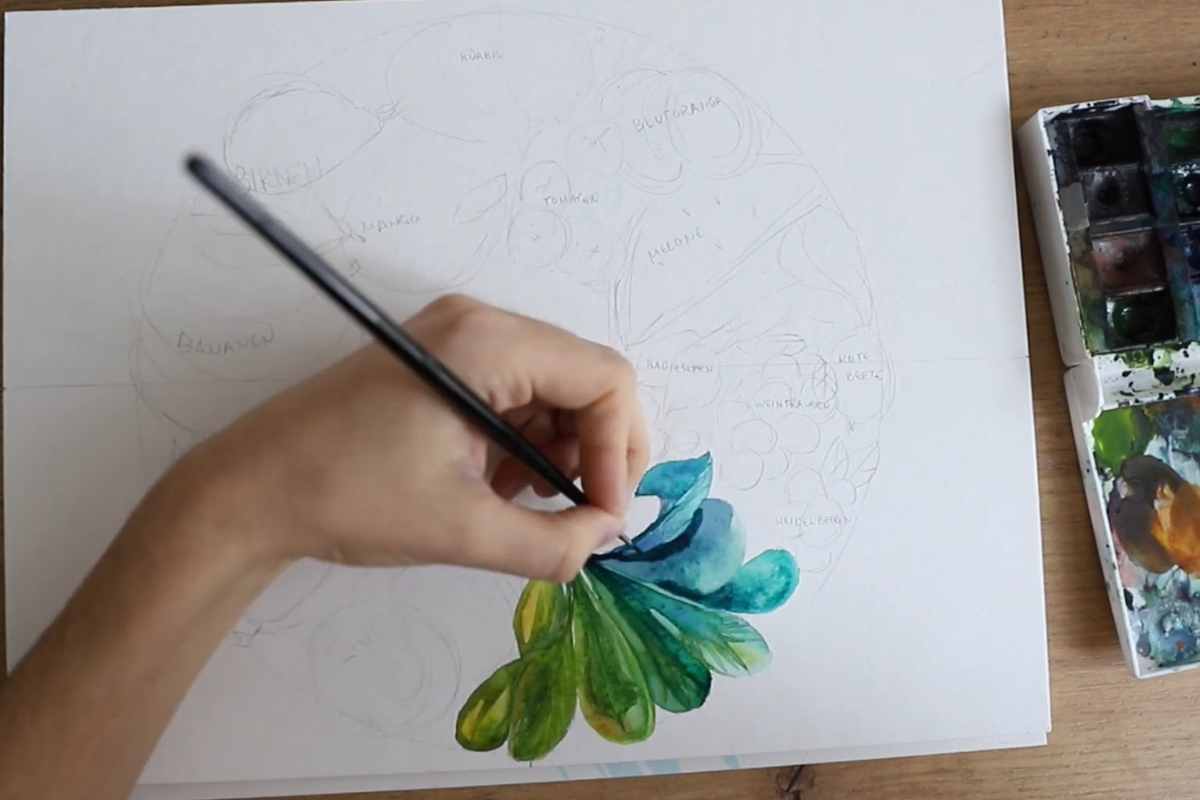
The Power of a Rainbow Circle
A rainbow circle featuring fruits and vegetables is an excellent way to practice your color blending and composition skills.
The idea of arranging various foods in a circular pattern not only brings vibrant colors to the forefront but also helps to create harmony between each section of the rainbow.
The vibrant hues of red, orange, yellow, green, blue, and purple flow beautifully from one fruit or vegetable to the next, making it a visual treat.
Choosing the Right Fruits and Vegetables
One of the main challenges when painting this rainbow circle is selecting fruits and vegetables that naturally match the colors of the rainbow. Each color section needs to feature a food item that both fits the hue and looks realistic when painted.
Red: Consider using tomatoes, strawberries, or apples. These fruits offer rich, saturated reds that are perfect for the first section.
Orange: Oranges, carrots, and pumpkins provide vibrant orange tones.
Yellow: Bananas, corn, and yellow peppers are good options for the yellow section.
Green: This section can feature kiwi, grapes, or lettuce, which offer various shades of green.
Blue: While blue vegetables and fruits are rare, blueberries are perfect for this section.
Purple: Eggplant, grapes, and plums can fill the purple section with rich tones.
The task of finding the perfect fruits and vegetables for each color is one of the fun aspects of the project. It allows the artist to mix different food items to create a gradient that is not only visually engaging but also ensures diversity in the composition.
Using Reference Pictures
Using reference images is a crucial step when painting realistic fruits and vegetables. Reference photos provide the artist with essential details, such as the texture of the skin, the way light interacts with the surface, and the subtle color variations within the fruits and vegetables.
Shadows, highlights, and surface reflections are more easily captured when the artist has a visual guide to work with.
For this project, gathering reference images for each fruit or vegetable can help in rendering them with accuracy.
The more reference images you gather, the more texture and detail you can add, making the final piece look more realistic. Whether you use photographs or still life setups, references allow for a deeper understanding of each food's shape, form, and color.
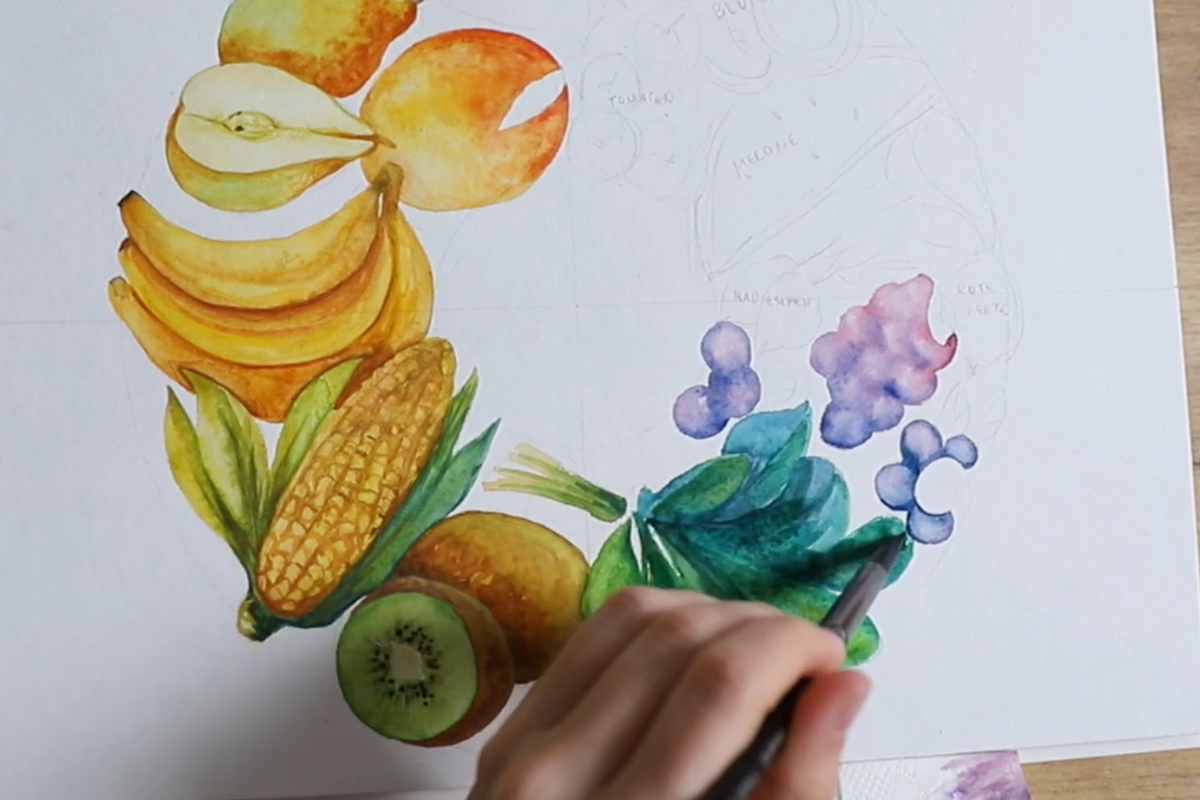
Adding Depth with Shadows and Details
One of the most rewarding aspects of painting realistic fruits and vegetables is the ability to capture depth and dimension through shadows and detailing.
Without these elements, the fruits and vegetables would look flat and lifeless. By carefully observing how light and shadow interact with the surface of each item, you can create more three-dimensionality in your painting.
Creating Shadows
To make the fruits and vegetables appear more realistic, start by painting the shadows. Shadows should be painted in darker tones, and they usually fall on the opposite side of the light source. For example, with a green apple, the shadow will appear on the right side if the light is coming from the left.
The deeper the shadow, the more realistic the fruit will look. Use layering techniques to build up these shadows gradually.
Adding Details
Details like water droplets, skin texture, and subtle color transitions give life to the painting. For example, a banana may have slight brown spots where the peel has ripened, and an apple may have reflective droplets of water.
Adding these small touches enhances the realism of your painting and makes it more visually appealing.
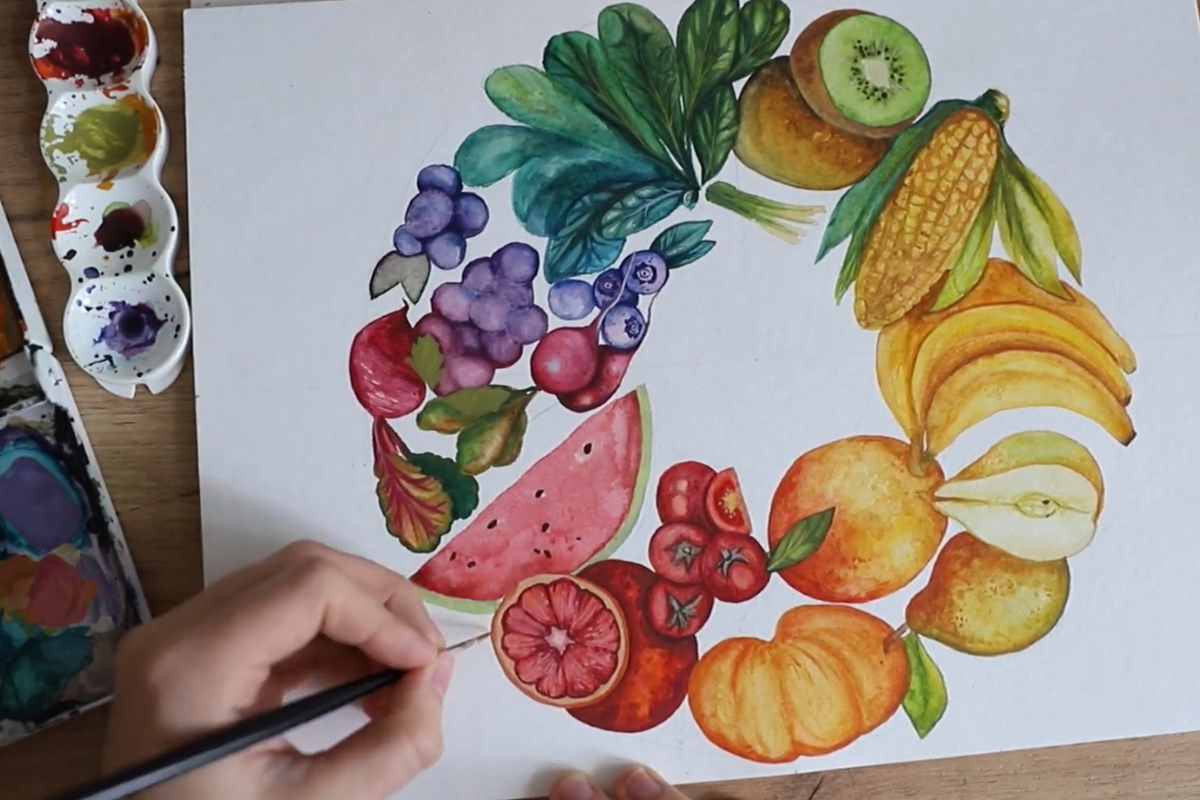
Overcoming the Challenges of Painting Fruits and Vegetables
While painting a rainbow circle of fruits and vegetables is exciting, there are several challenges to consider:
Finding the Right Balance of Colors
Each color section of the rainbow must blend well with the adjacent sections. This means you need to carefully manage the transitions between colors to create a smooth gradient. The challenge lies in ensuring that the colors don’t clash and that the contrast between each section is balanced.
Capturing the Texture of Different Surfaces
Fruits and vegetables come in various textures, from the smoothness of a pear to the bumpy texture of a watermelon. Capturing these textures in watercolor or any medium requires observation and technique.
For example, while painting grapes, you’ll need to use soft, round strokes to replicate their smooth surface, while corn will require a different technique to show its textured surface and the individual kernels.
Working in a Circular Composition
The circular arrangement of the fruits and vegetables may seem like a simple concept, but it requires careful planning to ensure that each item fits cohesively into the composition.
The use of a compass can help you create a uniform, flowing structure, but the challenge lies in balancing the fruits and vegetables so that the piece doesn’t look too crowded or disorganized.
Final Thoughts
Painting 14 colorful fruits and vegetables in a rainbow circle is not only a fun exercise in watercolor or any other medium, but it also offers the opportunity to practice key painting techniques like layering, shading, and detail work.
By choosing the right fruits and vegetables, using reference images, and mastering the techniques of light and shadow, you can create a vibrant, realistic piece of art that captures the beauty of nature.
While the task may come with challenges, it also allows the artist to express creativity and develop their skills.
Whether you're a beginner or more advanced, this painting project is a great way to improve your abilities and create a stunning piece that celebrates the colors of nature. So gather your paints and reference images, and get started on this fruitful art project!
We thank Visual Mind for the images.
Enjoy The Video Tutorial

Source: Melanie Mangold
Did you find this post useful or inspiring? Save THIS PIN to your Art Board on Pinterest! 😊
Discover More Artistic Inspiration