
Easy Watercolor Winter Birds: Paint a Red Cardinal and a Robin

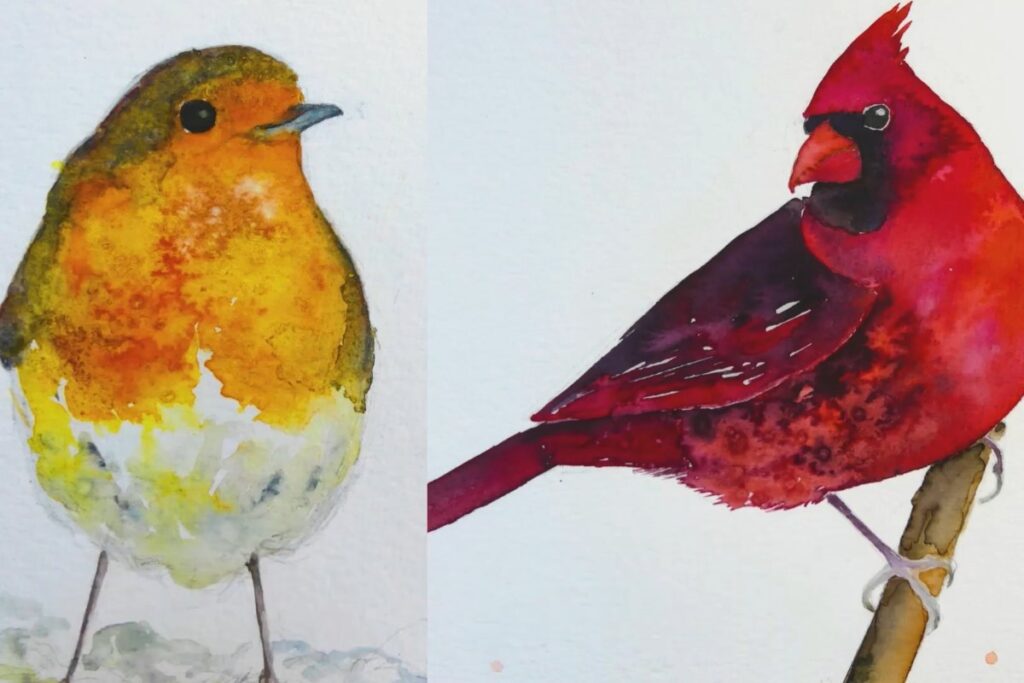
Few things say winter like a red cardinal against the snow or a round little robin puffing up its orange chest on a cold morning. In this beginner-friendly video tutorial, Rada Art Studio paints both birds in watercolor, one after the other, using loose wet-on-wet washes and a pinch of salt for texture.
The video runs just under eight minutes, so it fits easily into a quiet weekend afternoon. Either bird would also look lovely on the front of a handmade Christmas or winter card.
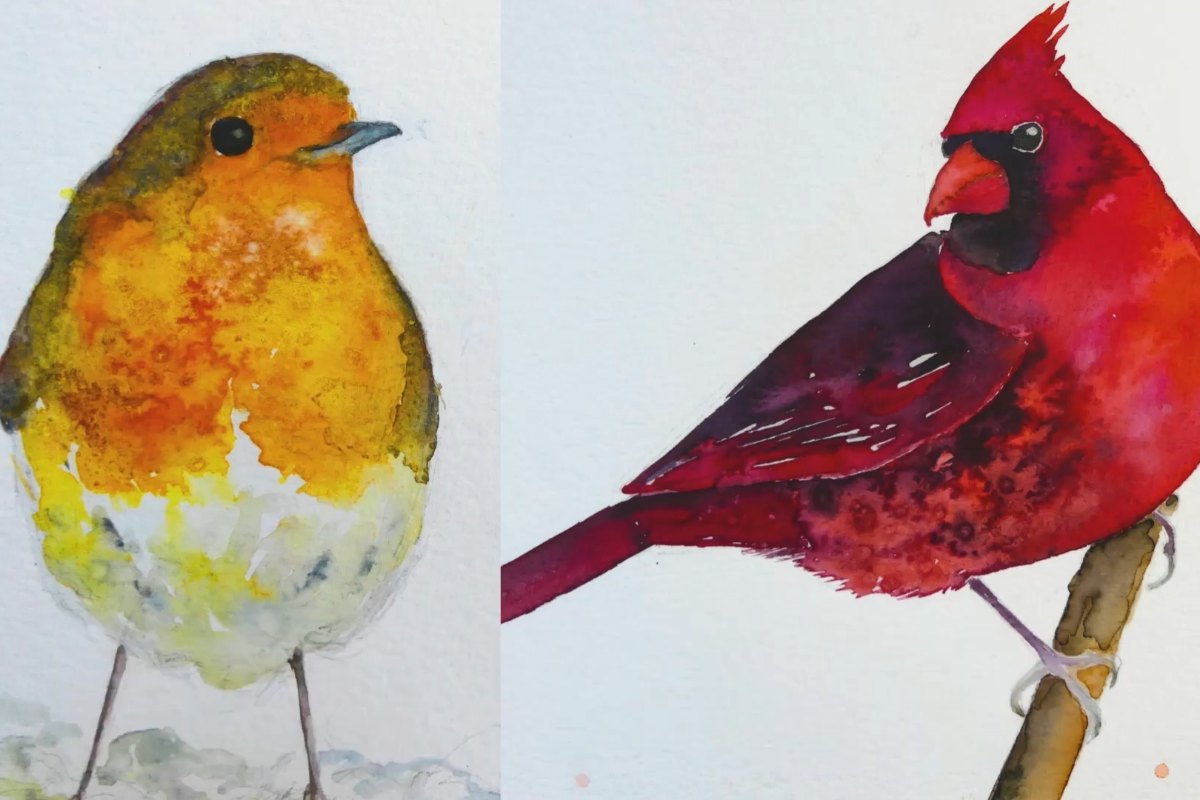
Watercolor Winter Birds at a Glance
- Artist: Rada Art Studio
- Subjects: a red cardinal and a European robin
- Level: beginner to intermediate
- Medium: liquid watercolor on cotton paper
- Techniques: wet-on-wet blending, salt texture, layering darker values
- Video length: 7 minutes 39 seconds
What You'll Need
- 300gsm cotton watercolor paper
- Vallejo liquid watercolors (or any watercolors in similar shades)
- A little salt
- Round brushes in a few sizes, including a fine one for the eyes and beaks
- A pencil for a light sketch
- Colors for the cardinal: crimson red, bright red, violet and Mars black, plus touches of burnt umber, scarlet red and coral red
- Colors for the robin: cadmium orange, bright red, Mars black and cobalt mist
How the Red Cardinal Is Painted
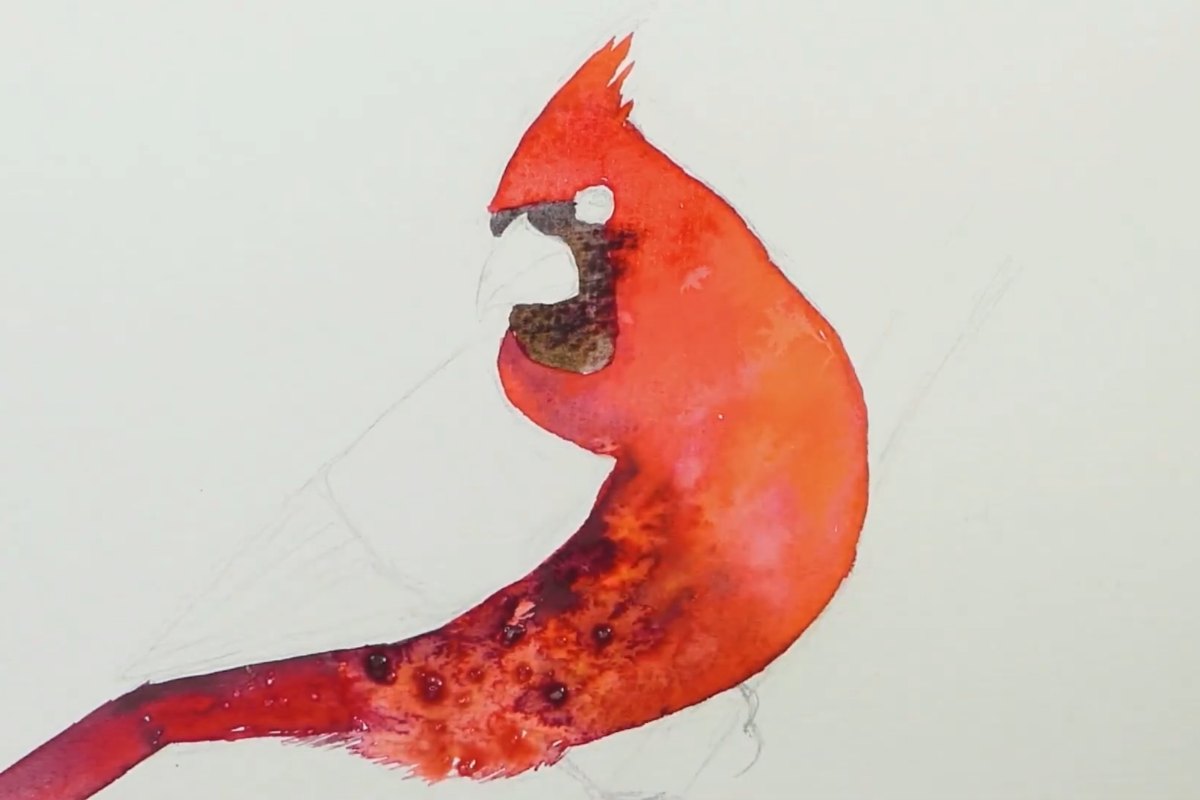
- Sketch lightly. The cardinal starts as a simple pencil outline perched on a branch, drawn softly enough that the lines disappear under the paint.
- Start wet on wet with crimson red. The crest and the back of the head go in first, and the color is left to spread softly on the damp paper.
- Drop in bright red. Bright red is added into the wet crimson along the chest and body, so the two reds blend right on the paper.
- Add a tiny bit of salt. While the lower body is still wet, a small pinch of salt goes on. As the paint dries, the salt pulls the pigment into speckled, feather-like spots.
- Paint the tail. Violet blended with Mars black, with crimson red added afterwards, gives the long tail its deep wine color.
- Build the black mask. Diluted Mars black with some burnt umber goes around the face and neck first, then more concentrated black paint deepens it, and scarlet red is blended in at the edges.
- Finish the wing, beak and branch. Bold strokes shape the rest of the wing, bright red and coral red fill the beak, and a warm branch completes the scene.
How the Robin Is Painted
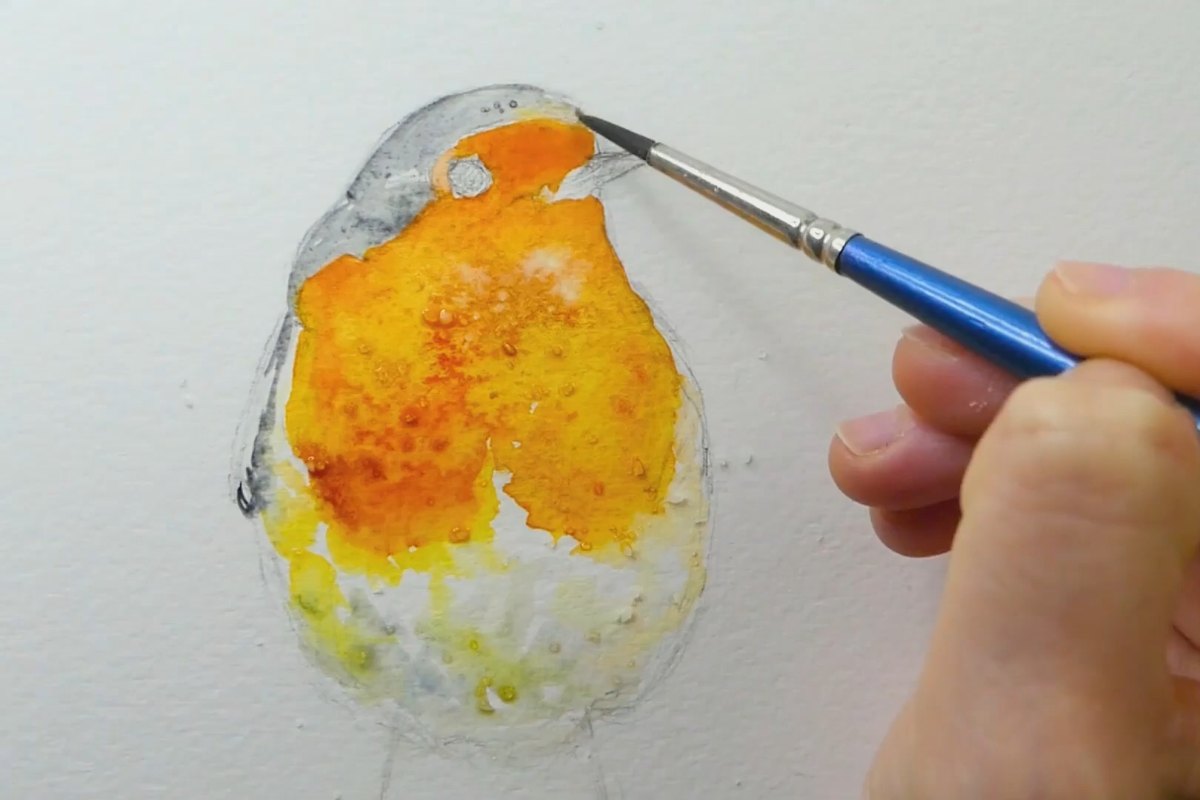
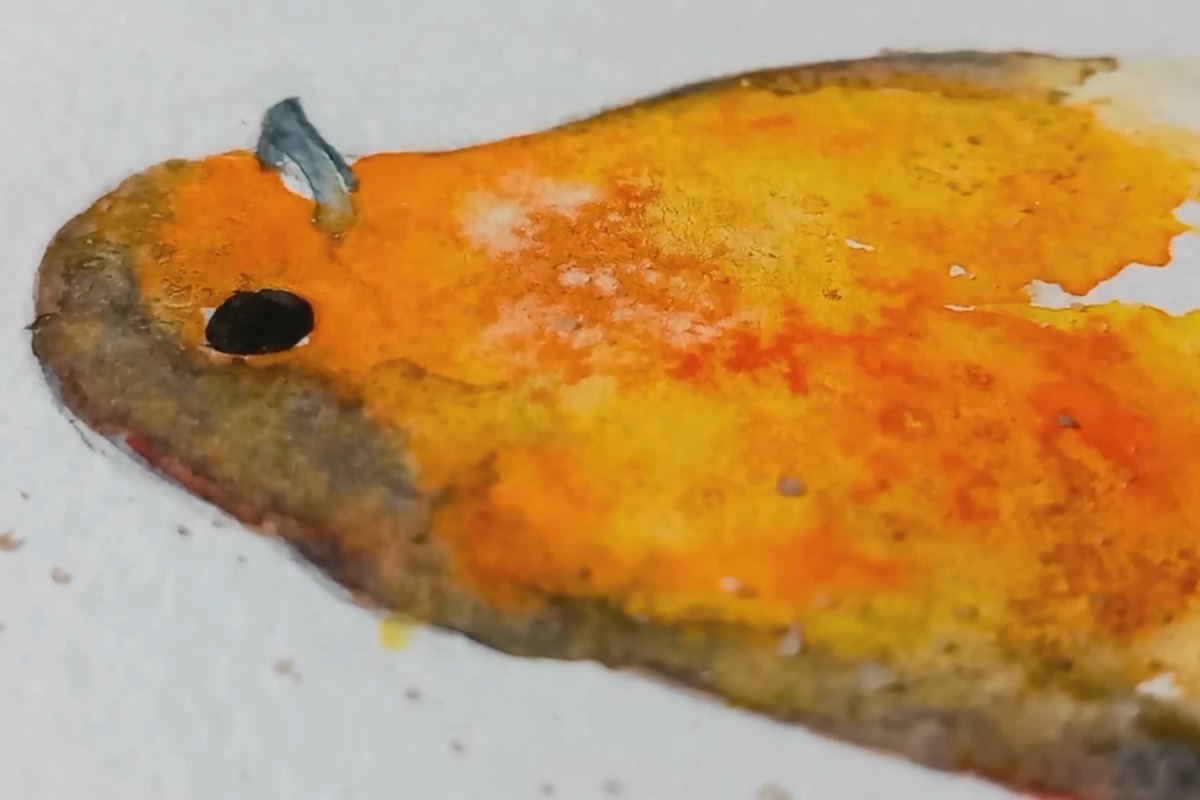
- Loose orange patches. Cadmium orange goes onto the face and chest in loose patches, leaving small gaps of white paper.
- Salt again. A bit of salt on the wet orange creates the same mottled texture used on the cardinal.
- Soft gray shadows. Some diluted Mars black shades the lower belly so the white area still reads as round.
- Back and wing. More Mars black and cobalt mist build the cooler gray tones along the head, back and wing.
- Small details last. A dark eye, a grayish beak, thin legs and a hint of snowy ground bring the little bird to life.
Tips for Painting Watercolor Birds
- Use salt sparingly. A few grains are enough. Let the paint dry completely before brushing the salt away, or the texture will smudge.
- Keep some white paper. The small unpainted spots on the robin's chest and the light lines on the cardinal's wing act as natural highlights.
- Go from light to dark. Both birds start with their brightest color and end with the darkest details, which keeps the reds and oranges clean.
- Work one area at a time. Wet-on-wet blending only works while the paper still has a sheen, so paint the head, body and tail in separate sections.
- Make cards from them. Smaller versions on folded watercolor paper make simple handmade cards for the holidays.
If birds are your favorite subject, you can also browse these 7 watercolor bird tutorials.
Enjoy the Video Tutorial
Watch Rada Art Studio paint both winter birds, from the first wash to the final details:

Source: Rada Art Studio
Frequently Asked Questions
Is this watercolor bird tutorial good for beginners?
Yes. The video is made with beginners in mind, and short notes on screen name the colors used at each stage. Some practice with wet-on-wet painting helps, but you can pause and paint one section at a time.
Why add salt to watercolor paint?
Salt soaks up water and pigment where it lands, leaving small light speckles once the paint is dry. On these birds it suggests soft feathers without painting each one by hand.
More from Rada Art Studio
Discover More Artistic Inspiration