
Realistic Python Acrylic Painting: Capturing Detailed Scales


Acrylic painting offers an incredible way to explore the world of vibrant colors, textures, and detailed subjects. If you've ever wondered how to paint something as intricate as a realistic green python, this tutorial is for you.
Python paintings, with their unique skin textures and vibrant colors, allow artists to experiment with detail, light, and shadow, creating an eye-catching masterpiece that truly stands out.
In this article, we’ll explore the techniques and methods used to paint a realistic green python with detailed scales using acrylic paints.
Whether you're a beginner or an experienced artist, this process can help you elevate your skills in rendering textures and adding depth to your artwork.
Why Paint a Green Python?
Pythons are fascinating creatures with an intricate and beautiful pattern of scales. Their rich green tones, shiny textures, and curved shapes provide an excellent subject for acrylic painting, which excels in creating vivid details and highlights.
Acrylic paints allow for fast drying and the ability to layer, making it an ideal medium to capture the slippery texture of the scales while also showcasing the glossy shine and smoothness of the snake’s body.
The Appeal of Realistic Animal Paintings
Realistic animal paintings, like the green python, challenge an artist to master details and textures. Capturing nature’s beauty through a realistic painting style requires careful observation, as every element—from the scales to the eyes—needs to be painted with precision and accuracy.
The green python, with its distinct coloration and texture, presents an exciting challenge while rewarding the artist with an impressive final piece.
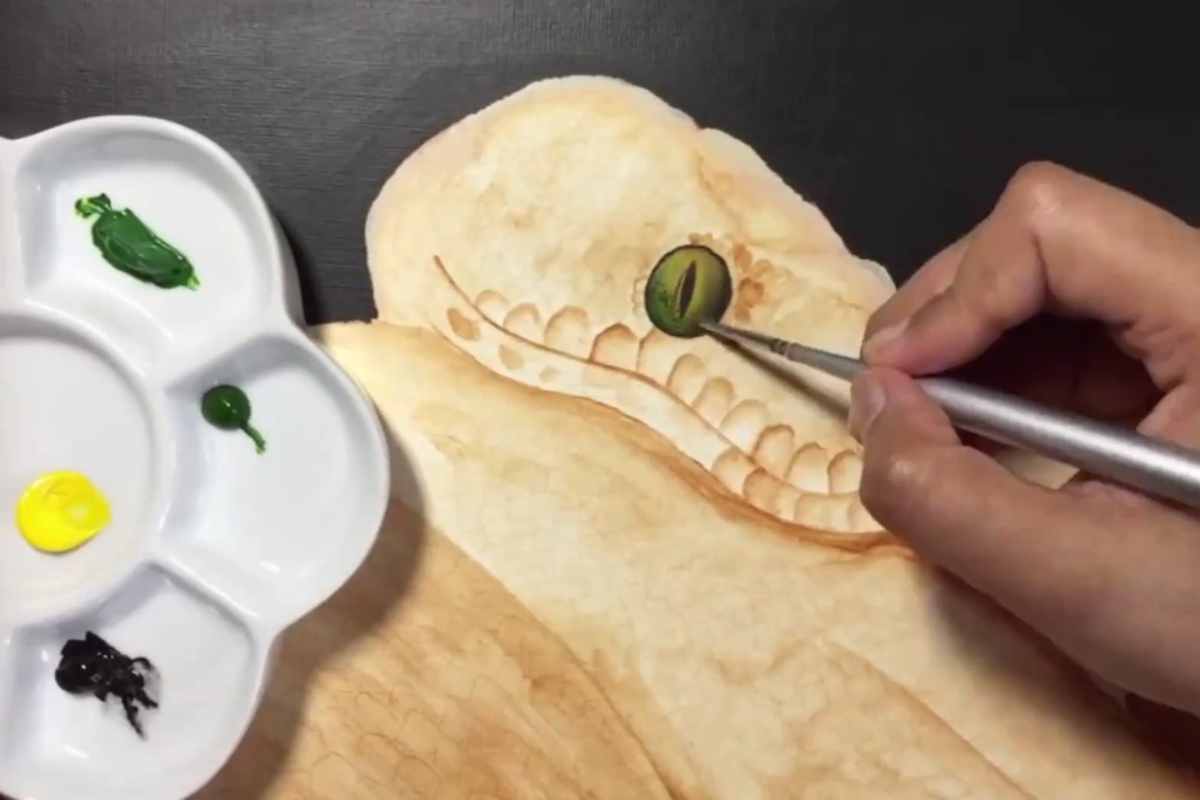
Techniques for Creating Realistic Texture
One of the most important aspects of painting a green python is achieving realistic texture. In this acrylic tutorial, special attention is given to scales and how to render them in such a way that they appear lifelike.
Layering and Blending for Depth
Acrylics are perfect for building up layers of color. This technique is especially helpful when painting detailed scales on the python’s body.
By using layering techniques, you can achieve the depth and texture that make the scales appear three-dimensional. Start with a base color, then gradually add layers of darker tones to create shadows and lighter tones to highlight the raised areas of the scales.
The beauty of acrylic paint is its ability to dry quickly, which allows for smooth layering without long waiting times. Layering helps create rich contrasts that give the python’s scales texture and make the snake look alive and dynamic.
Creating Scales with Precision
The scales of the python are an important focal point in this painting. Acrylic paint is applied in such a way that each scale is individually shaped and defined.
Using a fine brush, small, precise strokes are made to replicate the raised edges of the scales, while gentle washes are used to create subtle shadows between them.
The artist will often use a dry brushing technique to lightly highlight the edges of the scales, giving them that textured, slightly reflective quality.
Working with Shadows and Highlights
To make the python appear realistic, the play of light and shadow is crucial. The snake’s body is curved, and the light source affects the way the shadows fall on its scales.
Using dark greens and blacks for shadows on the underside of the python’s body, while keeping the tops of the scales lighter, will add volume and shape to the figure.
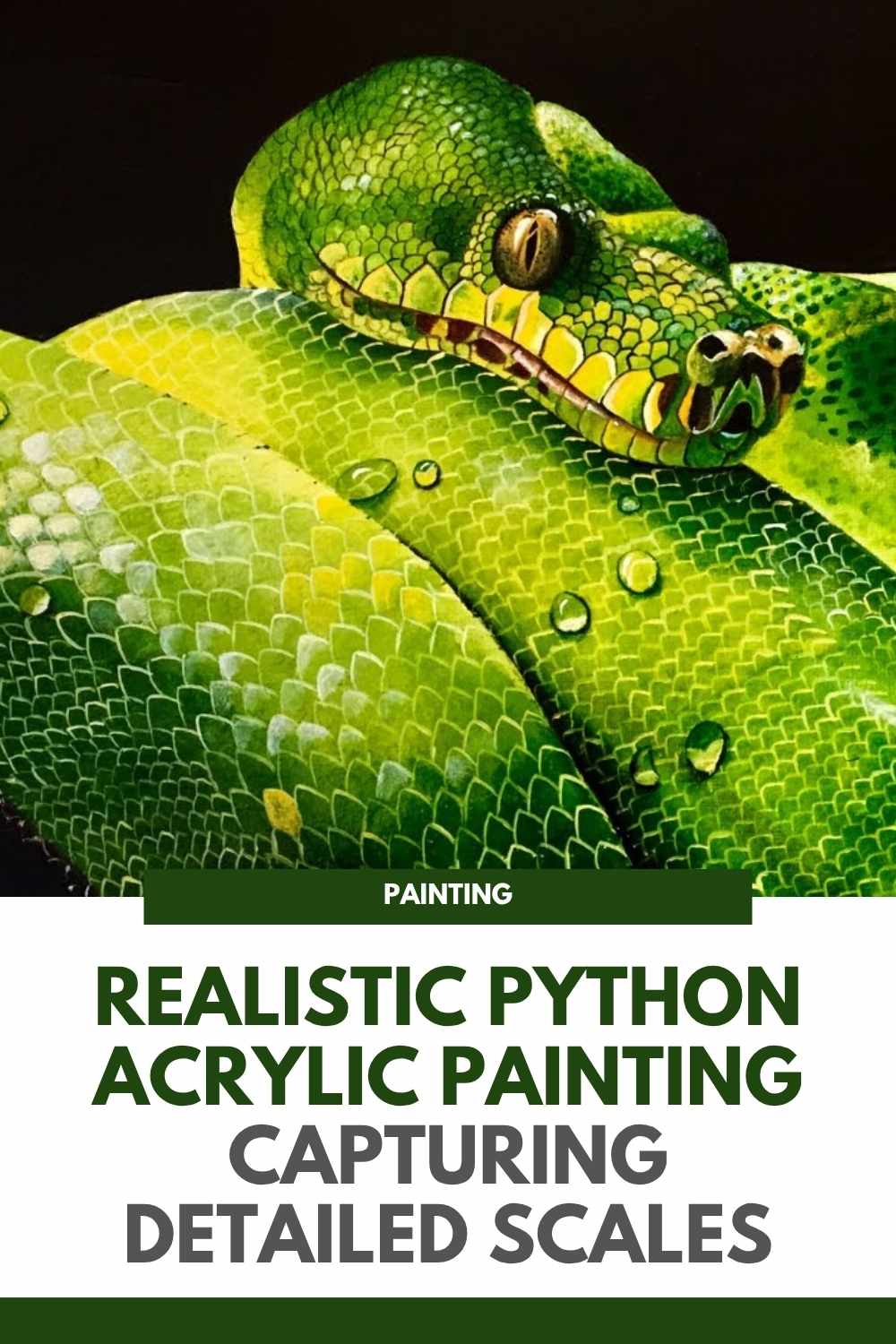
The artist uses light highlights to represent the glossy, wet appearance of the scales, which is characteristic of snakes.
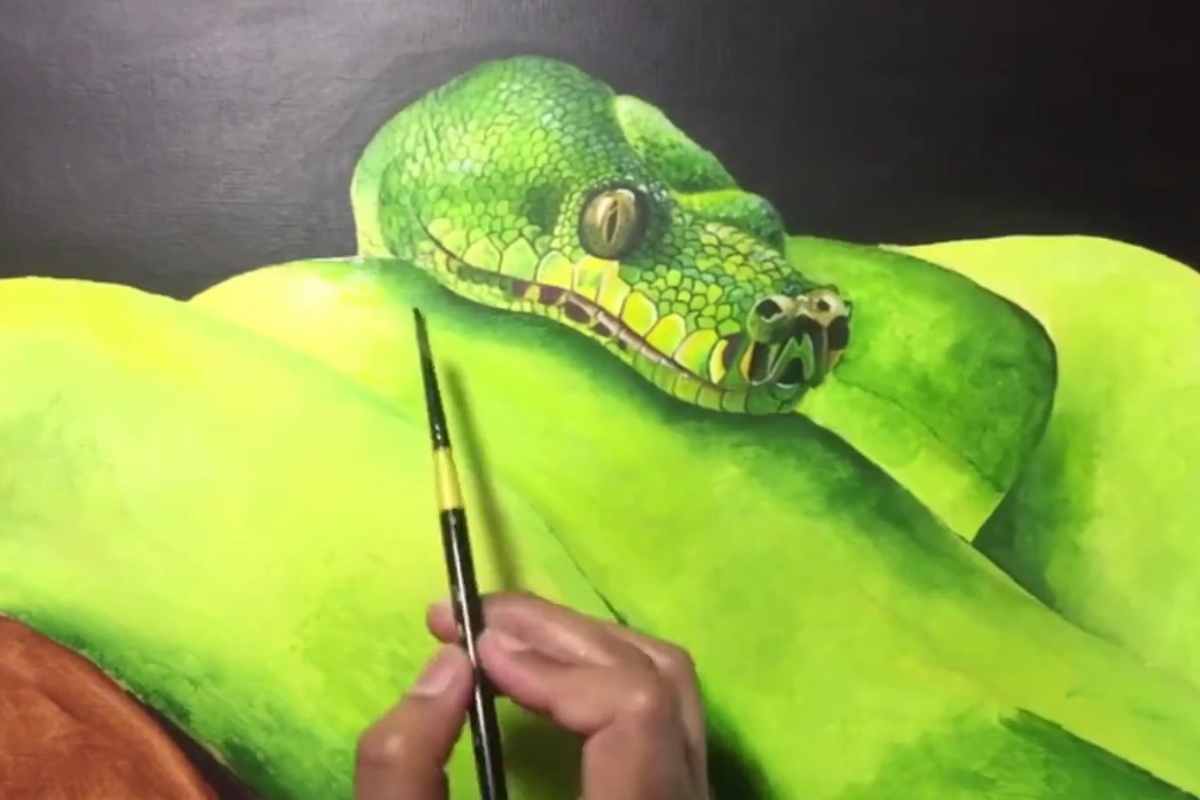
Color Choices for the Green Python
One of the most striking features of the python is its vibrant green coloration. However, this green is not a single, uniform color.
Pythons have multiple shades of green, from deep forest greens to lighter, more yellowish tones. The artist carefully selects the colors to match the natural variations of the python’s skin.
The color palette for the green python typically includes:
Dark greens and blacks for shadows and depth.
Bright greens and yellows for highlights and the lighter portions of the snake.
Earthy tones such as browns and ochres to provide richness and a natural feel.
By layering these colors and mixing them carefully, the artist can create a vibrant, textured painting that reflects the python’s intricate beauty.
Fine Details: Adding the Eyes and Background
No painting of a snake would be complete without paying attention to the eyes. The snake’s eyes are a crucial focal point, and they help give the painting life.
Using dark brown or golden tones, the artist can create the illusion of reflective, glowing eyes, which can make the snake seem even more lifelike.
For the background, the artist may choose a simple, dark backdrop, as seen in the image, which allows the green python to stand out.
A dark, black background can help highlight the vibrant green and yellow hues of the snake’s body, creating a sharp contrast and emphasizing its presence. The smooth, glossy look of the python’s skin is enhanced against a solid, neutral background.
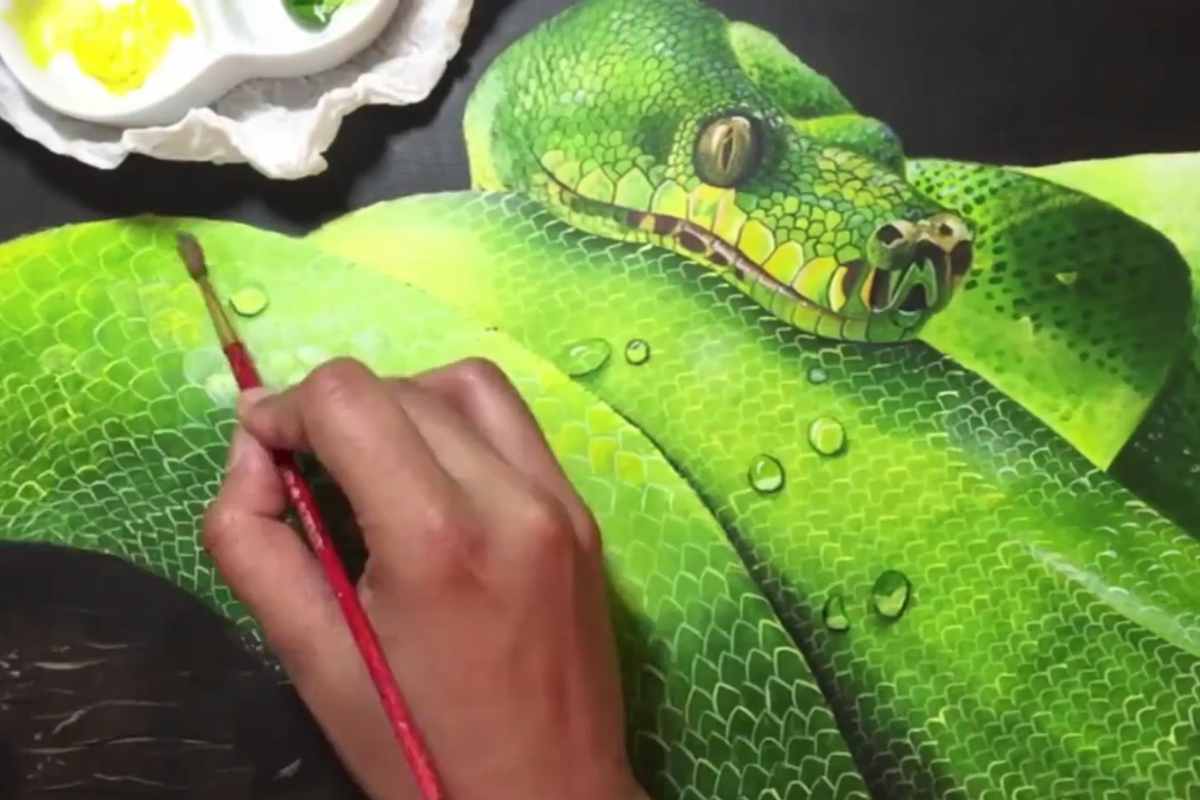
Patience and Observation
Painting a green python with realistic scales and texture requires both patience and attention to detail.
By carefully observing the snake’s natural patterns and following a step-by-step approach, artists can achieve an impressive and accurate representation of this stunning creature.
While this tutorial provides a basic framework, every artist brings their own unique perspective to the work, adding personal touches that make the painting their own.
Whether you are a beginner or an experienced artist, the process of creating such detailed art will improve your skills in texture rendering, shading, and layering.
Conclusion
Painting a realistic green python in acrylics is an exciting challenge that allows artists to experiment with color, texture, and depth.
Through layering, blending, and paying attention to fine details like the scales and the reflective nature of the python’s skin, this painting captures the unique beauty of one of nature’s most mesmerizing creatures.
This tutorial is a perfect opportunity for artists to enhance their acrylic painting skills while creating a visually striking and lifelike artwork.
We thank Canvas Whispererr for the images.
Enjoy The Video Tutorial
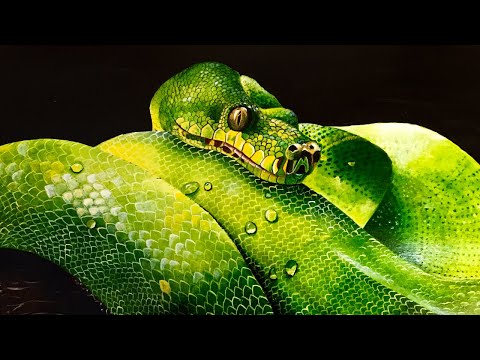
Source: Canvas Whispererr
Did you find this post useful or inspiring? Save THIS PIN to your Art Board on Pinterest! 😊
Last update on 2025-12-30 / Affiliate links / Images from Amazon Product Advertising API
Discover More Artistic Inspiration