
Beginner’s Guide to Painting Stunning Landscapes in Watercolor


Watercolor painting is an excellent medium for creating stunning landscapes. With its translucent properties and ability to blend smoothly, watercolor offers a fresh and atmospheric way to capture the beauty of nature.
Whether you are a beginner or an experienced artist, learning to paint landscapes in watercolor can be both enjoyable and rewarding.
This tutorial will guide you through the basic techniques for creating vibrant, expressive landscapes, focusing on simplicity and accessibility.
Why Choose Watercolor for Landscapes?
Watercolor has unique qualities that make it a fantastic choice for painting landscapes. The fluidity of the paint, along with its transparency, allows for soft, blended transitions that perfectly mimic the natural world.
From the delicate wash of a sky to the rich, vibrant tones of a sunset or winter landscape, watercolors provide an ideal medium to express the gentle variations in light, color, and texture found in nature.
The Beauty of Watercolor Landscapes
One of the most appealing aspects of landscape painting in watercolor is the ability to create a sense of atmosphere. The softness of the medium can evoke the feel of misty mornings, glowing sunsets, or a quiet snowfall.
The layers of color and the blending of hues create depth and dimension, which makes watercolor an ideal tool for landscapes, as it can imitate the complexity of nature while maintaining a sense of lightness and freedom.

Starting with Basic Techniques
Before diving into the full landscape, it’s important to understand the fundamental techniques that will make your painting process smoother and more enjoyable. Mastering wet-on-wet, wet-on-dry, and gradual layering are key to achieving beautiful landscapes.
Wet-on-Wet Technique
The wet-on-wet technique is essential when painting skies, backgrounds, and any elements that require smooth blending.
This technique involves applying wet paint onto wet paper, allowing the colors to spread and mix naturally. It’s perfect for creating soft gradients in the sky or in any large areas like water, fields, or clouds.
In landscapes, this method can help create atmospheric effects, such as a misty landscape or a glowing sunset. The soft edges and color transitions are ideal for capturing the serene and peaceful qualities often found in nature.
Wet-on-Dry Technique
The wet-on-dry technique is where the paint is applied to dry paper. This allows for crisper, more defined lines and is ideal for adding details such as tree trunks, branches, and texture in the foreground.
When painting trees or distant mountains, this technique gives you control over the sharpness of the elements while maintaining soft backgrounds.
Layering for Depth
Watercolor is built on the idea of layering. Starting with light washes and building up gradually allows you to control the intensity of the colors.
In landscape painting, this technique is particularly useful when creating depth. For example, the background can be painted with softer hues, while the foreground is made more intense and detailed. This gives the painting a sense of perspective and makes the elements feel more three-dimensional.
Focus on Composition
In any landscape, composition is key to creating a balanced and visually appealing piece. While nature often appears chaotic, artists can create harmony in their landscape paintings by following some simple compositional guidelines.
The Rule of Thirds
The rule of thirds is a compositional technique that helps divide your painting into thirds both horizontally and vertically. This technique leads to a more dynamic and balanced layout.
By placing key elements of the landscape, such as trees, hills, or lakes, along these lines or at their intersections, the painting will feel more visually pleasing and engaging.
Foreground, Middleground, and Background
When planning your landscape, think in terms of layers: the foreground, middleground, and background.
The foreground usually contains the most detailed and brightly colored elements, while the background can be softer and lighter. This division gives the painting a sense of depth and guides the viewer’s eye from the foreground to the background.
Leading Lines
In nature, elements like rivers, paths, or fences can act as natural leading lines that direct the viewer’s eye toward the horizon or the main subject of your painting.
Using these elements in your composition helps the viewer follow the flow of the painting and creates a sense of movement within the artwork.

Experimenting with Color and Texture
One of the joys of watercolor painting is experimenting with color. Landscapes offer endless opportunities to explore vibrant hues, soft transitions, and a mix of natural tones.
Whether you're painting a winter scene or a lush forest, colors play a significant role in conveying mood and atmosphere.
Creating a Winter Landscape
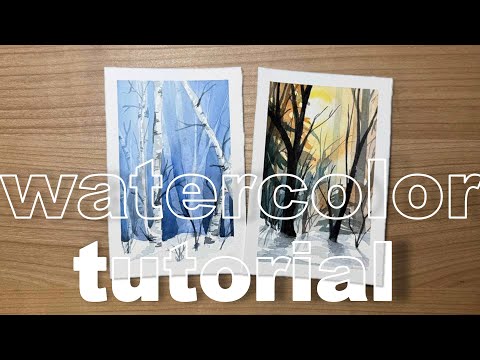
When painting a winter landscape, like the birch trees on the left side of the image, cool blues and grays work well to create the chill of the season.
The snow can be left white or softly glazed with a wash of color to suggest shadow and light. In such scenes, minimalism is key, allowing the space and quiet beauty of the landscape to shine through.
A Warm Sunset Landscape
For a warmer scene, such as the autumn trees on the right, you can use earthy tones like oranges, reds, and yellows.
These colors work well to evoke the warmth and beauty of the setting sun. In this type of scene, focusing on contrasts—the warmth of the sky against the coolness of the trees—will create a visually interesting and dynamic composition.
Practice and Patience
Watercolor landscapes require practice and patience. The beauty of this medium lies in its unpredictability, as the paint flows and blends in ways that may surprise you. With each painting, you’ll gain more confidence and control over your technique.
Take your time, observe nature, and experiment with different styles and color combinations. Over time, you’ll develop a unique approach to watercolor landscapes that reflects your personal artistic vision.

Conclusion
Painting landscapes in watercolor is a rewarding experience, full of opportunities for creative expression. Whether you’re capturing the serenity of winter birch trees or the warmth of an autumn sunset, watercolor offers a beautiful way to showcase the natural world.
By mastering basic techniques such as wet-on-wet and layering, understanding composition, and experimenting with color, you’ll be well on your way to creating stunning, atmospheric landscape paintings. Keep practicing, and enjoy the process of bringing nature’s beauty to life on paper!
We thank Art In Motion for the images.
Enjoy The Video Tutorial
Source: Art In Motion
Did you find this post useful or inspiring? Save THIS PIN to your Art Board on Pinterest! 😊

Discover More Artistic Inspiration