
Warm Cabin Winter Oil Painting: Wet-on-Wet Snowy Mountain Tutorial

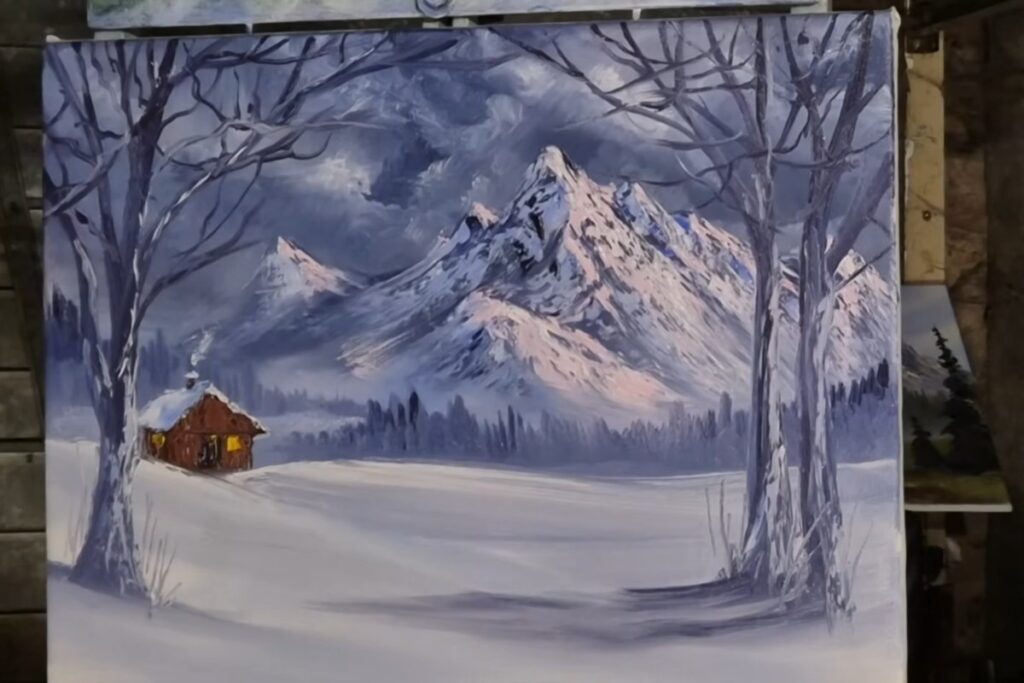
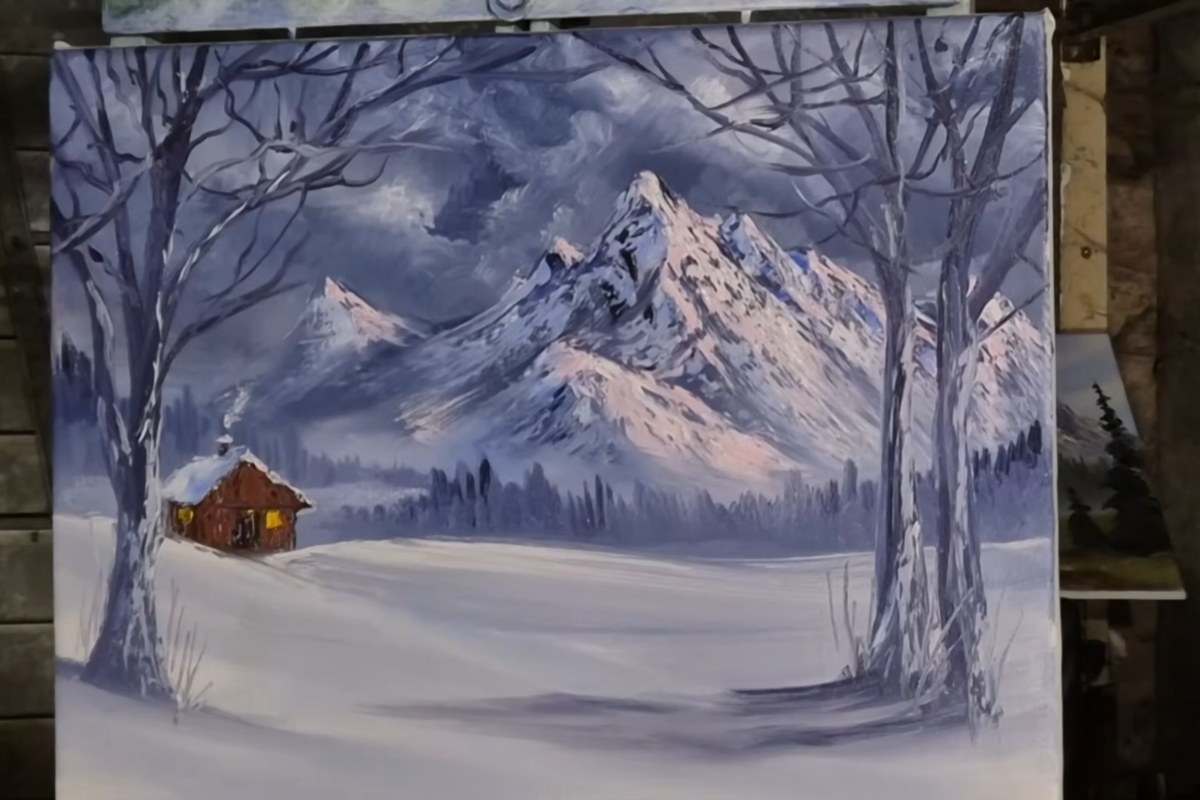
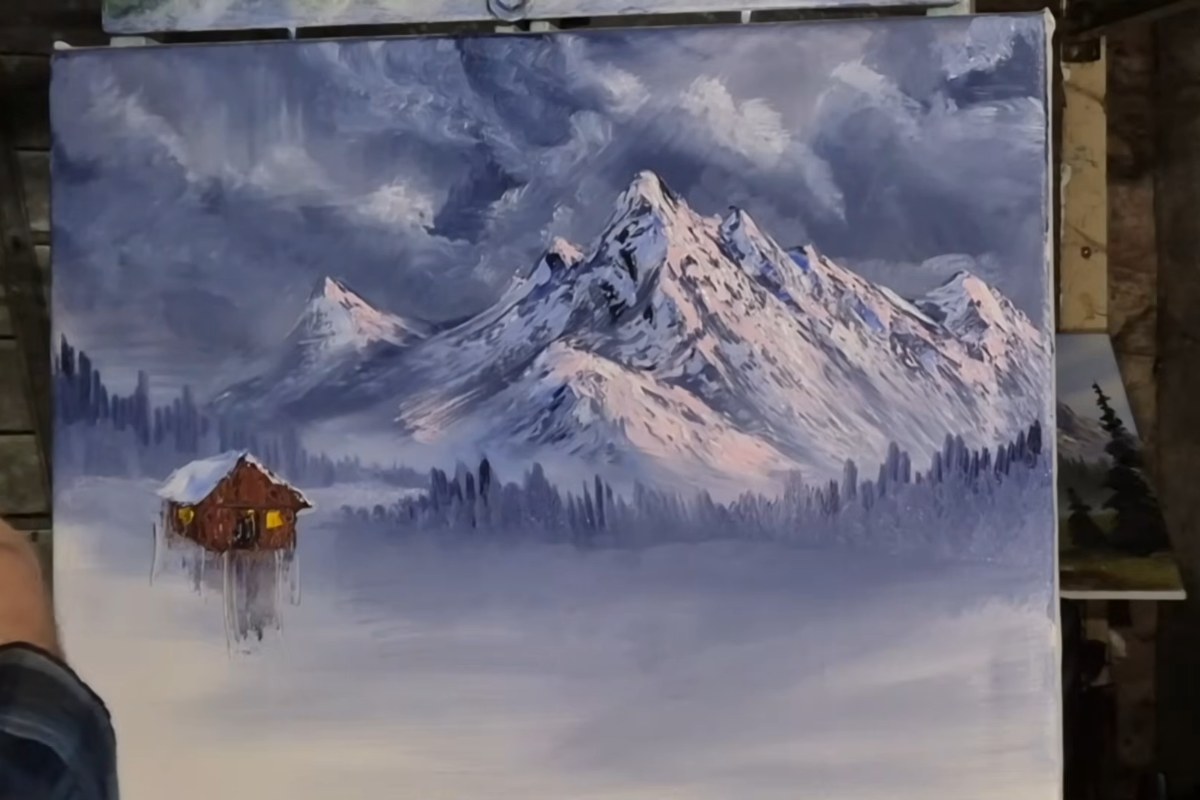
A small log cabin with lit windows, half buried in fresh snow under a wall of pink-tinted mountains: that is the scene Jason Bowen paints in this full-length wet-on-wet oil painting video. He covers the canvas with liquid white, builds a stormy winter sky, knifes in the mountains, adds a misty tree line and a tiny cabin, and finishes with tall bare trees and soft snowdrifts.
It is a good painting to start now if you want a cozy Christmas-season piece for your own wall or to give as a gift. The whole demo is shown in real time, so you can follow every brush and knife stroke.
Warm Cabin Painting at a Glance
- Artist: Jason Bowen
- Medium: Oil paint, wet-on-wet (alla prima) over liquid white
- Subject: Snowy mountains, evergreen tree line, log cabin and bare winter trees
- Level: Tagged by the artist for beginner painting; easier if you have tried a wet-on-wet landscape before
- Video length: 49:48, one continuous session
What You'll Need
These are the colors and tools named or used on screen in the video:
- Liquid white, brushed over the whole canvas before you start
- Titanium white
- Ultramarine blue
- Burnt umber
- Burnt sienna
- Alizarin crimson
- A yellow (used for the window glow)
- A 2-inch brush and a 1-inch brush
- A fan brush (he uses a number 6, but says any fan brush works)
- A palette knife
- A liner brush for fine branches
- Paper towel to knock excess paint off the brushes
How the Winter Cabin Painting Comes Together
1. Mix a cold gray and paint the sky (0:00 - 9:00)
Ultramarine blue and burnt umber make the gray that sets the mood. Jason taps the bristles of the large brush into the color for an even load, then puts in heavy, snowy clouds with loose criss-cross and looping strokes, wiping the brush on paper towel and blending as he goes. A cleaner brush with a little white lifts the light edges of the clouds.
2. Knife in the mountains (9:50 - 25:00)
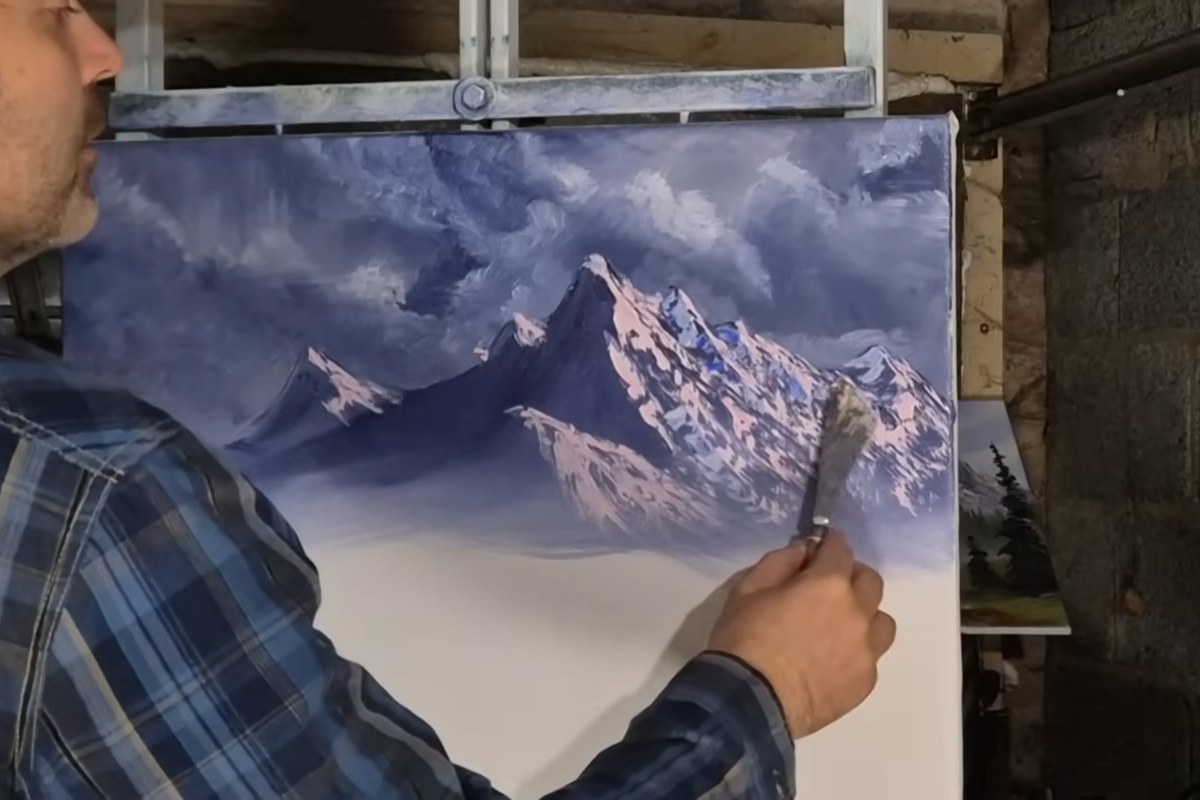
A dark mountain color, the same blue-brown mix warmed with a touch of crimson, goes on with the palette knife to block in the peaks. Snow is then laid on with the knife and very light pressure, so the paint breaks on the wet surface and slides down the slopes. Keep the highlights on one side of each ridge and let the blue shadows fill the other. A pinkish white brings the snow down around the base of the range.
3. Add a misty tree line (25:00 - 29:00)
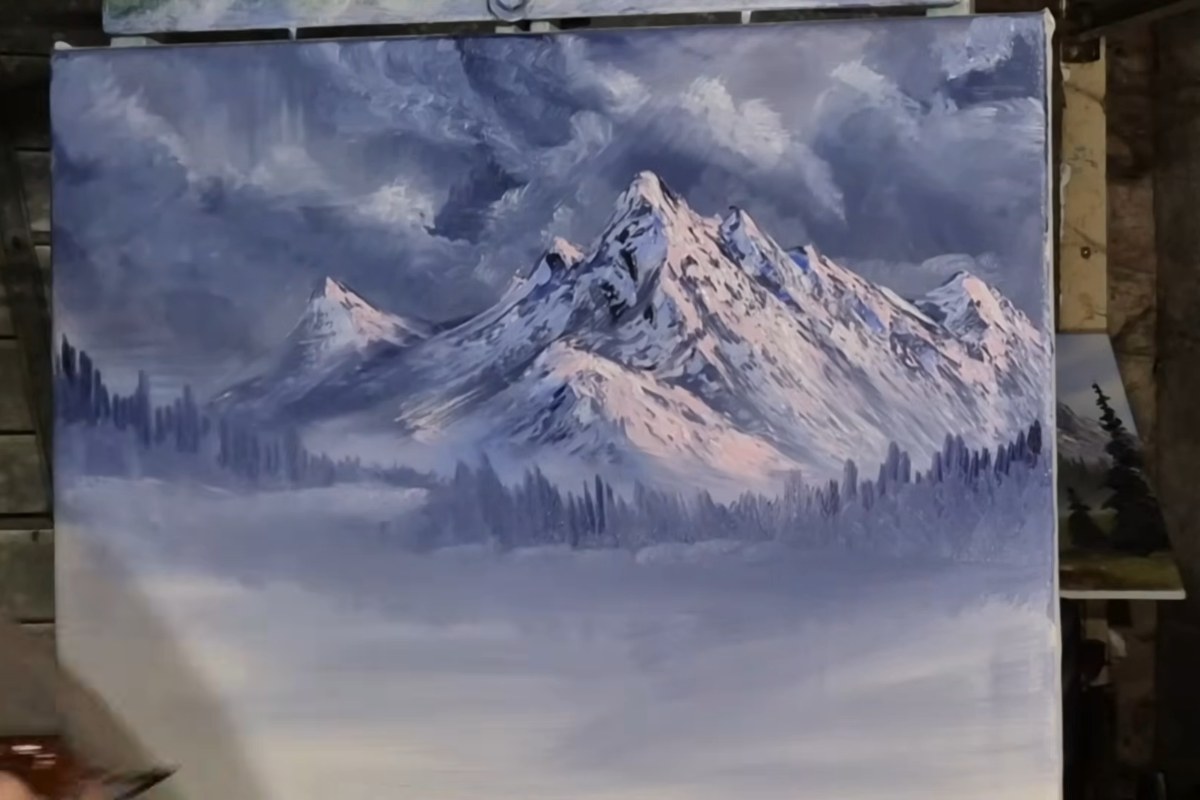
The fan brush and the dark mix tap in a band of small evergreens that separates the mountains from the snowfield. Tapping the base of the trees with the 2-inch brush softens them into mist, and a little snow tucked behind them keeps the layers apart.
4. Build the cabin (29:00 - 39:00)
Jason scrapes a clean patch with the knife, then forms the cabin walls with a very dark brown, using the knife edge to suggest old boards. A near-black door goes in next, followed by windows in yellow warmed with crimson so they glow, and a thin line of light under the door. A roll of blue and white on the knife becomes the snowy roof, then he adds a small chimney with a wisp of smoke and piles snow up against the walls so the cabin looks snowed in.
5. Paint the bare trees and finish the snow (39:00 - end)
Two large bare trees frame the scene. A well-loaded 1-inch brush gives the trunks and, with lighter pressure, the thinner branches, so you can get most of the tree with one brush. The liner brush adds extra twigs, and touches of white sit on the branches where snow would land. Last, he softens the snowfield, brings the drifts up toward the cabin and hints at a path and gentle shadows.
Tips for Painting Snow Scenes in Oil
- Keep your gray adjustable. Blue and brown can be pushed warmer or colder; for a wintry feel, lean toward the blue.
- Use less pressure for snow. A light touch with the knife lets the white break up naturally instead of sitting as a flat stripe.
- Fix mistakes with the knife. If paint lands somewhere you don't want it, scrape it off and repaint; the wet surface is forgiving.
- Go easy on shadows under a cloudy sky. Jason points out that on overcast days snow bounces light around and shadows almost disappear, so soft, faint shadows look more believable here.
- Change what you like. He encourages viewers to leave out or add elements, so move the cabin or the trees if your composition calls for it.
Enjoy the Video Tutorial
Here is the complete painting from Jason Bowen, from the first sky strokes to the last snowdrift.

Source: Jason Bowen
Frequently Asked Questions
Do I need liquid white for this painting?
The video starts with a coat of liquid white over the entire canvas, and the soft blending of the sky and the way the snow breaks on the mountains both rely on that wet base. If you skip it, expect the colors to drag more and blend less.
How long does this winter cabin painting take?
The video runs just under 50 minutes and shows the painting in one sitting. Since it is all done wet-on-wet, plan to paint it in a single session before the surface starts to set.
More Winter Landscapes to Paint
Discover More Artistic Inspiration